
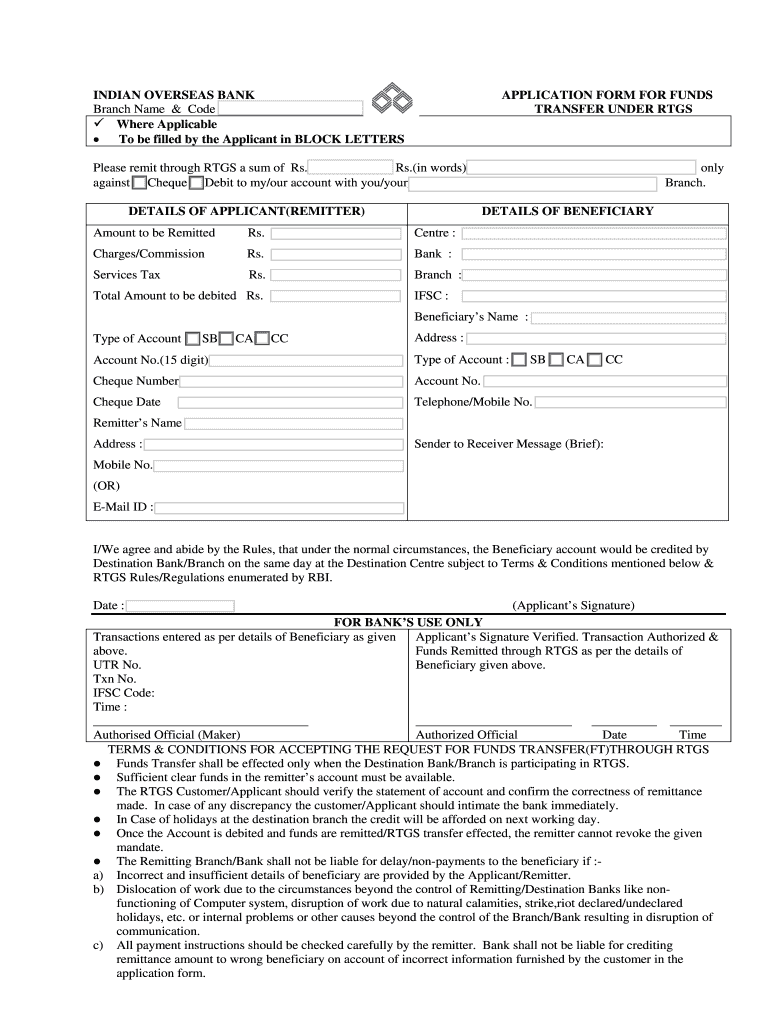







Definition and Meaning of the IOB RTGS Form
The Indian Overseas Bank (IOB) RTGS form is an application utilized for transferring funds through the Real Time Gross Settlement (RTGS) system. This financial mechanism is designed to facilitate high-value transactions that need to be settled instantly and irrevocably. A remitter submits the IOB RTGS form to instruct their bank to transfer a specified sum of money to a beneficiary’s account. The form typically requires critical information, including details about the remitter's and beneficiary's bank accounts, the amount to be transferred, and any other specific instructions necessary for the transaction.
Key Features of the IOB RTGS Form
- Real Time Processing: Transactions processed via RTGS are completed in real-time, providing immediate confirmation of transfers.
- High Transaction Limits: RTGS is generally used for high-value transactions, often starting from a minimum threshold that varies by bank but typically around 2 lakh Indian Rupees.
- Secure Transactions: The IOB RTGS form implementation ensures that all transactions are protected by security protocols, reducing the risk of fraud.
The significance of the IOB RTGS form lies not only in its functionality but also in its legal compliance and reliability for high-value transactions.
Steps to Complete the IOB RTGS Form
Filling out the IOB RTGS form requires attention to detail to ensure that all necessary information is accurately recorded. The process can be broken down into several key steps:
-
Obtain the Form: The RTGS form can be downloaded from the IOB website or acquired directly from any IOB branch.
-
Fill in Remitter Details:
- Name
- Account Number
- IFSC Code of the remitting branch
- Mobile Number and email for communication purposes
-
Enter Beneficiary Information:
- Beneficiary Name
- Beneficiary Account Number
- Beneficiary Bank Name
- Beneficiary Bank IFSC Code
-
Specify Transaction Details:
- Amount to be transferred
- Purpose of the transfer, ensuring it adheres to compliance requirements
-
Review and Sign: Carefully review the completed form to ensure all information is accurate. Sign the form to authorize the transaction.
-
Submit the Form: Deliver the completed IOB RTGS form to the bank, either in-person or via online banking if electronic submissions are allowed.
Completing these steps correctly is crucial for ensuring a smooth transaction and preventing any delays or errors in the transfer process.
How to Obtain the IOB RTGS Form
The IOB RTGS form is accessible through multiple channels to ensure that users can easily apply for high-value fund transfers. Here are common methods to obtain the form:
- IOB Official Website: Users can visit the Indian Overseas Bank website and navigate to the forms section for direct downloads of the RTGS form in PDF or Word format.
- Physical Bank Branches: The form is available at all IOB branches. Visit the nearest branch, where staff can assist you in acquiring the necessary documentation.
- Online Banking Portal: If you are an existing customer, log into your IOB online banking account. Forms and applications, including the RTGS form, may be available for download directly from your account interface.
Obtaining the form through these channels allows for efficient processing of high-value transactions.
Important Terms Related to the IOB RTGS Form
Understanding specific terminologies associated with the IOB RTGS form is beneficial for users:
- RTGS (Real Time Gross Settlement): A system that facilitates the transfer of funds between banks in real-time.
- IFSC Code (Indian Financial System Code): A code that identifies specific branches of banks in India, needed for electronic fund transfers.
- Beneficiary: The person or entity receiving the funds transferred via the RTGS system.
- Remitter: The individual or entity initiating the fund transfer.
Familiarity with these terms will help ensure that users navigate the process more effectively and communicate clearly with bank officials.
Legal Use of the IOB RTGS Form
The IOB RTGS form serves a critical role in legal financial transactions, ensuring that funds are transferred in accordance with banking regulations and compliance standards set forth by the Reserve Bank of India (RBI). These regulations include:
- KYC Compliance: Both the remitter and beneficiary must adhere to Know Your Customer (KYC) norms, providing valid identification and verification documents.
- Authorization: The signatory must be authorized to initiate the transfer, ensuring that the transaction is valid under bank policies.
- Record Keeping: All transfers conducted using the IOB RTGS form are logged and tracked for regulatory and audit purposes, providing a clear trail of fund movement.
The legal framework surrounding RTGS transfers helps prevent fraud and abuse, promoting trust between banking institutions and their clients.




