
Summons and complaint example 2026

Get Form
example of summons and complaint Preview on Page 1

Here's how it works

01. Edit your example of summons and complaint online
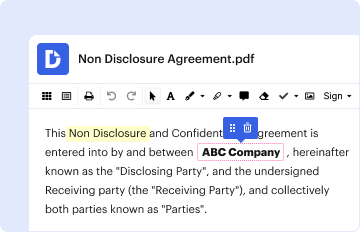
Type text, add images, blackout confidential details, add comments, highlights and more.
02. Sign it in a few clicks
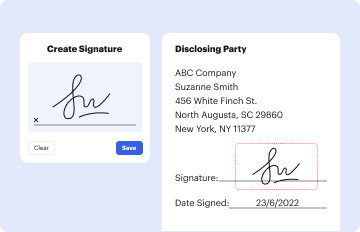
Draw your signature, type it, upload its image, or use your mobile device as a signature pad.
03. Share your form with others
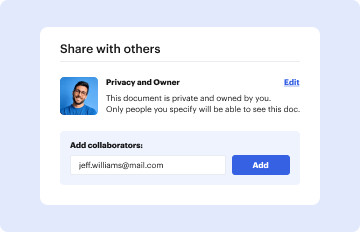
Send sample summons and complaint via email, link, or fax. You can also download it, export it or print it out.

How to use or fill out summons and complaint example with our platform

Form edit decoration
9.5
Ease of Setup
DocHub User Ratings on G2
9.0
Ease of Use
DocHub User Ratings on G2
  1. Click ‘Get Form’ to open the summons and complaint example in the editor.
  2. Begin by filling in the names of the parties involved. In the designated fields, enter 'A.B.' as the Plaintiff, 'C.D.' as the Defendant and Third-Party Plaintiff, and 'E.F.' as the Third-Party Defendant.
  3. Next, complete the address fields for both attorneys. Ensure that you accurately input the addresses where indicated for effective communication.
  4. In Section 2 of the Third-Party Complaint, clearly state the grounds for C.D.'s claim against E.F. This should be framed similarly to an original complaint, providing a concise rationale.
  5. Finally, sign and date the document in the appropriate fields at the bottom of each section to validate your submissions.

Start using our platform today to streamline your document editing and ensure your summons and complaint is completed efficiently!

See more summons and complaint example versions

We've got more versions of the summons and complaint example form. Select the right summons and complaint example version from the list and start editing it straight away!
Versions Form popularity Fillable & printable
2008 4.8 Satisfied (61 Votes)
be ready to get more

Complete this form in 5 minutes or less

Get form

Got questions?

We have answers to the most popular questions from our customers. If you can't find an answer to your question, please contact us.
Contact us
In legal terminology, a complaint is any formal legal document that sets out the facts and legal reasons (see: cause of action) that the filing party or parties (the plaintiff(s)) believes are sufficient to support a claim against the party or parties against whom the claim is brought (the defendant(s)) that entitles
Comply With the Relevant Federal, State, and Local Rules. Research Before Writing. Allege Subject Matter Jurisdiction, Personal Jurisdiction, and Venue. Jurisdiction. Draft Concise and Plain Statement of the Facts. Factual Allegations. Draft Separate Counts for Each Legal Claim. Plead Facts With Particularity Where Necessary.
If you receive a form called a Summons (SUM-100) it means that someone is suing you in court. In addition to the Summons, youll also receive another document, called a Complaint. The Complaint describes the details of the case against you.
The person complaining does not have to use the word complaint for something to count as a complaint. They may talk about feedback, an issue, or a concern, or they may say they want to tell you about something. In this guide, the term complaint covers all the variations people might use.
Service of a Summons and Complaint is a process to compel someone to appear in court to defend him/her/itself against a lawsuit.

Security and compliance

At DocHub, your data security is our priority. We follow HIPAA, SOC2, GDPR, and other standards, so you can work on your documents with confidence.

Learn more
be ready to get more

Complete this form in 5 minutes or less

Get form

People also ask

In essence, a legal complaint initiates a lawsuit, while a lawsuit encompasses the entire process of resolving the dispute in court. The existence of a lawsuit and its course through the judicial process is also referred to as litigation.
A complaint is any formal legal document that sets out the facts and reasons that a party or parties believe are sufficient to support a claim against the university or university personnel.
Its primary objectives are: To Notify: The complaint informs the defendant that they are being sued and provides them with details of the alleged wrongdoing. To Define the Issues: It outlines the legal and factual basis for the lawsuit, defining the issues that the court will consider.

Related links