




Definition and Meaning of the Process Recording Template PDF
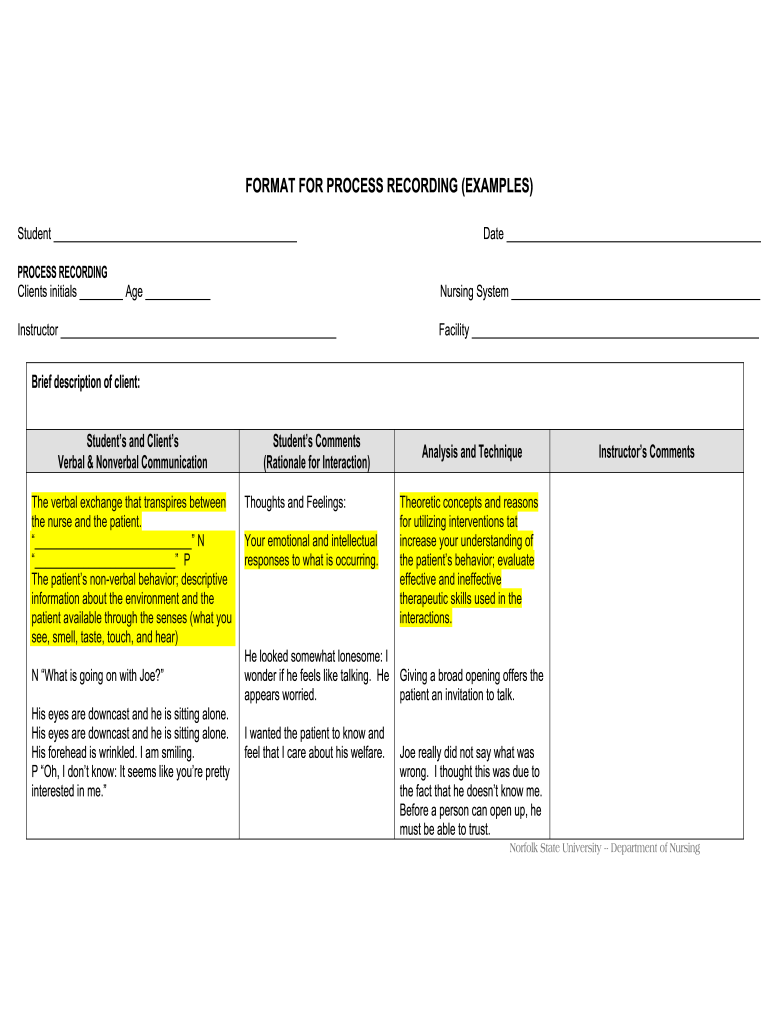
A process recording template PDF is a structured document used primarily by professionals in fields such as social work, nursing, and counseling. It serves as a tool for recording interactions between practitioners and clients, focusing on both verbal and nonverbal communication. The main goal of this template is to facilitate reflection, learning, and improvement in practice by providing a detailed account of client interactions.
- Purpose: Authors use the template to create a clear and formal account of sessions, which can aid in supervision, training, and evaluation.
- Components: Typically, the template includes sections for client details, descriptions of the interaction, personal reflections, and analysis of the therapeutic techniques used.
- Importance: By maintaining detailed records, practitioners can improve their skills, ensure compliance with ethical standards, and enhance the therapeutic process.
How to Use the Process Recording Template PDF
Utilizing the process recording template PDF effectively requires specific steps to ensure comprehensive documentation of client interactions. Here’s how to navigate its use:
- Download and Open: Obtain the PDF form from a reliable source, ensuring that it is compatible with your digital tools (like DocHub).
- Fill Out Client Details: Start with basic information such as the client’s name, date of the session, and specific identifiers relevant to the interaction. This helps provide context for reflection later.
- Document Interaction:
- Verbal Communication: Note specific phrases, questions, or comments made during the session.
- Nonverbal Communication: Observe and record body language, gestures, and emotional cues.
- Reflect and Analyze: In the sections designated for personal reflection, capture your insights on the interaction, including thoughts on what worked well and areas of improvement. Analyze the techniques utilized and their effectiveness in the context of the session.
- Review and Store: Ensure the completed document is reviewed for completeness and accuracy. Store it securely, following any organizational protocols for confidentiality.
Example of Documenting Interaction
For instance, if a client expresses anxiety during a session, you might record their statements verbatim, note their posture, and reflect on your response in real-time. This comprehensive approach helps build a fuller picture of practitioner-client dynamics.
Steps to Complete the Process Recording Template PDF
Completing the process recording template PDF involves a systematic approach to ensure that all relevant information is captured. The following steps outline this process:
- Prepare for the Session: Before meeting with a client, review the previous notes and set objectives for the current interaction.
- Start Recording During the Session: As the session progresses, use the template to capture:
- Relevant statements from the client,
- Your therapeutic responses,
- Observations of the client’s demeanor or emotional state.
- Complete the Template Post-Session:
- Fill in missing details immediately after the session while the information is fresh.
- Provide a reflective analysis on your performance and insights gained from the session.
- Submit for Supervision or Review: Once completed, share the document with a supervisor or colleagues for feedback if required.
- Maintain Confidentiality: Use secure methods to store or share the document, ensuring compliance with applicable confidentiality regulations.
Practical Tip
Creating a habit of immediate documentation can lead to richer content in the recordings, as thoughts and observations are captured while still fresh.
Key Elements of the Process Recording Template PDF
A well-designed process recording template PDF should include several key elements that enhance its utility and effectiveness. The following are essential components generally found in such templates:
- Client Information: Basic identifiers such as name, age, and session date to provide context.
- Session Overview: A brief statement summarizing the purpose and goals of the interaction.
- Detailed Interaction Log:
- Verbatim Notes: Exact quotes from the client and the practitioner.
- Observational Notes: Insights on nonverbal cues and emotional states.
- Reflections: A dedicated space for practitioners to articulate their thoughts, feelings, and learning points from the session.
- Therapeutic Techniques Used: Document the methods or interventions applied during the session, including their effectiveness and impact.
Importance of Each Element
Each of these elements serves to create a comprehensive picture of the client-practitioner interaction, allowing for better reflection, growth, and quality improvement in service delivery.
Who Typically Uses the Process Recording Template PDF
The process recording template PDF is primarily used by professionals in several fields. Typical users include:
- Social Workers: To enhance client interactions and improve service delivery.
- Nurses: To document patient encounters, focusing on both clinical and emotional aspects.
- Counselors and Therapists: For detailed accounts of counseling sessions, fostering client insight and professional growth.
- Students in Relevant Programs: Often required in training to develop essential skills reflective of real-world practice.

Impact on Professional Development
By utilizing the process recording template, these professionals not only document their interactions but also engage in reflective practice, which is critical for ongoing development and skill enhancement.
Examples of Using the Process Recording Template PDF
Utilizing the process recording template PDF effectively can be illustrated through various examples across different professions:
Social Work Example
A social worker encountering a client dealing with grief might note specific statements the client makes about loss, alongside their emotional reactions. Reflections may focus on the effectiveness of empathetic responses facilitated through active listening.
Nursing Example
A nursing session might involve a patient discussing their recovery process from a surgical procedure. The nurse can document both the patient’s verbal expressions of pain and their nonverbal cues, while also reflecting on care techniques applied.
Counseling Example
A therapist might record a session with a client dealing with anxiety. The template can capture the therapist’s therapeutic interventions, such as cognitive behavioral techniques, and the client’s reactions, providing material for reflection in future sessions.
This structured approach not only enhances understanding but also aids in improving techniques and delivery methods across various professional fields.