
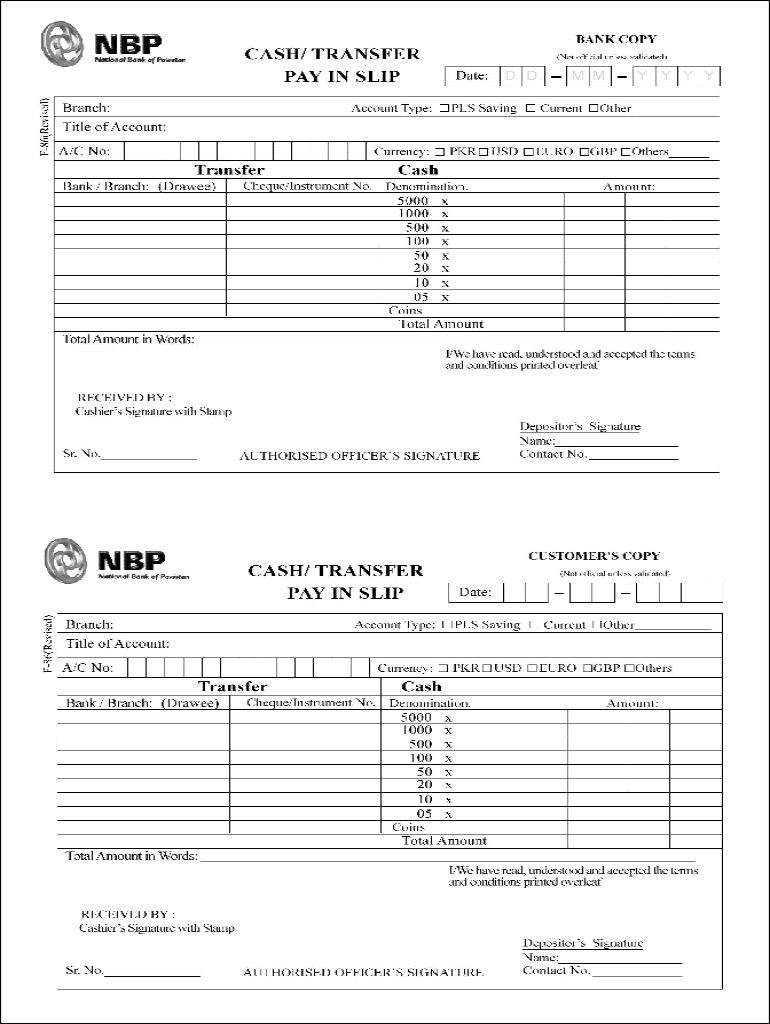







Definition and Purpose of the Pakistan Pay in Slip
The Pakistan Pay in Slip is a formal document used by individuals and businesses to deposit funds into a bank account. This slip serves as a record of the transaction and includes essential details about the payment, such as the amount, date, and purpose of the deposit.
- Functionality: It is primarily utilized to facilitate cash deposits or transfers, ensuring that accurate records are maintained by both the bank and the depositor.
- Format: Typically, this slip is structured to capture specific information such as the account number, depositor’s name, and branch details.
This document plays a critical role in the banking transaction process, providing a verifiable paper trail that can be referenced in case of discrepancies or audits.
How to Use the Pakistan Pay in Slip Effectively
Utilizing the Pakistan Pay in Slip effectively involves a few clear steps to ensure that the deposit process is smooth and error-free. Here are essential guidelines for using this slip:
-
Obtain the Slip: Pay in slips are usually available at bank branches or can be downloaded online from the bank's official website.
-
Fill in the Details: Accurately complete the required fields, which typically include:
- Account number of the recipient.
- Name of the depositor.
- Amount being deposited.
- Purpose of the deposit, if necessary.
-
Submit the Slip: After completing the form, submit it to the bank teller along with the cash or cheque.
-
Retain a Copy: Always keep a copy of the slip for your records. This serves as proof of your transaction and can be crucial for any future verification.
Steps to Complete the Pakistan Pay in Slip
Completing a Pakistan Pay in Slip requires careful attention to detail to ensure accurate processing of the deposit. Here are the step-by-step instructions:
-
Select the Correct Slip: Ensure you are using the right slip for the type of deposit you are making. Banks may have different slips for cash deposits or transfers.
-
Fill in Personal Information:
- Enter your name as it appears on the bank account.
- Write down your contact information, if required.
-
Input Transaction Details:
- Specify the account number into which the funds will be deposited.
- Clearly state the amount being deposited, including denominations if cash is involved.
-
Purpose of Deposit: Mention the reason for the deposit, if necessary, as some banks require this information.
-
Signature: Sign the slip at the designated area, if needed, to authenticate the transaction.
Once completed, present the slip to the bank representative along with your cash or cheque.
Common Users of the Pakistan Pay in Slip
The Pakistan Pay in Slip is utilized by a wide range of individuals and organizations, including:
- Individuals: Regular banking customers who need to deposit their cash, salaries or funds received from other sources.
- Businesses: Companies making payments for services, such as rent, utilities, or supplier payments.
- Freelancers and Contractors: Self-employed individuals who receive payments for their services may frequently use this slip to deposit client payments.
By understanding who typically uses a pay in slip, banks can streamline their services to accommodate these customers effectively.


Important Terms Related to the Pakistan Pay in Slip
To better navigate the process of using a Pakistan Pay in Slip, it's beneficial to understand key terms associated with this form:
- Depositor: The individual or entity making the deposit.
- Account Number: The unique identifier assigned to a bank account.
- Transaction Reference: A unique identifier that may be assigned by the bank for tracking purposes.
- Deposit Amount: The cash or cheque amount being deposited.
Familiarity with these terms can enhance the user's ability to effectively fill out the slip and interact with banking personnel during the transaction process.
Legal Use of the Pakistan Pay in Slip
The Pakistan Pay in Slip is not just a functional document; it also has legal implications. It serves as an official record of financial transactions between the depositor and the bank. Here’s how it functions from a legal perspective:
- Evidence of Transaction: This slip can act as legal evidence in case of disputes regarding payment or deposit.
- Financial Audits: During audits, both individuals and businesses can provide a pay in slip to demonstrate compliant financial activity.
- Official Verification: Banks use these slips to verify and track ownership and transfers of funds.
Understanding its legal significance underscores the importance of keeping copies of these documents for future reference.
Examples of Using the Pakistan Pay in Slip
Practical examples can clarify how the Pakistan Pay in Slip operates in real-world scenarios:
- Individual Deposits: A person receives a salary in cash and uses a pay in slip to deposit the full amount into their bank account.
- Business Transactions: A small business owner uses the pay in slip to deposit proceeds from sales collected throughout the day into their business account.
- Rent Payments: A tenant uses a pay in slip to deposit monthly rent, ensuring a record is kept for both parties.
These examples illustrate the varied applications of the pay in slip in everyday financial transactions, highlighting its versatility and importance.




