
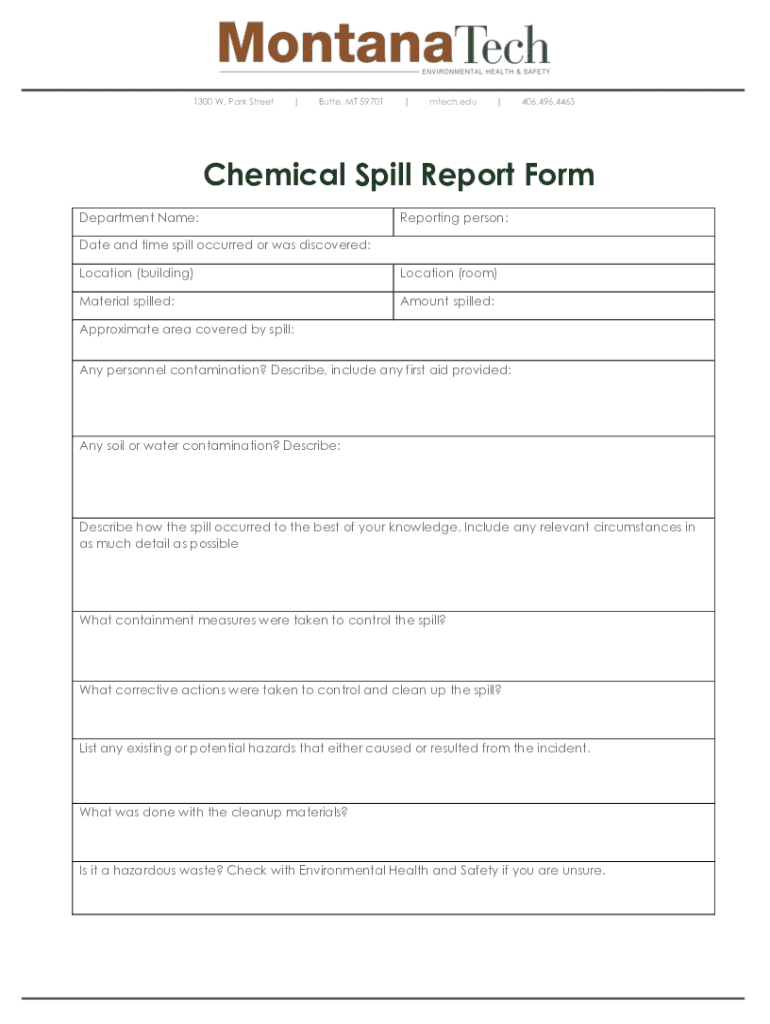







Definition & Meaning of the Spill Report Form
The spill report form is a standardized document used to report incidents involving spills that could pose risks to health and the environment. This form includes essential details such as the type of spill, the material involved, the date and time of the incident, and any immediate actions taken. Organizations utilize this form to ensure compliance with safety regulations, facilitate communication regarding the spill, and trigger the necessary response measures.
- Purpose of the Form: It serves to document spills for regulatory and internal records, aiding in ensuring the safety of employees and the surrounding environment.
- Importance: Accurate record-keeping of spills is crucial for compliance with local, state, and federal regulations, especially in hazardous material handling scenarios.
How to Use the Spill Report Form
Utilizing a spill report form involves several steps to ensure thorough documentation and proper communication of the incident. The primary focus should be on providing clear, concise information that reflects the situation accurately.
-
Fill in Basic Information: Start by entering the date and time of the spill, along with the location. Specific details about the site can help responders understand the geographic context.
-
Describe the Material: Specify the type of material spilled. Include details such as whether the material is hazardous, non-hazardous, liquid, or solid. This information is vital for assessing risks and appropriate responses.
-
Document Actions Taken: Detail immediate measures taken to contain the spill, including any cleanup efforts implemented. Specify if external agencies were notified or if further assistance was sought.
-
Follow-up Actions: After the initial report, note any follow-up actions required, including inspections or additional clean-up tasks. This section ensures ongoing compliance with regulatory requirements.
-
Review and Submit: Before submission, review the form for completeness and accuracy. Ensure it is submitted to the proper department or regulatory agency in a timely manner.
Steps to Complete the Spill Report Form
Completing the spill report form requires attention to detail and a systematic approach to document all relevant information effectively.
-
Gather Relevant Information: Before completing the form, gather all information related to the incident, including witness statements, photographs of the spill, and prior documentation of similar incidents if applicable.
-
Enter Information Systematically: Input data in the designated fields methodically. Use clear and concise language to describe the material and the nature of the spill.
-
Use Checklists: Utilize lists where available to ensure no critical information is overlooked, especially in the sections regarding potential hazards and response measures.
-
Attach Supporting Documents: If applicable, include any supporting documents that may provide context or further details about the spill or response efforts.
-
Finalize the Report: After thorough completion, ensure the report is signed off by the appropriate personnel. This adds a layer of accountability to the documentation.
Important Elements of the Spill Report Form
Key components of a spill report form are critical for ensuring accurate data collection and compliance with safety regulations. These elements facilitate effective spill management and risk assessment.
-
Date and Time of Spill: Accurate timestamps help determine the immediacy of the incident response.
-
Location: Precise identification of the spill site aids in focused response efforts and future risk assessments.
-
Type of Material: Identification of the substance involved is essential for assessing environmental and health risks.
-
Description of Incident: A thorough narrative describing what led to the spill provides context and supports future preventative measures.
-
Containment Actions: This section documents what immediate response actions were taken, which is crucial for compliance and safety reviews.
-
Potential Hazards: Any risks associated with the spill, such as toxicity or environmental impact, should be clearly noted. This is important for informing further actions and notifications.
Legal Use of the Spill Report Form
Legal frameworks governing the reporting of spills emphasize the importance of adhering to regulations set forth by environmental and safety agencies. Understanding these legalities can ensure compliance and reduce liability for organizations.
-
Regulatory Compliance: Organizations must comply with federal and state regulations regarding spill reporting, such as the Comprehensive Environmental Response, Compensation, and Liability Act (CERCLA) and the Oil Pollution Act (OPA).
-
Record-Keeping Obligations: Legal obligations often require long-term retention of spill reports for potential audits and assessments by regulatory agencies.
-
Disclosure Requirements: In some instances, the details of reported spills may need to be disclosed to public health agencies or environmental organizations, depending on the material involved.
-
Penalties for Non-Compliance: Failure to file the spill report form accurately and within the required timeframe can result in significant penalties or fines imposed by regulatory authorities.
Examples of Using the Spill Report Form
Real-world scenarios clearly illustrate the application of the spill report form and its importance in various industries.
-
Chemical Manufacturing: In a chemical plant, an operator notices a leak from a storage tank. They complete a spill report form detailing the chemical, the volume spilled, and immediate containment measures, which are crucial for internal records and regulatory compliance.
-
Laboratory Incidents: A university lab conducts experiments with hazardous materials. When a spill occurs, researchers fill out a spill report form, highlighting the material types involved, safety protocols followed, and clean-up procedures enacted.
-
Emergency Situations: After a truck carrying hazardous materials has an accident, responders utilize spill report forms to document the incident’s specifics and the emergency actions taken. This formal documentation aids in assessing the situation’s impact and ensuring a proper response.
-
Industrial Sites: Manufacturers handle multiple substances daily. Should a spill occur, employees complete different spill report forms, recording varying materials and containment techniques tailored to the specific incident, ensuring comprehensive response tracking for safety reviews.




