Type text, add images, blackout confidential details, add comments, highlights and more.

02. Sign it in a few clicks
Draw your signature, type it, upload its image, or use your mobile device as a signature pad.

03. Share your form with others
Send it via email, link, or fax. You can also download it, export it or print it out.

How to use or fill out Plant Classification Form - California State Water with our platform
Ease of Setup
DocHub User Ratings on G2
Ease of Use
DocHub User Ratings on G2
Click ‘Get Form’ to open the Plant Classification Form in our editor.
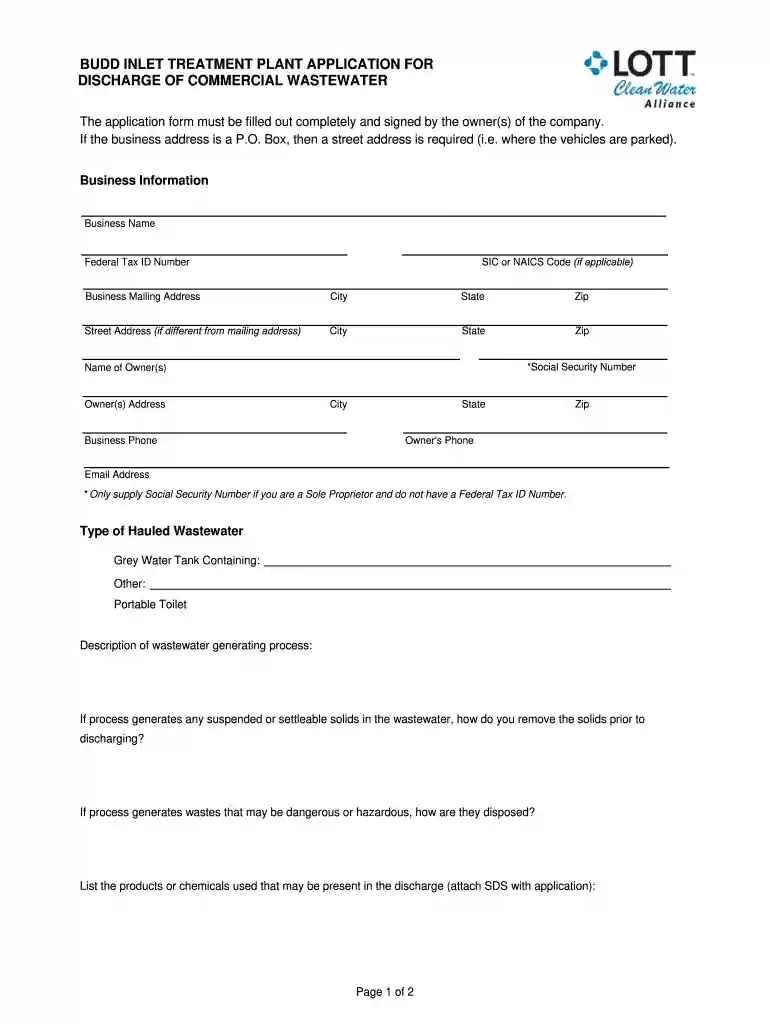
Begin by entering your Business Information. Fill in the Business Name, SIC or NAICS Code, and Federal Tax ID Number if applicable. Ensure you provide a complete mailing address including city, state, and zip code.
If your business address is a P.O. Box, include a physical street address where vehicles are parked. Also, input the Owner(s) details including their name, address, phone number, and email.
Next, specify the Type of Hauled Wastewater. Indicate if it includes Grey Water Tank or Portable Toilet and describe the wastewater generating process.
Address how you manage any suspended solids in the wastewater before discharge and detail any hazardous waste disposal methods.
List all products or chemicals that may be present in the discharge and attach relevant Safety Data Sheets (SDS) with your application.
For Vehicle Information, list each vehicle that will discharge at LOTT along with its Year, Make, License Number, Capacity in gallons, and request a Proximity Card number for office use.
Finally, complete the Certification Statement by typing or printing your name as the owner. Sign and date where indicated to certify that all information is accurate.
Start filling out your Plant Classification Form today for free using our platform!
Fill out Plant Classification Form - California State Water online It's free
Who is the primary regulator of wastewater treatment facilities in the United States?
EPA regulates the treatment and discharge of wastewater under the CWA. Under Section 402, the National Pollutant Discharge Elimination System (NPDES) issues permits to all wastewater dischargers and treatment facilities.
What agency regulates water quality in the state of California?
Who regulates drinking water quality? The U.S. Environmental Protection Agency (USEPA) establishes and enforces national drinking water standards. In California, enforcement of drinking water standards falls under the State Water Resources Control Board (SWRCB) Drinking Water Division.
How many wastewater treatment plants are there in California?
About 1,100 wastewater treatment plants exist in California, including the EBMUD Wastewater Treatment Facility and Orange County Sanitation District Treatment Plant.
Who regulates wastewater in California?
The State and Regional Water Boards identify the sources of pollutants that threaten the quality of the States waters and regulate those sources by imposing requirements to control the discharge of pollutants in permits.
Are wastewater treatment plants government owned?
Wastewater is largely treated by publicly owned treatment works (POTWs). A smaller number of private facilities, such as industrial plants, also treat wastewater.
Related Searches
Water treatment Certification onlineCalifornia wastewater grade 1 exam questionsCal State WaterWater treatment plant classificationWastewater treatment plant OperatorCalifornia Wastewater operator CertificationD1 water Certification ClassesSWRCB Operator Certification
Security and compliance
At DocHub, your data security is our priority. We follow HIPAA, SOC2, GDPR, and other standards, so you can work on your documents with confidence.
Who regulates wastewater treatment plants in California?
Section 13626 of the California Water Code gives the Wastewater Operator Certification Program (WWOCP) responsibility for classifying all publicly owned wastewater treatment plants and private plants regulated by the Public Utility Commission or issued a waste discharge requirement by the State Water Board one of the
What are the classification of wastewater?
The three types of wastewater are domestic, industrial, and stormwater runoff. These categories are based on their sources and the types of pollutants they typically carry: Domestic wastewater (also called sanitary sewage) originates from homes, offices, schools, and commercial buildings.
Related links
WASTEWATER TREATMENT PLANT CLASSIFICATION FORM
(Please fill out a separate form for each plant.) 1. Owner Name and Mailing Address: 2. Specific Name and Physical Address of. Wastewater Treatment Plant
by D Doneen 1950 Cited by 4 The sulfate anion is generally considered about half as toxic as the chlo- ride; therefore, plants tolerate about twice the concentration of sulfates as.
Cookie consent notice
This site uses cookies to enhance site navigation and personalize your experience.
By using this site you agree to our use of cookies as described in our Privacy Notice.
You can modify your selections by visiting our Cookie and Advertising Notice.