
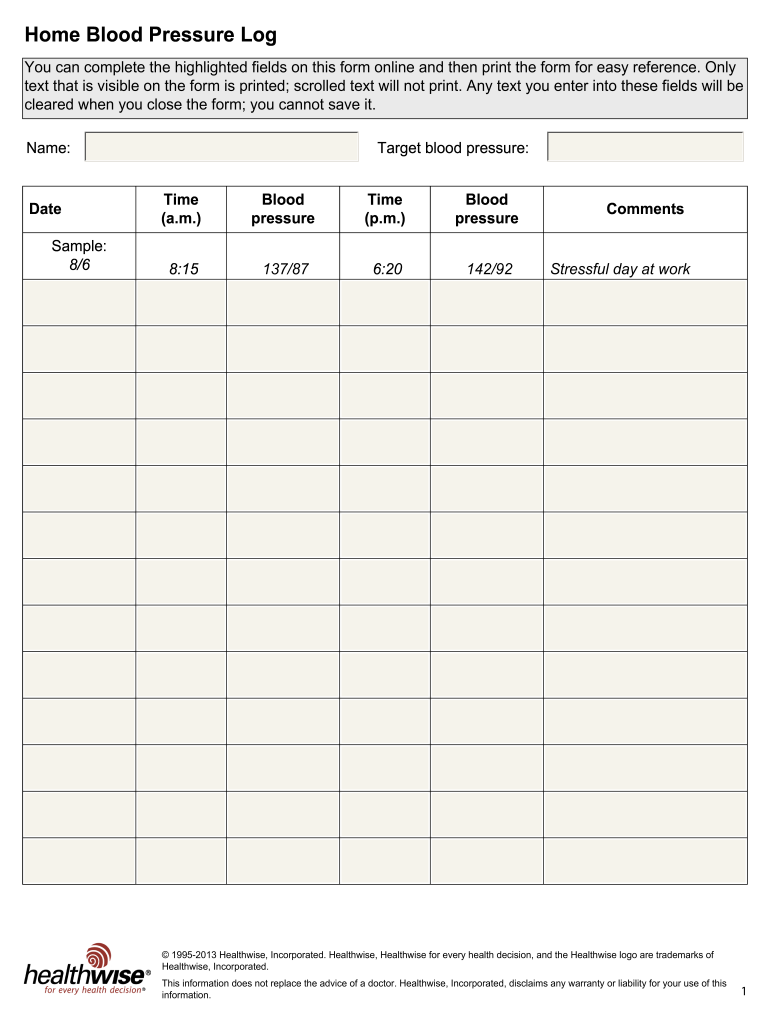







Definition & Purpose of a Blood Pressure Chart Printable
A blood pressure chart printable is a versatile tool designed for individuals to record and track their blood pressure readings over time. This chart typically provides sections for logging systolic and diastolic numbers, the date and time of the reading, and any comments related to the individual's health or activities at the time of measurement. It serves as an essential resource not just for personal health monitoring but also for sharing vital health data with healthcare providers.
- Understanding Blood Pressure Readings: The measurements include two numbers, systolic (the upper number) and diastolic (the lower number). Normal blood pressure usually ranges around 120/80 mmHg. High readings can indicate hypertension, necessitating further medical advice.
- Importance for Health Management: Regularly tracking blood pressure can help individuals recognize trends and changes in their health, making it easier to discuss with healthcare professionals.
How to Use the Blood Pressure Chart Printable
Using a blood pressure chart printable involves several simple steps that help ensure accurate data recording and tracking.
- Download or Print the Chart: Access a detailed, fillable blood pressure chart suitable for your needs. Ensure you have the appropriate format that allows printing and input of your data.
- Gather Necessary Information: Prepare any necessary equipment, such as a blood pressure monitor, and choose a consistent time of day for readings—ideally when you are relaxed.
- Record Your Readings: Each entry should include:
- The systolic and diastolic values.
- The date and time of the measurement.
- Any notes regarding your physical condition, stressful events, or medications taken.
- Review Regularly: Analyze the data at intervals (weekly or monthly) to observe patterns or changes. This information can aid discussions with medical professionals.
How to Obtain the Blood Pressure Chart Printable
Acquiring a blood pressure chart printable is straightforward and often free. Here are several ways to obtain one:
- Online Resources: Many health organizations, such as the American Heart Association, offer free downloadable templates. These can often be filled in digitally or printed for manual entry.
- Healthcare Providers: Physicians or clinics may provide printed versions during checkups or as part of preventative care resources.
- Health Apps: Some digital health applications allow users to generate printable charts after recording their data, combining convenience with functionality.
Key Elements of the Blood Pressure Chart Printable
When utilizing a blood pressure chart, specific components are crucial for effective tracking:
- Header Section: Should contain personal identification fields such as name, age, and contact information for easy reference.
- Reading Columns: Dedicated areas for entering systolic and diastolic numbers, each with rows for multiple entries over time.
- Comments Field: An area for writing notes about how one feels during readings or any relevant circumstances that may affect blood pressure, like medication intake or physical activity.
- Date and Time Log: Essential for tracking trends; every entry needs a timestamp to relate readings to specific moments.
Benefits of Using a Blood Pressure Chart Printable
Employing a blood pressure chart printable provides numerous advantages for individuals monitoring their health:
- Simplicity and Accessibility: Easily printable and straightforward to use; no need for advanced technology.
- Personal Health Management: Empower individuals to take an active role in managing their health by visually tracking their readings over time.
- Facilitates Doctor-Patient Communication: Accurate records help doctors understand a patient’s health trends, leading to better-informed treatment plans.
Maintaining an organized blood pressure log empowers individuals to manage their wellness more effectively, lowering risks associated with hypertension and encouraging proactive health conversations.




