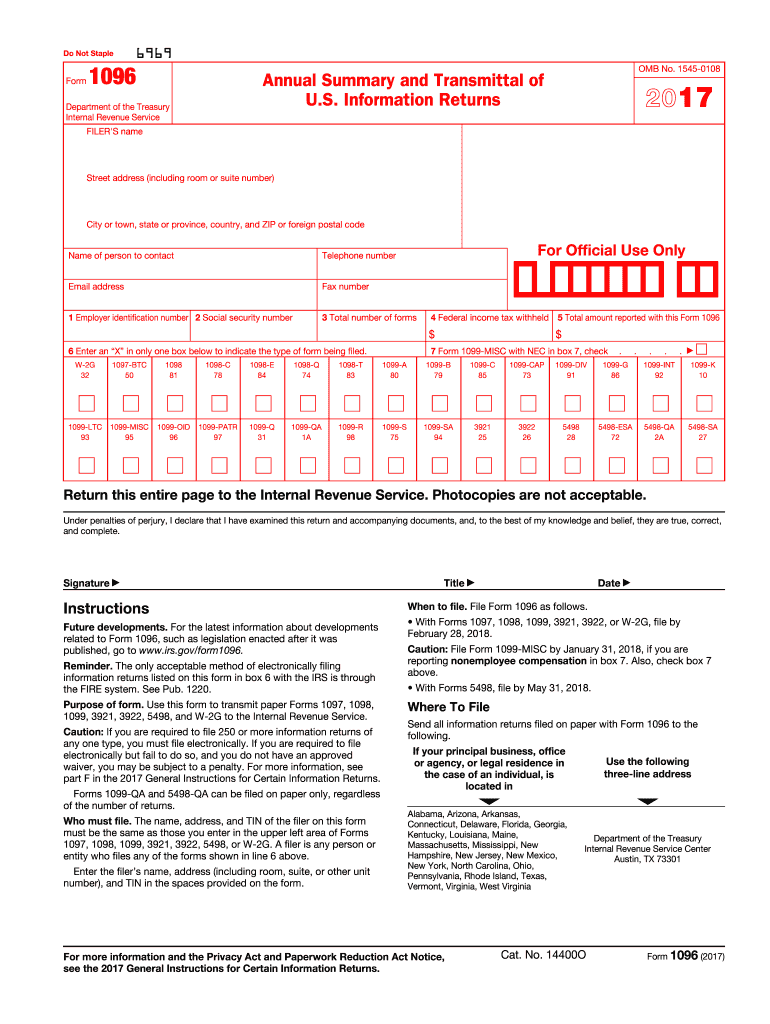







Definition and Purpose of Form 1096
Form 1096, also known as the "Annual Summary and Transmittal of U.S. Information Returns," is an essential document used by businesses to transmit other IRS forms, such as Forms 1099, 1098, 5498, and W-2G. The role of Form 1096 is to provide a summary of these forms when filed on paper with the Internal Revenue Service. Each Form 1096 accompanies a paper filing of corresponding information returns, summarizing the accompanying forms for proper record-keeping by the IRS.
How to Obtain the 1096 Online 2017 Form
While downloading Form 1096 from unofficial sources is discouraged due to non-scannability, businesses can easily order official IRS forms through the IRS website or by contacting the IRS's forms order line. Official copies ensure accurate processing and compliance with IRS standards. Additionally, software platforms like DocHub may offer guidance on where to legally obtain or complete these forms online safely.
Steps to Complete the Form 1096
- Obtain the Form: Ensure you have the legal, scannable form from the IRS.
- Enter Filer Information: Include the filer's name, address, and identification number.
- Identify the Transmitted Forms: Mark the box indicating which form accompanies the 1096 (e.g., 1099-MISC).
- Provide Contact Details: Fill out the contact person’s name, telephone number, email, and fax.
- Summarize the Transmitted Forms: Record the total number of forms submitted with the 1096.
- Submit the Form: Mail the completed Form 1096 and corresponding forms to the appropriate IRS address.
Filing Deadlines and Important Dates
Businesses must submit Form 1096 along with applicable information returns by February 28 if filing on paper. For electronic submissions, the deadline extends to March 31. Timeliness is crucial to avoid potential penalties. Late submission may incur fines calculated per form, emphasizing the importance of meeting deadlines.
Legal Use and Compliance
Form 1096 is legally mandated for businesses to report non-employee compensation and other financial particulars to the IRS accurately. Compliance with IRS guidelines ensures transparency in monetary reporting and prevents legal issues. Adhering to these legal norms demonstrates responsible business practices.
Penalties for Non-Compliance
Failing to file Form 1096 accurately or timely can result in penalties. The IRS imposes fines that vary depending on the lateness and number of forms affected. Ignoring reminders or deliberately avoiding submission can lead to increased scrutiny from the IRS, further complicating compliance and operational transparency.
Software Compatibility
Businesses utilizing tax software such as TurboTax or QuickBooks can facilitate the preparation and submission of Form 1096. These platforms often integrate features to autofill required information and streamline the filing process, reducing the chance of errors. However, it's critical to ensure the software used aligns with IRS requirements for paper filing standards.
Taxpayer Scenarios for Form 1096
This form is commonly used by businesses that made payments to vendors during the tax year. Self-employed individuals and small business owners often file Form 1096 to summarize information returns for service providers. It's a vital document for summarizing any informational reporting necessary for payments not subject to withholding taxes.


Business Types Benefiting from Form 1096
Form 1096 is particularly relevant for corporations, partnerships, and sole proprietorships engaged in transactions requiring 1099 filings. Businesses involved in independent contracting, rental payments, and other forms of non-employee remuneration frequently utilize Form 1096 to ensure regulatory compliance and transparent reporting of payment transactions to the IRS.