







Definition and Meaning of the Auto Accident Checklist PDF
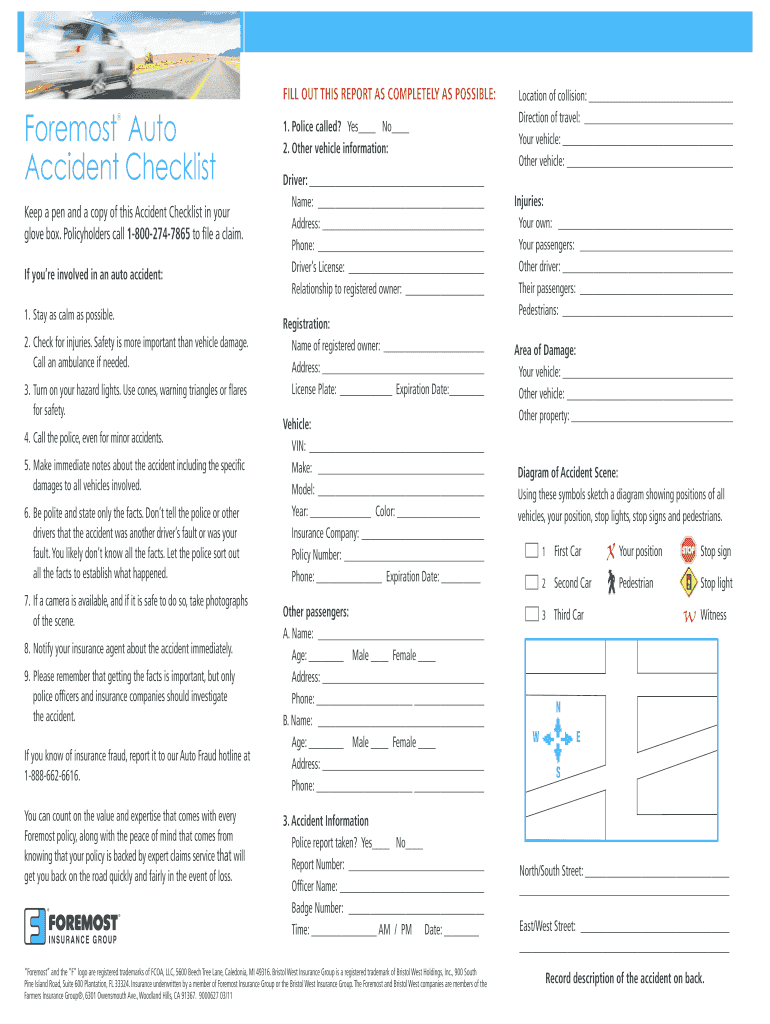
An auto accident checklist PDF is a structured document that provides clear guidelines for individuals involved in a car accident. This resource serves to aid in the critical steps one should follow immediately after an accident, focusing on safety, accurate reporting, and documentation. The checklist typically addresses:
- Ensuring personal safety and the safety of others
- Notifying the authorities
- Collecting necessary documentation and information
- Communicating with insurance providers
By having this checklist readily available, policyholders can systematically navigate the overwhelming circumstances following a vehicle accident, ensuring they do not overlook important actions.
How to Use the Auto Accident Checklist PDF
Utilizing the auto accident checklist PDF effectively requires understanding its layout and instructions. The document breaks down the process into actionable steps that should be followed sequentially:
-
Assess the Situation:
- Check for injuries among all involved individuals.
- Move to a safe location if necessary.
-
Contact Authorities:
- Call 911 to report the accident, especially if there are injuries.
- Request a police report, which will be essential for insurance claims.
-
Document the Accident:
- Take photographs of the scene, vehicle damage, and any relevant road conditions.
- Gather information from the other party, including names, insurance details, and license plate numbers.
-
Notify Your Insurance Provider:
- Contact your agent as soon as possible to report the accident.
- Provide them with the details recorded in your checklist.
-
Fill Out the Checklist:
- Use the checklist to ensure all necessary steps are documented.
- Keep the completed document for future reference.
The PDF format allows for easy printing and digital storage, ensuring you can access and utilize it when needed.
Important Terms Related to the Auto Accident Checklist PDF
Understanding specific terms associated with the auto accident checklist PDF is crucial for effective utilization and compliance. Common terms include:
- Liability: Legal responsibility for the accident, which determines who pays for damages.
- Claim: A request submitted to an insurance company for payment or reimbursement due to losses incurred in the accident.
- Deductible: The amount the insured party must pay out of pocket before insurance coverage kicks in.
- Collision Coverage: An optional insurance policy that pays for damage to a vehicle resulting from a collision, regardless of fault.
Familiarity with these terms can help individuals navigate conversations with law enforcement and insurance companies more effectively.
Steps to Complete the Auto Accident Checklist PDF
Completing the auto accident checklist PDF efficiently involves multiple steps to ensure comprehensive documentation. Below are detailed instructions:
-
Initial Assessment:
- Check for any medical emergencies and assess the condition of all parties involved.
- If safe to do so, move vehicles to avoid further accidents.
-
Documentation Gathering:
- Collect the necessary details:
- Names and contact information of all parties involved
- Insurance information of other drivers
- Witness information, if applicable
- Collect the necessary details:
-
Filling Out the Checklist:
- Categorically fill in each section of the checklist, including:
- Description of the accident
- Road conditions and visibility at the time of the accident
- Diagrams if necessary to illustrate the accident scene
- Categorically fill in each section of the checklist, including:
-
Important Contacts:
- Include contacts for local law enforcement, insurance agents, and any other relevant parties.
-
Keep Copies:
- Make copies of the completed checklist for your records and provide copies to your insurance company if required.
By following these steps, individuals can create a well-documented account of the accident that will assist in insurance claims and potential legal actions.
Legal Use of the Auto Accident Checklist PDF
The auto accident checklist PDF holds significant legal weight as it provides a factual account of the incident. Its role becomes critical in the following scenarios:
- Insurance Claims: Insurers often require accurate details to process claims efficiently. Submitting the checklist can expedite this process.
- Legal Proceedings: In the event of disputes regarding liability, having a well-documented checklist can serve as evidence supporting one's account of the accident.
- Compliance: Many states mandate that drivers collect specific information after an accident. The checklist serves to ensure compliance with these regulations.
By understanding and utilizing the checklist correctly, individuals can reinforce their position whether dealing with insurance companies or navigating legal matters.




