
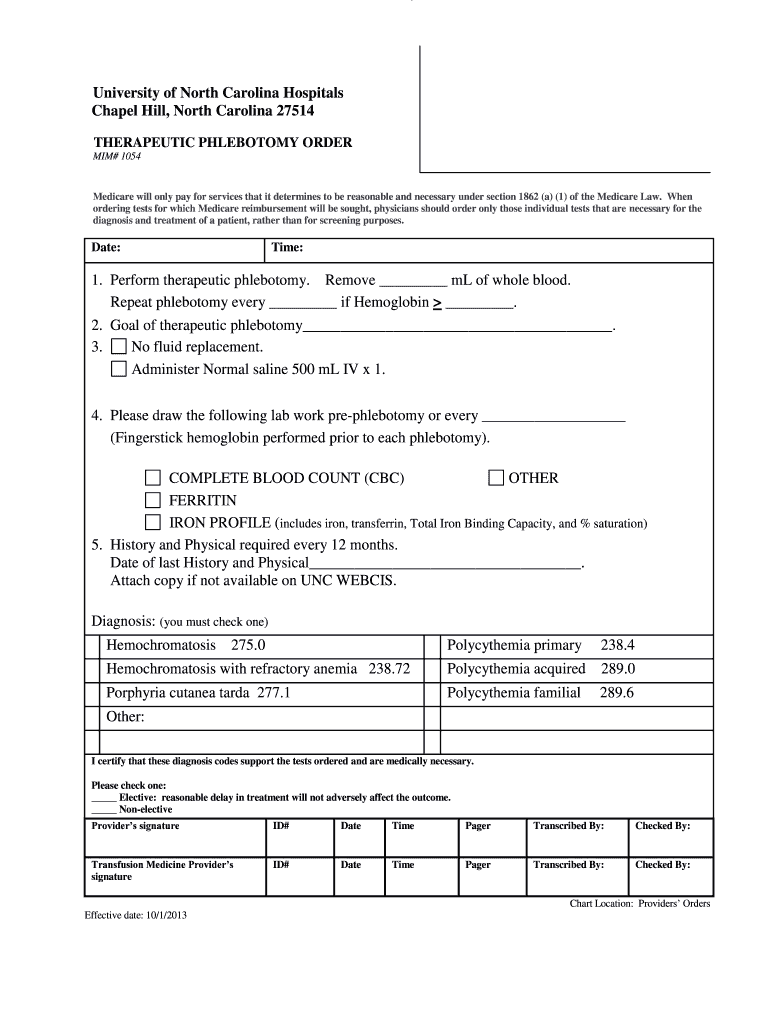







Definition and Meaning of Therapeutic Phlebotomy Form
The therapeutic phlebotomy form is a medical document utilized in clinical environments to facilitate therapeutic phlebotomy procedures, which involve the withdrawal of blood from patients to manage specific health conditions. This form serves multiple purposes, including documenting the rationale for the treatment, detailing patient information, and capturing necessary medical history to ensure compliance with healthcare regulations. Specifically, it is often used for conditions such as hemochromatosis, polycythemia vera, and other disorders that require regular blood removal to maintain optimal health.
The form is crucial for ensuring proper medical record keeping, allowing healthcare providers to track treatments and patients’ responses effectively. The therapeutic phlebotomy order form outlines the specific protocol followed during the procedure, including the frequency of blood draws and the amount of blood to be collected. This communication tool is vital for both medical practitioners and patients, ensuring clarity in treatment plans and adherence to legal requirements.
How to Obtain the Therapeutic Phlebotomy Form
To obtain a therapeutic phlebotomy form, patients should typically follow these steps:
-
Consult with a Healthcare Provider: A doctor or a licensed healthcare provider must evaluate the need for therapeutic phlebotomy. Upon identifying the need, they will provide the necessary orders and documentation.
-
Healthcare Facility: Many hospitals and clinics provide templates or standardized forms that can be filled out during the outpatient scheduling process. Patients can request the form directly at these facilities.
-
Online Resources: Some organizations, such as hospital systems or health networks like the Red Cross, might offer downloadable versions of the phlebotomy form on their official websites. Patients should ensure they are accessing official resources to guarantee form authenticity.
-
Prescription and Documentation: Patients may need to get a prescription or official documentation from their healthcare provider to accompany the form when submitting for treatment authorization, especially for insurance purposes.
-
Contacting Administrative Departments: In some cases, patients can contact the administrative departments of their healthcare providers or local blood donation facilities for assistance in obtaining the appropriate form.
Important Considerations When Obtaining the Form
- Insurance Approval: Ensure to inquire whether insurance approval is necessary before proceeding with therapeutic phlebotomy to pre-empt billing issues.
- State Regulations: Since regulations may vary by state, patients should confirm any specific state requirements related to therapeutic phlebotomy documentation.
Steps to Complete the Therapeutic Phlebotomy Form
Filling out the therapeutic phlebotomy form requires careful attention to detail. Below are the typical steps to complete the form accurately:
-
Patient Information Section:
- Enter the patient's full name, date of birth, and contact information.
- Provide relevant medical identification numbers, if applicable.
-
Medical Necessity:
- Clearly state the diagnosis or condition necessitating therapeutic phlebotomy, such as hemochromatosis or polycythemia vera.
- Include any relevant historical details that may support the necessity of the procedure, such as previous treatments or complications associated with the condition.
-
Procedure Specifications:
- Indicate the frequency of blood draws (e.g., weekly, biweekly) and the expected volume of blood to be removed during each session.
- Document any other relevant procedures or tests that should accompany therapeutic phlebotomy.
-
Consent Section:
- Patients or guardians must sign a consent statement acknowledging understanding of the procedure and risks involved.
- Include emergency contact information in case of adverse reactions during the procedure.
-
Healthcare Provider Review:
- The healthcare provider must review and sign the form, confirming that the indicated procedure aligns with the medical treatment plan.
After Completing the Form
- Ensure the form is dated and stored securely in the patient's medical record.
- Keep copies for personal health records and insurance claims if needed.
Key Elements of the Therapeutic Phlebotomy Form
The therapeutic phlebotomy form consists of several essential elements that contribute to its efficacy and legal compliance:
-
Patient Identification: This section includes detailed information about the patient, such as full name, date of birth, address, and insurance details.
-
Clinical History: Documenting prior medical history and any previous treatments helps prioritize patient safety.
-
Indication for Procedure: Clearly stating the medical necessity for therapeutic phlebotomy ensures appropriate actions are taken.
-
Procedure Details:
- Frequency and volume of blood withdrawal.
- Specific laboratory tests required before or after the procedure.
-
Consent and Acknowledgment: Patient consent is crucial, especially to comply with legal standards and foster trust between provider and patient.
-
Provider Authentication: The signature of the healthcare provider affirms the legitimacy and medical necessity of the procedure.
Who Typically Uses the Therapeutic Phlebotomy Form
Various professionals in the healthcare sector utilize the therapeutic phlebotomy form, including:
-
Hematologists: Specialists who often manage conditions treated with therapeutic phlebotomy, such as hemochromatosis.
-
Oncologists: Physicians treating patients with blood disorders that may require regular phlebotomy.
-
Primary Care Physicians: General healthcare providers assessing and managing patients with conditions requiring blood removal.
-
Nurses and Phlebotomists: Personnel who directly carry out the therapeutic phlebotomy procedures, relying on the form for procedural guidance and documentation.
Additionally, administrative staff in hospitals or clinics handle these forms for billing and insurance purposes, ensuring that all necessary documentation is in place for reimbursement.


Legal Use of the Therapeutic Phlebotomy Form
The legal framework surrounding the use of the therapeutic phlebotomy form is multifaceted, highlighting the importance of compliance in healthcare:
-
Health Insurance Portability and Accountability Act (HIPAA): The form must adhere to privacy laws established by HIPAA, ensuring patient information is securely handled and disclosed only with patient consent.
-
Medicare Compliance: For patients receiving treatment under Medicare, the therapeutic phlebotomy form must meet specific documentation criteria to align with reimbursement policies.
-
State Regulations: Healthcare providers must understand local state laws regarding therapeutic phlebotomy practices, as regulations may warrant additional documentation or specific protocols to follow.
Maintaining accurate and compliant documentation not only protects patients but also safeguards healthcare providers against legal implications related to procedural errors or negligence.




