
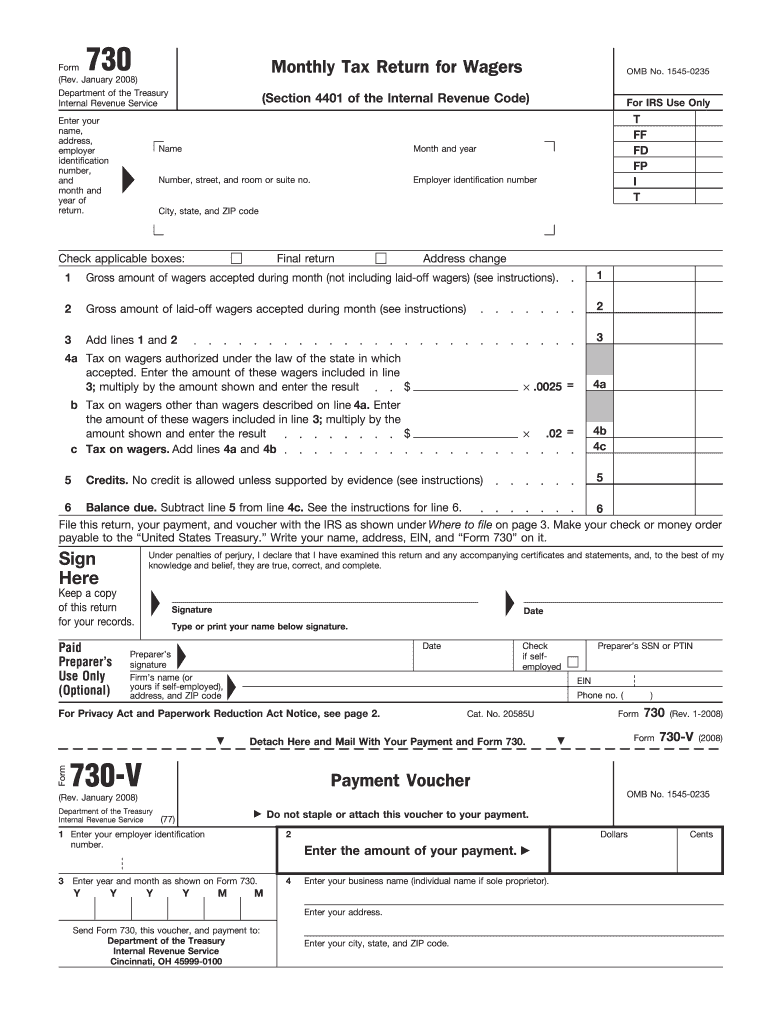







Definition & Purpose of Form 730
The Form 730, also known as the Monthly Tax Return for Wagers, is an essential document issued by the Internal Revenue Service (IRS) under Section 4401 of the Internal Revenue Code. Its primary purpose is for businesses involved in accepting wagers to report their gross wagering activities and calculate the associated federal excise taxes. Wagering businesses include those engaged in activities such as lotteries, horse racing, sports betting, and other gambling operations. Understanding its significance helps ensure compliance with federal tax obligations and avoid potential penalties.
How to Obtain the Form 730
Obtaining the Form 730 is a straightforward process. Businesses can download the form directly from the IRS website, which provides the most current and official version. It is also available through tax software packages and financial management tools, such as TurboTax and QuickBooks. For those preferring physical copies, local IRS offices or approved tax preparers can provide the paper version. Ensuring access to the correct form version is crucial to accurately reporting wagers and complying with tax regulations.
Steps to Complete the Form 730
Filling out the Form 730 involves several detailed steps. Begin by entering identification information, such as the business name, address, and Employer Identification Number (EIN). Proceed to Part I, where gross wagers are reported. Calculate the tax by applying the applicable rate to the reported wagers. In Part II, account for any adjustments, exemptions, or credits. This section is critical for those eligible for tax reductions. Once completed, review all entries for accuracy before finalizing the document. Attach any required supporting documentation, like financial records or additional IRS forms.
- Collect Business Information: Ensure the business name, address, and EIN are correct.
- Report Gross Wagers: Enter the total amount of wagers accepted during the filing period.
- Calculate the Tax: Apply the appropriate tax rate to the reported wagering amounts.
- Adjustments: Include any credits, exemptions, or deductions applicable.
- Review: Double-check all entries for accuracy.
- Submission: Attach additional documentation, if needed.
IRS Guidelines for Form 730
The IRS provides explicit guidelines for completing Form 730 to ensure compliance and accuracy. These guidelines cover the taxation of different types of wagering activities, criteria for exemptions, and details on allowable deductions. IRS instructions clarify when and how to file the form, including deadlines that must be adhered to for timely submission. Non-compliance or inaccuracies can result in audits or financial penalties, making adherence to IRS guidelines essential for business operators.
Filing Deadlines & Important Dates
Filing Form 730 must adhere to specific deadlines to avoid penalties. Generally, the form is due on the last day of the month following the month in which wagers were accepted. Businesses must mark their calendars accordingly, as missing these deadlines can incur interest charges, late filing fees, and additional scrutiny from tax authorities. Maintaining an organized schedule and utilizing reminder tools can aid in meeting these critical dates without error.
Required Documents for Form 730 Submission
Supporting documents play a crucial role when filing Form 730. Accurate reporting requires keeping records of all wagering transactions, including detailed logs of accepted wagers and payouts. Tax credits or deductions require substantiation through bank statements, invoices, or compliance certificates. Businesses should maintain these records for at least four years to resolve any future discrepancies or audits efficiently. Proper documentation offers a clear audit trail and supports claims made on the tax return.
Legal Use of Form 730
The legal use of Form 730 involves strict adherence to federal laws governing wagering activities. All wagering establishments, including private clubs, casinos, and online bet-taking platforms within the United States, must file this form to comply with Section 4401. Non-compliance or fraudulent activities associated with inaccurate reporting can lead to legal action, including substantial fines and criminal prosecution. Familiarity with federal regulations enables businesses to operate within legal boundaries and establish credibility with regulatory bodies.
Penalties for Non-Compliance
Failure to file Form 730 or incorrect entries can result in significant penalties. The IRS imposes fines for late filings, underreporting of wagers, or failing to report altogether. Interest accrues on unpaid taxes, increasing the financial burden over time. Severe cases of non-compliance might invite audits or legal proceedings, affecting business operations. Proactively managing tax obligations and seeking professional consultation when facing complex filing requirements can mitigate these risks effectively.




