





Definition and Meaning of a Security Guard Report Sample
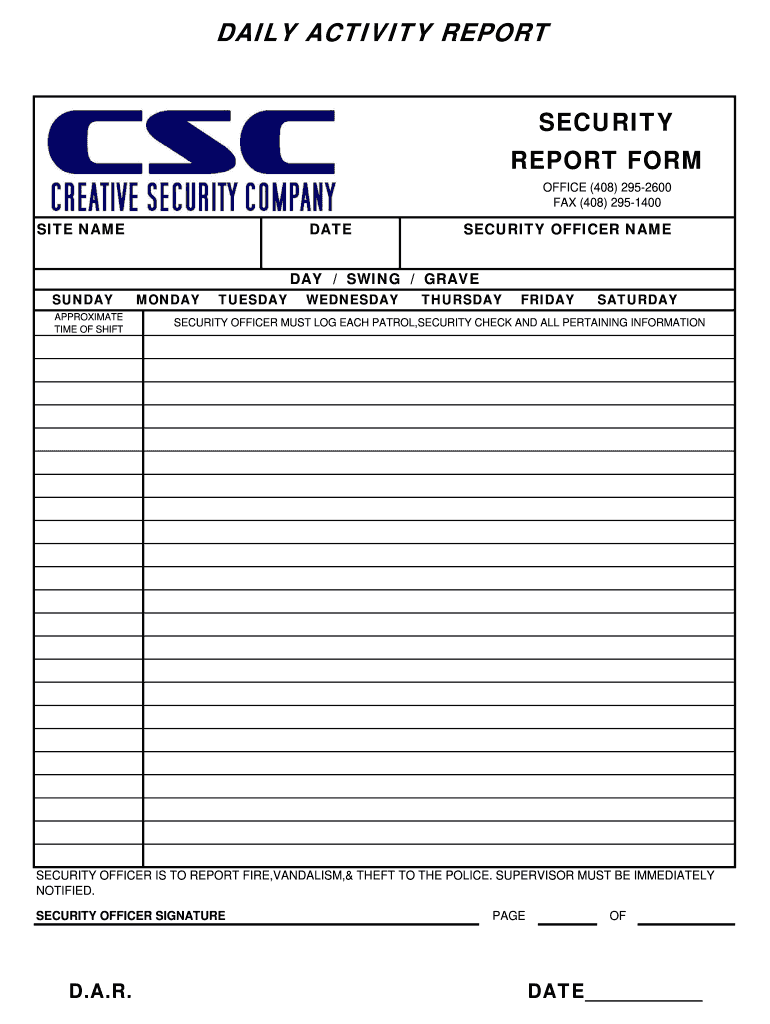
A security guard report sample is a structured document that serves to record various activities and incidents during a security guard's shift. Its purpose is to ensure proper documentation of events that occur within a specific timeframe, which may include patrols, security checks, and the reporting of any incidents such as theft, vandalism, or disturbances. This document acts as a vital tool in maintaining accountability and provides a historical record that can be referenced if necessary.
The report typically includes key information such as the officer's name, the time and date of the report, specific locations patrolled, and a detailed log of activities undertaken during the shift. By compiling this data, security personnel can communicate effectively with management, supply law enforcement with necessary information when required, and ensure compliance with organizational policies and legal requirements.
How to Use the Security Guard Report Sample
Utilizing a security guard report sample begins with understanding its structure and purpose. The report should be tailored to suit the specific needs of the security atmosphere in which it is being utilized. Security personnel can start by filling out fundamental details like:
- Officer Information: Name, badge number, and the shift timing.
- Date and Time: Start and end of the shift, accurately recorded to establish a timeline.
Once the basic information is populated, the officer should log events chronologically. This can include:
- Daily Activities: Patrols, checks of facilities, and rounds taken.
- Incidents: Description of any occurrences, actions taken, and resolutions.
Furthermore, it is important to use clear and precise language when documenting incidents to avoid ambiguities that could lead to misunderstandings or disputes later on.
Steps to Complete the Security Guard Report Sample
Completing a security guard report requires a systematic approach to ensure comprehensive documentation. Here are sequential steps that security personnel may follow:
-
Prepare the Report Format: Choose either a physical format or a digital template. Ensure this integrates necessary fields for information completion.
-
Fill in Officer Details: At the top of the report, place the officer’s name, identification number, and relevant shift information to identify accountability.
-
Document Date and Time: Clearly state the date and the start and end times for the shift to provide context.
-
Record Patrol Details: Notate specific areas checked, with timestamps for when the officer was in those zones. This establishes an operational history.
-
Log Incidents: For any reported incidents, detail the nature of the issue, involved individuals, witnesses, and immediate action taken.
-
Submit for Review: After completing the report, it should be reviewed by a supervisor for accuracy and completeness before being filed.
Important Terms Related to Security Guard Reports
Familiarization with key terms related to security guard reports is essential for effective communication and documentation. Commonly used terms include:
- Incident Report: A specific log detailing an unexpected event, often requiring follow-up.
- Daily Activity Log: A summary of all activities the security guard engaged in during a shift.
- Patrol Log: A record of specific areas patrolled by the guard, including times and observations noted.
- Witness Statement: A record of information provided by individuals who can corroborate details regarding an incident.
Understanding these terms enhances the effectiveness and professionalism of the report, ensuring clear communication with law enforcement or corporate security departments.
Legal Use of Security Guard Reports
The legal implications of security guard reports are significant, as they can be used as evidence in investigations or court cases. To ensure compliance with legal standards:
-
Accuracy: The report must be factual and free from overly subjective opinions. It is crucial for maintaining credibility in legal scenarios.
-
Timeliness: Reports should be filed promptly after the incident to maintain the integrity of the information.
-
Retention: Many organizations have specific timeframes for how long these reports should be kept, often dictated by organizational policy or state regulations.
Utilizing these guidelines can ensure that security guard reports remain legally valid and useful in any investigative context.
Key Elements of a Security Guard Report Sample
A comprehensive security guard report incorporates several critical elements to ensure clarity and completeness:
- Header Information: Officer details and reporting date/time.
- Incident Overview: A clear title or statement summarizing the incident.
- Detailed Accounts: Log of activities and observations, including any notable conditions at the site.
- Conclusions/Recommendations: Space for the officer to provide observations or suggestions based on their experience during the shift.
- Signatures: Room for the officer's and supervising personnel's signatures to verify and authenticate the report.
By including these components, security personnel enhance the reliability and usefulness of their reports for audits, investigations, and operational reviews.
Examples of Using the Security Guard Report Sample
The application of a security guard report sample can vary significantly based on context. Here are a few scenarios that illustrate different use cases:
-
Incident Handling: If a theft occurred, the report should detail the time, location, descriptions of individuals involved, and actions taken by the guard, such as notifying police and collecting witness statements.
-
Routine Patrols: A daily activity log may document patrol routes taken, noting any unusual findings or incidents such as malfunctioning security equipment.
-
Reporting Safety Concerns: If a potentially hazardous situation was identified, the officer can record the details, allowing management to address these issues promptly and prevent future incidents.
By utilizing these examples, security officials can reinforce the importance of accurate and detailed reporting in maintaining security and safety across various environments.