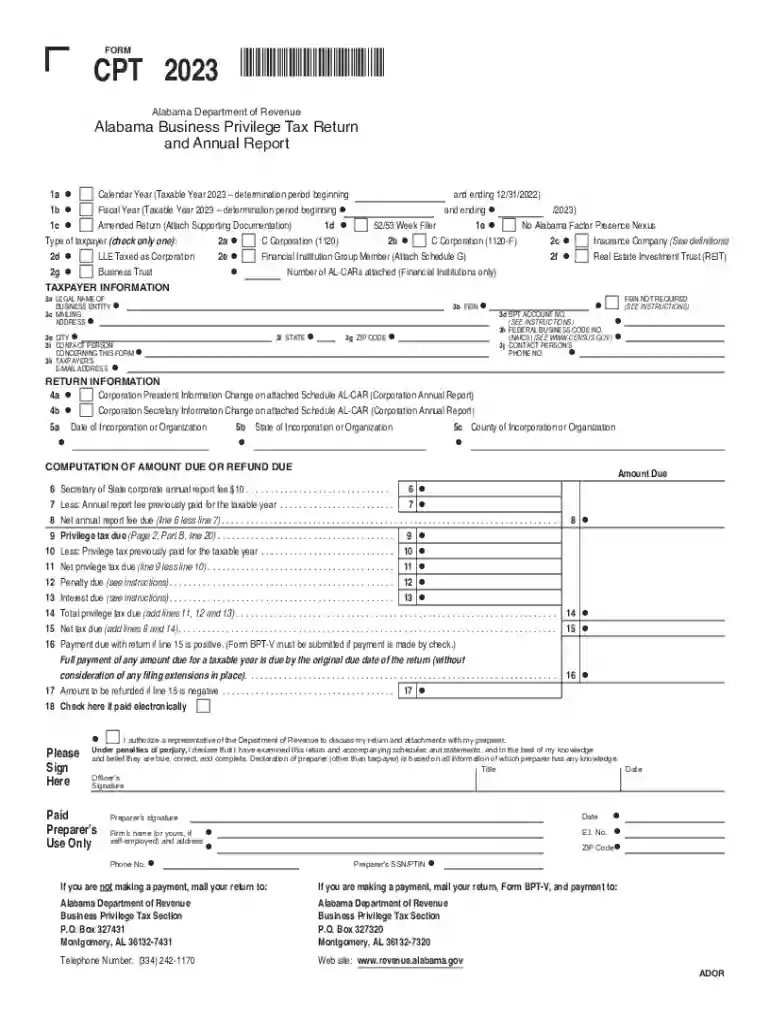
1a Calendar Year (Taxable Year 2023 determination period beginning-2026

Get Form
1a Calendar Year (Taxable Year 2023 determination period beginning Preview on Page 1

Here's how it works

01. Edit your form online
Type text, add images, blackout confidential details, add comments, highlights and more.

02. Sign it in a few clicks
Draw your signature, type it, upload its image, or use your mobile device as a signature pad.

03. Share your form with others
Send it via email, link, or fax. You can also download it, export it or print it out.

How to use or fill out 1a Calendar Year (Taxable Year 2023 determination period beginning

Form edit decoration
9.5
Ease of Setup
DocHub User Ratings on G2
9.0
Ease of Use
DocHub User Ratings on G2
  1. Click ‘Get Form’ to open it in the editor.
  2. Begin by selecting '1a Calendar Year' for the taxable year 2023. This section establishes your reporting period, which runs from January 1, 2023, to December 31, 2023.
  3. In the 'Type of taxpayer' section, check only one box that accurately describes your business entity type, such as C Corporation or Insurance Company.
  4. Fill in the Taxpayer Information fields including your legal name, mailing address, FEIN, and contact details. Ensure all information is accurate to avoid processing delays.
  5. Proceed to the Return Information section. If there are any changes regarding corporate officers, indicate them here and provide necessary details.
  6. Complete the Computation of Amount Due or Refund Due section by entering amounts as instructed. Be sure to calculate any fees and taxes owed accurately.
  7. Finally, review all entries for accuracy before signing and submitting your form electronically through our platform for a seamless experience.

Start using our platform today to fill out your forms online for free!

See more 1a Calendar Year (Taxable Year 2023 determination period beginning versions

We've got more versions of the 1a Calendar Year (Taxable Year 2023 determination period beginning form. Select the right 1a Calendar Year (Taxable Year 2023 determination period beginning version from the list and start editing it straight away!
Versions Form popularity Fillable & printable
2023 4.6 Satisfied (52 Votes)
2022 4.8 Satisfied (92 Votes)
2005 4.2 Satisfied (66 Votes)
be ready to get more

Complete this form in 5 minutes or less

Get form

Got questions?

We have answers to the most popular questions from our customers. If you can't find an answer to your question, please contact us.
Contact us
Calendar Tax Year: This is a period of 12 consecutive months beginning January 1 and ending December 31; or. Fiscal Tax Year: This is a period of 12 consecutive months ending on the last day of any month except December.
January 1, 2023 - December 31, 2023. They are for the tax return that you will file in early 2024.
A tax year is an annual accounting period for keeping records and reporting income and expenses. An annual accounting period does not include a short tax year. The tax years you can use are: Calendar year 12 consecutive months beginning January 1 and ending December 31.
Income Tax year (tax year) A tax year is a period starting on 6 April in one year and ending on 5 April in the following year. For example, the 2023 to 2024 tax year starts on 6 April 2023 and ends on 5 April 2024.
The tax years you can use are: Calendar year 12 consecutive months beginning January 1 and ending December 31. Fiscal year 12 consecutive months ending on the last day of any month except December.

Security and compliance

At DocHub, your data security is our priority. We follow HIPAA, SOC2, GDPR, and other standards, so you can work on your documents with confidence.

Learn more
ccpa2
pci-dss
gdpr-compliance
hipaa
soc-compliance

People also ask

Why does the tax year start on 6 April? ICAEW.

Related links