
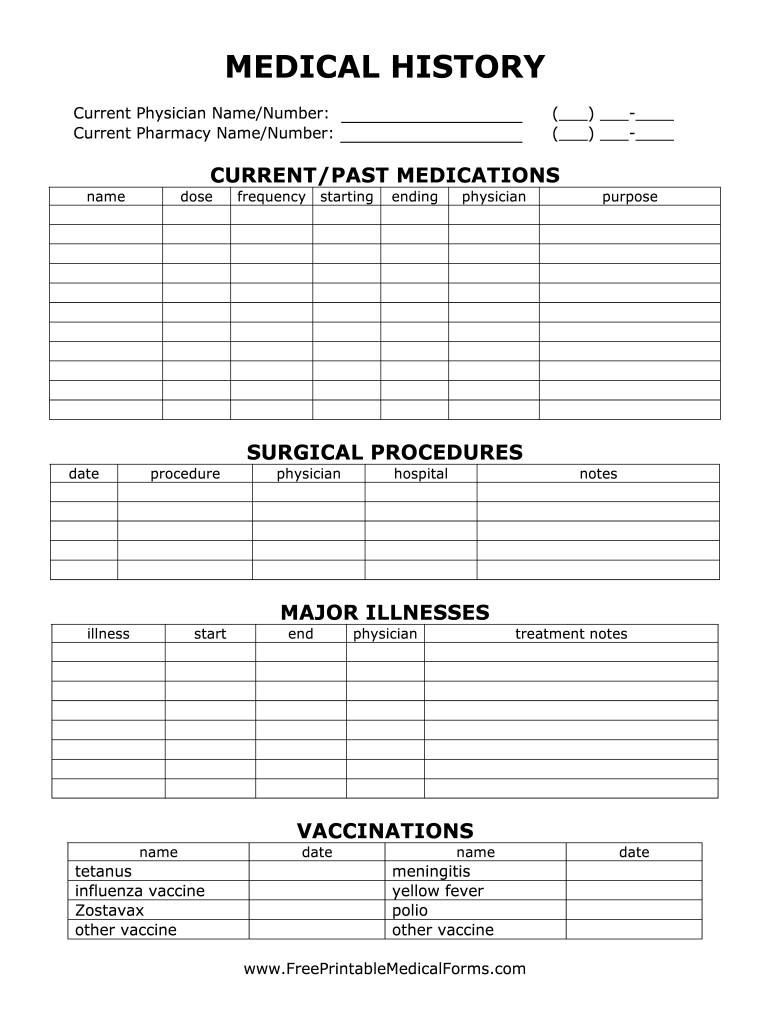







Definition and Importance of a Family Medical History Template
A family medical history template serves as a structured document that collects essential health information about an individual's family members. This template is crucial in understanding hereditary health risks, enabling healthcare providers to deliver personalized medical advice and interventions. It typically includes sections for recording immediate family health issues, chronic conditions, and genetic disorders that may affect future generations.
Many medical professionals recommend using this template during routine health assessments. By compiling a family medical history, patients can provide valuable insights that may inform preventive care strategies or specific screenings. For example, a family history of heart disease can lead to more aggressive monitoring for cardiovascular conditions. Furthermore, this template may aid in identifying patterns of illness that could suggest a genetic predisposition, making it a critical tool in both clinical and research settings.
Steps to Complete the Family Medical History Template
Completing a family medical history template involves several key steps that ensure thoroughness and accuracy.
-
Gather Relevant Information: Begin by collating details about immediate family members, including parents, siblings, and children. Then, expand to include grandparents, aunts, uncles, and cousins where applicable.
-
Document Health Conditions: For each family member, list any known medical conditions, such as diabetes, heart disease, cancer, or mental health issues. It is essential to note the age of onset, severity, and any treatments received.
-
Include Lifestyle Factors: Record lifestyle information such as smoking, alcohol use, and exercise habits. These factors can significantly influence health outcomes and provide context for inherited conditions.
-
Review and Update Regularly: Family medical history is not static. Regular updates are necessary to reflect new diagnoses, changes in family health status, or the addition of new family members.
By following these steps, individuals can create a comprehensive family medical history that serves as a valuable resource for their healthcare providers.
Important Sections of a Family Medical History Template
A well-structured family medical history template typically includes several key sections:
-
Personal Information: This area captures the individual's details, such as name, date of birth, and contact information.
-
Family Member Details: A systematic listing of family members, starting with immediate relatives and extending to extended family, with columns for relationship, age, medical conditions, and status (living or deceased).
-
Genetic Conditions: A section dedicated to recording any known hereditary diseases, along with associated family members diagnosed with such conditions.
-
Lifestyle and Environmental Risks: Areas to note factors such as smoking history, diet, and exposure to environmental toxins that might affect family health.
By including these sections, users ensure they cover the breadth of information relevant to understanding family health dynamics.
Digital Tools for Managing Family Medical History Templates
Several digital tools and software options facilitate the management of family medical history templates, streamlining the process of gathering and updating information. For instance, platforms like DocHub enable users to create fillable forms that can be easily shared among family members. Features include:
-
Cloud Storage Integration: Import and save documents from various cloud services, ensuring easy access and backups of health records.
-
Collaborative Editing: Multiple users can edit the document, allowing for family members to contribute their health information efficiently.
-
Security Features: Protection through encryption and password options ensures that personal health data remains confidential.
These digital tools enhance the usability of family medical history templates, making it simpler to keep records current and accessible.
Benefits of a Family Medical History Template
Using a family medical history template offers numerous benefits:
-
Enhanced Preventive Care: Knowledge of hereditary conditions allows for tailored preventive measures and screenings, improving early detection chances.
-
Improved Communication with Healthcare Providers: Presenting a comprehensive family medical history enables healthcare providers to make informed choices about treatment and care plans.
-
Increased Family Awareness: Sharing this information within families raises awareness of potential health risks, encouraging healthier lifestyle choices among relatives.
-
Support in Genetic Counseling: For families with known genetic disorders, these templates can assist genetic counselors in determining risks and options for family planning.
Overall, the use of a family medical history template promotes a proactive approach to health management, benefiting both individuals and families alike.




