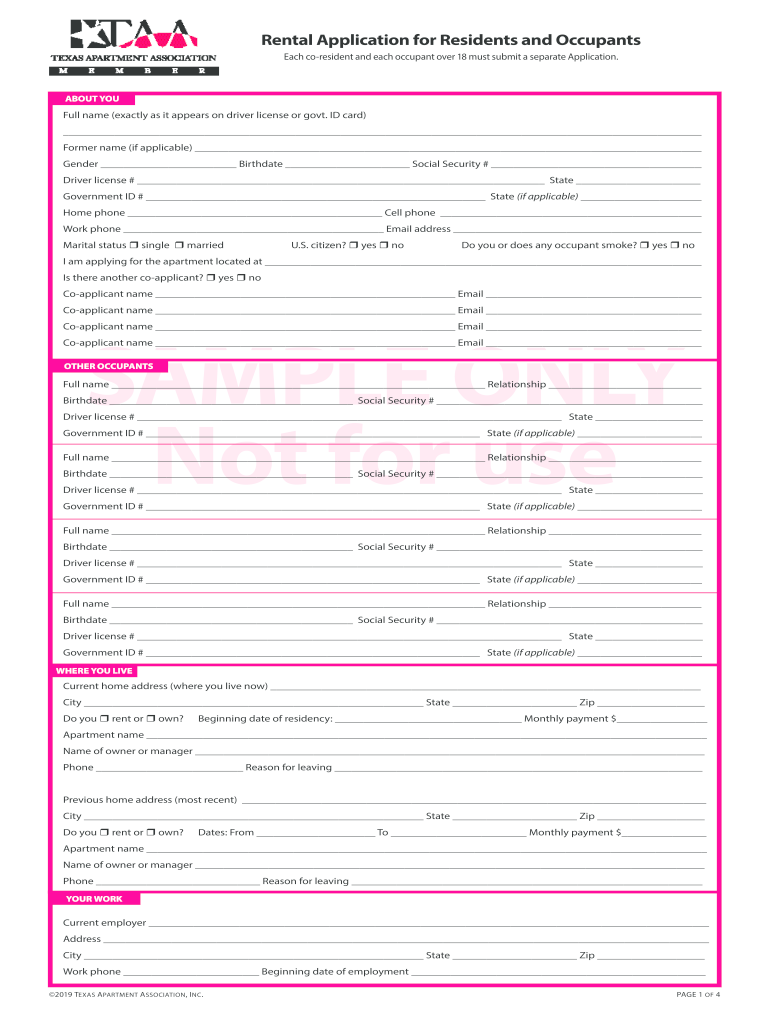
Beginning date of residency: Monthly payment $ 2026

Get Form
d1 d2 form Preview on Page 1

Here's how it works

01. Edit your d1 d2 form online
Type text, add images, blackout confidential details, add comments, highlights and more.
02. Sign it in a few clicks
Draw your signature, type it, upload its image, or use your mobile device as a signature pad.
03. Share your form with others
Send it via email, link, or fax. You can also download it, export it or print it out.

How to use or fill out Beginning date of residency: Monthly payment $ with our platform

Form edit decoration
9.5
Ease of Setup
DocHub User Ratings on G2
9.0
Ease of Use
DocHub User Ratings on G2
  1. Click ‘Get Form’ to open it in the editor.
  2. Locate the section labeled 'Beginning date of residency:' and enter the date you plan to start your residency. Ensure the format is consistent with any specified guidelines.
  3. Next, find the 'Monthly payment $' field. Input the amount you will be paying monthly for your residence. Double-check for accuracy to avoid any discrepancies.
  4. Review all entered information for completeness and correctness before proceeding. Utilize our platform's features to save your progress or make edits as needed.

Start filling out your application today for free and experience seamless document management!

See more Beginning date of residency: Monthly payment $ versions

We've got more versions of the Beginning date of residency: Monthly payment $ form. Select the right Beginning date of residency: Monthly payment $ version from the list and start editing it straight away!
Versions Form popularity Fillable & printable
2019 4.2 Satisfied (21 Votes)
2017 4.4 Satisfied (51 Votes)
be ready to get more

Complete this form in 5 minutes or less

Get form

Got questions?

We have answers to the most popular questions from our customers. If you can't find an answer to your question, please contact us.
Contact us
No, medical students do not get paid during medical school. Students must pay to study and graduate from medical school just like any other university program. However, residents who have graduated from medical school and practice medicine alongside a senior physician in a residency (GME) program are paid.
Residency starts on July 1st. Between Match Day and starting residency, most students take this opportunity to travel or spend time with loved ones because residency is going to be a rough ride.
Traditionally, medical residency start July 1, but the first year residents who up a few weeks earlier and may undergo orientation prior to starting work.
Your first year of residency will be filled with opportunities to learn and refine the technical skills youll need to become a proficient physician. These include performing diagnostic tests, interpreting lab results, and carrying out medical procedures.
First-year residents are known as PGY-1 (postgraduate year one) or interns, because the first year of residency is considered an internship. Interns become residents in the second year of their residency as they focus more on their field of specialty.

Security and compliance

At DocHub, your data security is our priority. We follow HIPAA, SOC2, GDPR, and other standards, so you can work on your documents with confidence.

Learn more
ccpa2
pci-dss
gdpr-compliance
hipaa
soc-compliance
be ready to get more

Complete this form in 5 minutes or less

Get form

People also ask

In keeping with ACGME standards, each resident has one day free of patient related activities per week (on average). An average week on Medical Service is approximately 65-70 hours of patient care. An average week on ICU is approximately 70-75 hours of patient care.
Residency interviews usually occur October through January of your fourth year, with December and January being the busiest interview months. It is important to note that each specialty, and the residency programs within them, may have their own process and associated timelines.
Residency as an opportunity for advanced training in a medical or surgical specialty evolved in the late 19th century from brief and informal programs for extra training in a special area of interest.

Related links