Vet bill template 2026

Get Form
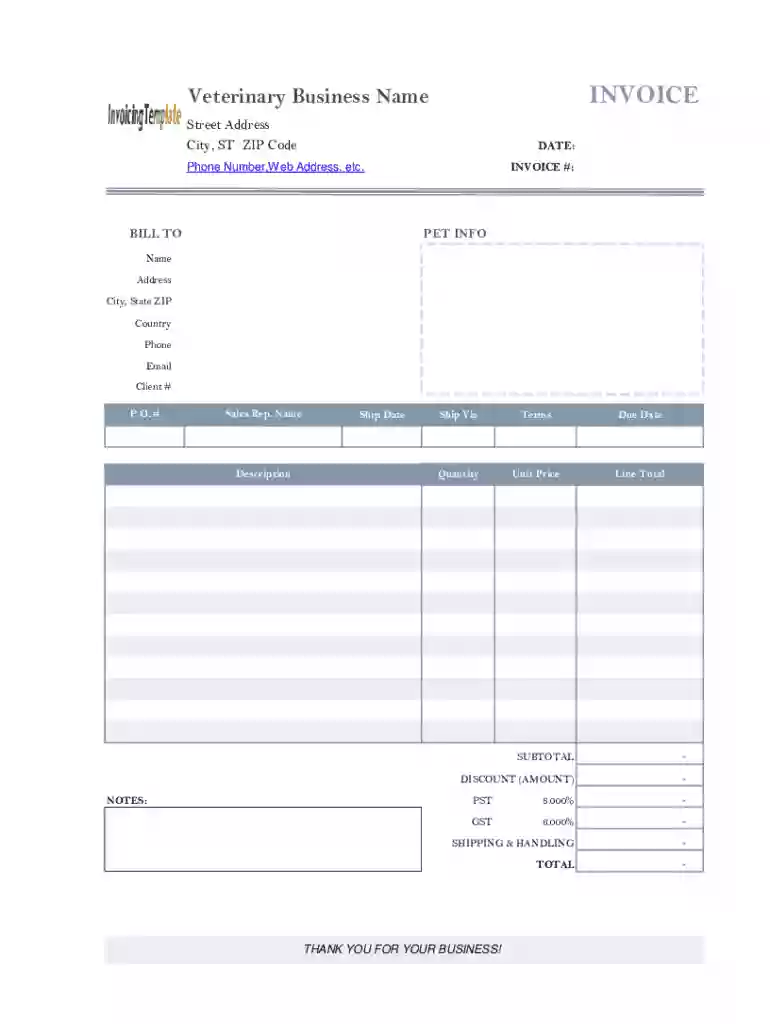
veterinary invoice template Preview on Page 1

Here's how it works

01. Edit your veterinary invoice template online
Type text, add images, blackout confidential details, add comments, highlights and more.

02. Sign it in a few clicks
Draw your signature, type it, upload its image, or use your mobile device as a signature pad.

03. Share your form with others
Send vet invoice generator via email, link, or fax. You can also download it, export it or print it out.

Definition and Importance of a Vet Bill Template

A vet bill template serves as a structured document designed for veterinary services, enabling pet owners and veterinary professionals to communicate billing details effectively. This type of template typically includes essential information such as services provided, itemized costs, payment methods, and client information. Understanding the definition and importance of a vet bill template is crucial for ensuring transparency in veterinary care.

  • Purpose: The primary purpose of a vet bill template is to formalize the billing process between the veterinary clinic and pet owners.
  • Transparency: It provides clarity by outlining all services and their associated costs which can build trust between the veterinarian and their clients.
  • Record Keeping: Maintaining a vet bill is essential for both the vet and the client for future reference, potential insurance claims, and tax purposes.

The use of a vet bill template is prevalent in various scenarios, including routine check-ups, emergency care, and specialty treatments, highlighting its versatility within veterinary practices.

How to Use the Vet Bill Template Effectively

Utilizing a vet bill template efficiently is key to ensuring that the billing process runs smoothly and accurately.

  • Step 1: Download & Customize: Start by downloading a suitable vet bill template. Many templates come in formats compatible with various software, including PDF and DOC. Customize the template to include your clinic's logo and contact details.
  • Step 2: Itemize Services: Clearly list each service rendered, such as vaccinations, check-ups, or surgeries. Include descriptions and corresponding fees for each service to avoid confusion.
  • Step 3: Final Review: Before presenting the bill to a client, review the document for accuracy. Ensure all charges are correct and that the arithmetic totals are precise.
  • Step 4: Provide Payment Options: Clearly indicate acceptable payment methods, whether it be cash, card, or insurance options.

By following these steps, veterinary practices can ensure their billing process is efficient and professional.

Key Elements of a Vet Bill Template

A well-structured vet bill template includes several critical components that enhance its effectiveness and clarity.

  • Clinic Information: Name, address, phone number, and email of the veterinary practice should be prominently displayed.
  • Client Information: Details such as the pet owner's name, address, and contact information should be included.
  • Pet Information: This section may contain the pet’s name, species, breed, age, and medical history relevant to the visits.
  • Services Rendered: A detailed list of services provided along with itemized costs. This may also include the date of service to maintain a comprehensive history.
  • Payment Instructions: Include a section for payment methods, deadlines, and any notes regarding insurance claims.

Incorporating these elements ensures that the vet bill template serves its intended purpose efficiently.

Steps to Complete the Vet Bill Template

Completing a vet bill template can be straightforward when following structured steps.

  1. Open the Template: Access the vet bill template and make necessary adjustments to cater to your specific practice.
  2. Fill Out Clinic and Client Information: Enter your clinic’s details at the top and the client’s information directly beneath it.
  3. Input Services and Fees: For each service rendered, add a description along with the fee. Ensure that the total amount reflects an accurate sum of the services provided, including any taxes if applicable.
  4. Add a Payment Section: Include information on how payment can be made, specifying the due date if necessary.
  5. Review and Save: Once all sections are filled, double-check for accuracy and save the document in the desired format for distribution.

Following these steps ensures that the vet bill template is completed accurately, fostering professionalism and clarity.

Examples of Using the Vet Bill Template

In practice, there are various scenarios where a vet bill template can be effectively implemented.

  • Routine Check-Ups: For standard visits, a vet bill can outline examination fees, vaccinations, and routine treatments.
  • Emergency Services: In critical cases, the vet bill template can be adapted to reflect higher service charges, urgent care fees, and any necessary follow-up visits.
  • Specialized Treatments: Veterinary practices providing surgical or specialized services can utilize the template to itemize costs associated with procedures, anesthesia, and aftercare.
  • Insurance Claims: Using a comprehensive vet bill template can help pet owners submit documentation for reimbursement from insurance companies, as most require an itemized statement of fees.

These examples illustrate the versatility of a vet bill template across various types of veterinary services.

Legal Use of the Vet Bill Template

Understanding the legal implications of using a vet bill template is crucial for veterinary professionals.

  • Legal Documentation: A vet bill serves as a legal document that records services provided, thus can be used as evidence in disputes or for clarifying responsibilities in case of non-payment.
  • Insurance Requirements: Many pet insurance policies require a detailed invoice for claims. A vet bill template fulfills this requirement when properly detailed.
  • Compliance with Regulations: Practitioners must ensure that their billing practices comply with local laws regarding transparency and billing practices. Using a standardized template can aid in maintaining compliance.

By keeping these legal aspects in mind, veterinary professionals can minimize risks associated with billing and ensure adherence to regulations.

be ready to get more

Complete this form in 5 minutes or less

Get form

Got questions?

We have answers to the most popular questions from our customers. If you can't find an answer to your question, please contact us.
Contact us
A best-practice veterinary note template Patient Owner Information: [Details] Visit Reason: [Brief description] Medical History: [Summary] Clinical Examination: [Findings] Diagnosis: [If Applicable] Treatment Plan: [Details] Owner Communication: [Summary] Follow-Up: [Instructions]
In some cases, the vet will be able to claim the money direct from the insurer, so you only have to pay out your excess. This is called a direct claim. In other cases, you may have to pay your vet the balance of your pets treatment and then claim the money back from your pet insurance provider.
Unfortunately, deducting medical expenses for pets is not allowed as a medical expense on your tax return. The only exception would be if your pet is a certified service animal, like a guide dog.
If you can establish that you have an animal that is providing some type of service for your business and you are self-employed, you will be able to write off expenses related to the animal, such as food, special training, and veterinary care, as business expenses.
National vet visit cost by state StateAverage cost of a vet visit California $89 Colorado $72 Connecticut $82 Delaware $8347 more rows

People also ask

You can indeed deduct pet expenses on your taxes, provided they meet specific criteria. Here are the costs you might be able to write off: Veterinary bills. Medical treatments.
If you find yourself in a situation where you cant pay your balance in full, you have alternative financing avenues to explore, including a vet surgery payment plan or an emergency vet payment plan.
You can deduct these expenses whether you take the standard deduction or itemize: Alimony payments. Business use of your car. Business use of your home. Money you put in an IRA. Money you put in health savings accounts. Penalties on early withdrawals from savings. Student loan interest. Teacher expenses.

vet bill template