




Here's how it works
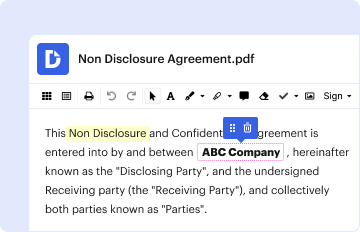
01. Edit your clear communication index online
Type text, add images, blackout confidential details, add comments, highlights and more.
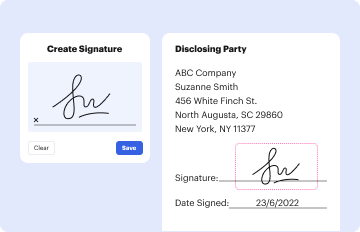
02. Sign it in a few clicks
Draw your signature, type it, upload its image, or use your mobile device as a signature pad.

03. Share your form with others
Send clear communication index score sheet via email, link, or fax. You can also download it, export it or print it out.
How to use or fill out the CDC Clear Communication Index with our platform

- Click ‘Get Form’ to open the CDC Clear Communication Index in the editor.
- Begin by entering the name of the material and your name as the scorer, along with the date. This information is crucial for tracking and reference.
- Identify your primary audience. Use Appendix B from the User Guide for common public health audiences to ensure accuracy.
- Assess your audience's health literacy skills. List relevant characteristics, including familiarity with terms and concepts, to tailor your communication effectively.
- Define your primary communication objective clearly. What do you want your audience to think, feel, or do after engaging with your material?
- Craft a concise main message statement that encapsulates what you want your audience to remember. Ensure it is clear and memorable.
- Proceed through each section of the score sheet, answering questions based on the criteria provided in the User Guide. Score each item accurately.
Start using our platform today for free to enhance your document editing experience!
Fill out cdc clear communication index online
It's free
It's free
See more cdc clear communication index versions
We've got more versions of the cdc clear communication index form. Select the right cdc clear communication index version from the list and start editing it straight away!
| Versions | Form popularity | Fillable & printable |
|---|---|---|
| 2014 | 4.8 Satisfied (125 Votes) |
Got questions?
We have answers to the most popular questions from our customers. If you can't find an answer to your question, please contact us.
Contact us
What is the CDC Clear communication Index?
The CDC Clear Communication Index (Index) is a research-based tool to help you develop and assess public communication materials. The Index has 4 introductory questions and 20 scored items drawn from scientific literature in communication and related disciplines.
What are the three elements of the basic communication model?
The basic elements of communication include the sender, receiver, and message, as well as the medium and potential feedback.
What are the 3 basic models of communication explain each models?
Linear transmission models understand communication as a one-way process in which a sender transmits an idea to a receiver. Interaction models include a feedback loop through which the receiver responds after getting the message. Transaction models see sending and responding as simultaneous activities.
What are the CDC principles of communication?
In practice: Take small steps with your audience. Use enabling language that promotes choices. Set the context. Explain how health disparities and inequities happen before mentioning which people and communities are most affected. Help the audience draw new conclusions.
What is an index in communication?
The Index is designed to help you communicate clearly with your intended audience(s). You can use the Index in several ways: To inform the design and development of a new communication product. To assess the clarity of a communication product prior to public release.
Security and compliance
At DocHub, your data security is our priority. We follow HIPAA, SOC2, GDPR, and other standards, so you can work on your documents with confidence.
Learn more


People also ask
What are three elements of the basic communication model CDC?
Subject:General Management Sender: This is the individual or group who initiates the communication. The sender has a message that they want to communicate to others. Message: This is the information or ideas that the sender wants to convey. Receiver: This is the individual or group for whom the message is intended.
What are the three 3 elements of the semantic triangle model of communication?
Key Takeaways. The triangle of meaning is a model of communication that indicates the relationship among a thought, symbol, and referent, and highlights the indirect relationship between the symbol and the referent.
What are the three basic components of communication?
Communication Involves Three Components: Verbal Messages - the words we choose. Paraverbal Messages - how we say the words. Nonverbal Messages - our body language.