






Understanding the Ohio Sales Tax Exemption Form
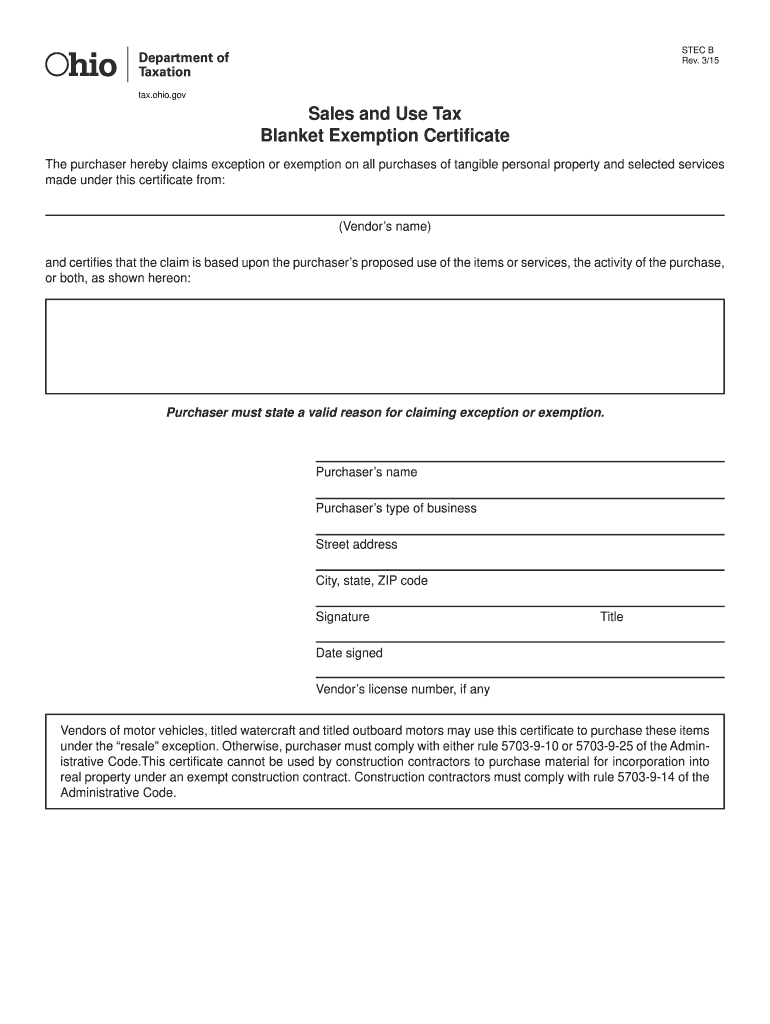
The Ohio sales tax exemption form, particularly the STEC B form, is essential for businesses seeking to avoid sales tax on qualifying purchases. This form allows purchasers to claim an exemption for tangible personal property and selected services, thus optimizing their tax liabilities. Here is a detailed examination of the necessary components and processes involved with the form.
Key Components of the Ohio Sales Tax Exemption Form
The Ohio sales tax exemption form requires specific details and pieces of information to be filled out accurately. The following elements are essential:
- Purchaser Information: When filing for exemption, the form requires the purchaser's name, business type, and address. This information is vital for the state department to recognize and validate the exempt status of the entity.
- Reason for Exemption: An explicit reason must be indicated on the form for claiming the sales tax exemption. Common valid exemptions include resale of tangible goods or services considered tax-exempt under specific statutes. It is essential to substantiate this reason with the appropriate legal references.
Filling Out the Ohio Sales Tax Exemption Form
Completing the Ohio sales tax exemption form involves several systematic steps to ensure it meets all legal standards:
- Obtain the Correct Form: The official version of the STEC B can be found on the Ohio Department of Taxation website. It is recommended to use the latest revision to avoid compliance issues.
- Accurate Completion: Fill in all mandatory fields; incomplete forms can lead to delays or rejections. Ensure to specify the type of exemption clearly.
- Signature Requirement: The form must be signed and dated by the authorized individual of the business entity to authenticate the information provided.
These steps ensure the form accurately reflects the intention of the purchaser and complies with state regulations.
Examples of Valid Exemptions
Various scenarios qualify for sales tax exemption in Ohio. Here are some pertinent examples:
- Resale Transactions: Businesses purchasing inventory that will be resold to consumers can utilize the sales tax exemption form to avoid tax charges on these purchases.
- Non-Profit Organizations: Certain non-profit organizations may also qualify for exemption when buying goods or services directly related to their exempt purposes.
Each scenario requires appropriate documentation and adherence to specific criteria as detailed in state regulations.
Legal Considerations for Using the Sales Tax Exemption Form
Understanding the legal implications of using the Ohio sales tax exemption form is crucial:
- Compliance with State Laws: Misusing the exemption form can lead to penalties, including interest on unpaid sales tax and potential legal ramifications. It is essential to ensure that purchases made under the exemption genuinely qualify.
- Audit Risk: Using the exemption form involves a higher level of scrutiny from the Ohio Department of Taxation. Businesses should maintain clear records and justification for each exemption claimed.
Steps to Obtain the Ohio Sales Tax Exemption Certificate
To obtain a sales tax exemption certificate in Ohio, follow these steps:
- Register Your Business: Ensure that your business is properly registered with the Ohio Secretary of State and the local tax authorities.
- Complete the Application: Fill out the STEC B form accurately, including all required information.
- Submit the Form: Send the completed form to the vendor or supplier from whom you wish to purchase tax-exempt goods. Retain a copy for your business records.
These steps are vital in establishing a legitimate basis for exempt purchases.
Understanding Variants and Other Related Forms
There are other related forms pertinent to sales tax exemptions in Ohio. For instance, the STEC U form is used for unusual transactions such as sample sales or specific exemptions for certain items. Familiarity with different forms is important for ensuring compliance with various types of transactions and exemptions.
Common Mistakes Made When Completing the Ohio Sales Tax Exemption Form
Awareness of common errors can help avoid delays or denials in sales tax exemption claims:
- Incomplete Information: Failing to fill out all required fields can result in rejection. Each part of the form must be completed according to the instructions provided.
- Incorrect Reasons for Exemption: Misclassifying a transaction or providing an ineligible reason for exemption can lead to penalties. Research and confirm the legality of each exemption claimed.
Resources for Further Information
For more details regarding the Ohio sales tax exemption form and its use, business owners can visit the Ohio Department of Taxation’s website. Here they can access the most current forms, guidelines, and frequently asked questions, ensuring they have the resources needed to manage their tax obligations responsibly.