





Understanding the Bank Information Document
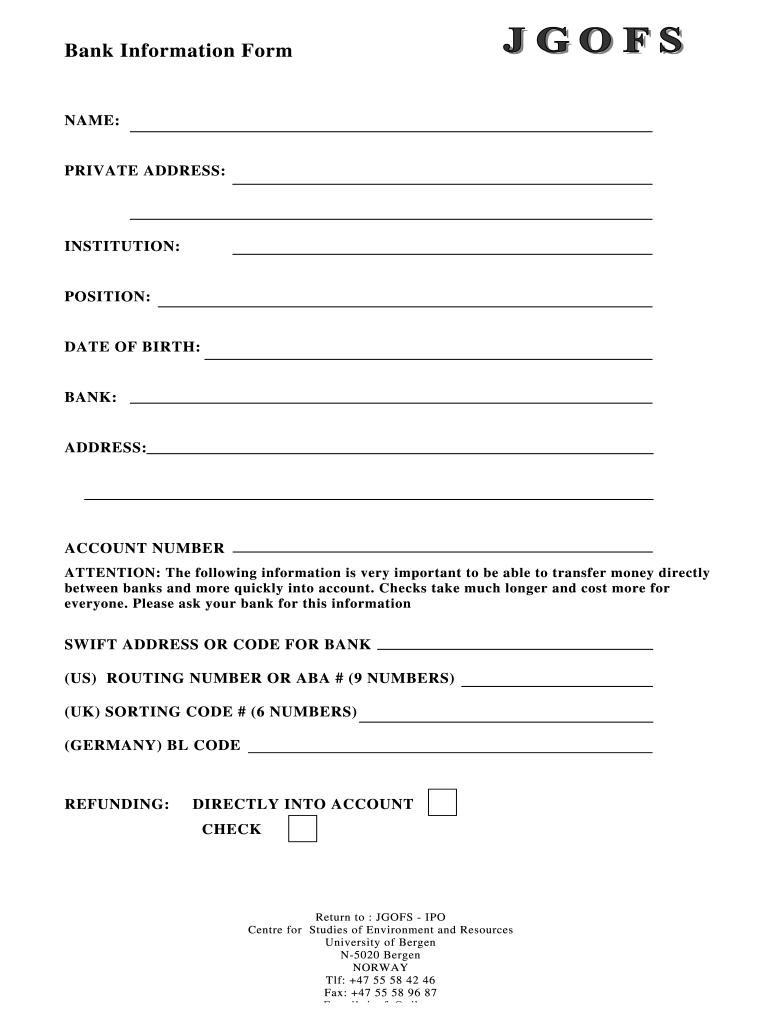
The bank information document is essential for collecting crucial details regarding an individual or an entity's banking information. This structured document typically contains fields that facilitate the secure processing of transactions, account verification, and fund transfers between institutions. Key components often found within this document include:
- Personal Information: Collects full name, address, and contact details of the individual or entity filling out the form.
- Bank Account Details: Requires the account number, bank name, branch details, and routing number to enable accurate and efficient transaction processing.
- Transaction Preferences: Offers options specifying the method for refunding or receiving funds, such as direct deposit into a bank account or a check mailed to the address provided.
Providing accurate banking information is critical. An incomplete or inaccurate bank information document can lead to payment delays or failed transactions, causing financial strain and complications in business operations.
Key Elements of the Bank Information Document
The bank information document includes several key elements that are necessary for completing the form accurately. Each of these elements serves a specific purpose in ensuring that the institution processing the request has all the pertinent information needed. Standard elements include:
- Name and Address: Full legal name of the account holder and the complete address where the account is held. This information verifies the identity of the account holder.
- Bank Information: Details about the financial institution such as the bank's name, mailing address, and contact number. This helps the processing entity to communicate with the bank if necessary.
- Account Type: Identifies whether the account is a checking, savings, or commercial account. This classification helps clarify the nature of the funds, which is especially relevant for organizations handling various transaction types.
These elements contribute to financial institution compliance measures and verify the legitimacy of account holders, safeguarding against fraud.
Steps to Complete the Bank Information Document
Completing a bank information document requires attention to detail and accuracy to avoid potential errors. The following steps outline the process for filling out the form correctly:
- Gather Required Information: Collect all necessary data about the individual or entity, including names, addresses, and banking details.
- Fill Out Personal Information: Clearly print or type the name, address, and contact details of the individual or entity that owns the account.
- Input Bank Details: Provide the bank name, branch location, routing number, and the account number. Ensure each digit is entered correctly to facilitate smooth transactions.
- Specify Preferences: Indicate whether the funds should be directly deposited or if a check should be issued. If opting for direct deposit, confirm that the account type aligns with this preference.
- Review for Accuracy: Double-check all entries for accuracy and completeness before submitting the form. Mistakes in account numbers or routing numbers can lead to transaction errors.
Taking the time to follow these steps diligently will help ensure that banking transactions are processed smoothly and efficiently.
Common Use Cases for the Bank Information Document
The bank information document is widely used in various scenarios, making it a versatile tool in both personal and professional contexts. Some common applications include:
- Direct Deposit Setup: Often used by employers to facilitate the deposit of salaries directly into employee bank accounts, eliminating the need for physical checks.
- Loan Applications: Financial institutions require this document when processing personal or business loan applications to confirm the applicant's banking details and ensure funds are deposited correctly.
- Refund Requests: Individuals or businesses may submit this document when requesting refunds from service providers, ensuring that repayment is delivered via the designated bank account.
These use cases illustrate the crucial role the bank information document plays in financial transactions, promoting efficiency and accuracy across various sectors.
Security Features of the Bank Information Document
Security is paramount when handling sensitive banking information. The bank information document includes several features designed to protect the individuals involved:
- Confidentiality: The document should clearly state that all information will remain confidential and used solely for its intended purpose.
- Encryption Best Practices: When sharing digital copies, it is vital to use secure platforms that support data encryption to prevent unauthorized access.
- Limited Access: Only authorized personnel should be allowed to access the bank information document to mitigate risks of fraud or identity theft.
Understanding these security measures helps reassures individuals that their sensitive data is being handled responsibly.
Legal Compliance and Regulatory Considerations
The bank information document must comply with various legal and regulatory frameworks to ensure it meets industry standards. Important aspects to consider include:
- Data Privacy Laws: Familiarity with laws such as the Gramm-Leach-Bliley Act, which governs the privacy of consumer financial information, ensures that personal data is handled in compliance with legal standards.
- Record Keeping Regulations: Financial entities must maintain accurate records of submitted bank information documents to support anti-fraud measures and provide documentation during audits.
- Consumer Protection Policies: Adherence to regulations that protect consumers from unauthorized use of banking information ensures trust and security in financial transactions.
Compliance with these regulations not only protects consumers but also bolsters an institution's reputation and operational integrity.
Tips for Creating an Effective Bank Information Document Template
For businesses and organizations needing to regularly collect banking information, creating a standardized template for the bank information document can streamline the process. Key tips for developing an effective template include:
- User-Friendly Design: Ensure the template is clear and easy to navigate. Use bullet points and sections to guide users through filling in their information without confusion.
- Incorporate Mandatory Fields: Clearly designate which fields are mandatory to prevent incomplete submissions.
- Testing and Feedback: Share the template with a small group of users before full implementation. Gather feedback to identify areas for improvement and ensure clarity.
Creating an effective template enhances efficiency in collecting bank information while minimizing errors, ultimately leading to smoother transaction processing.




