
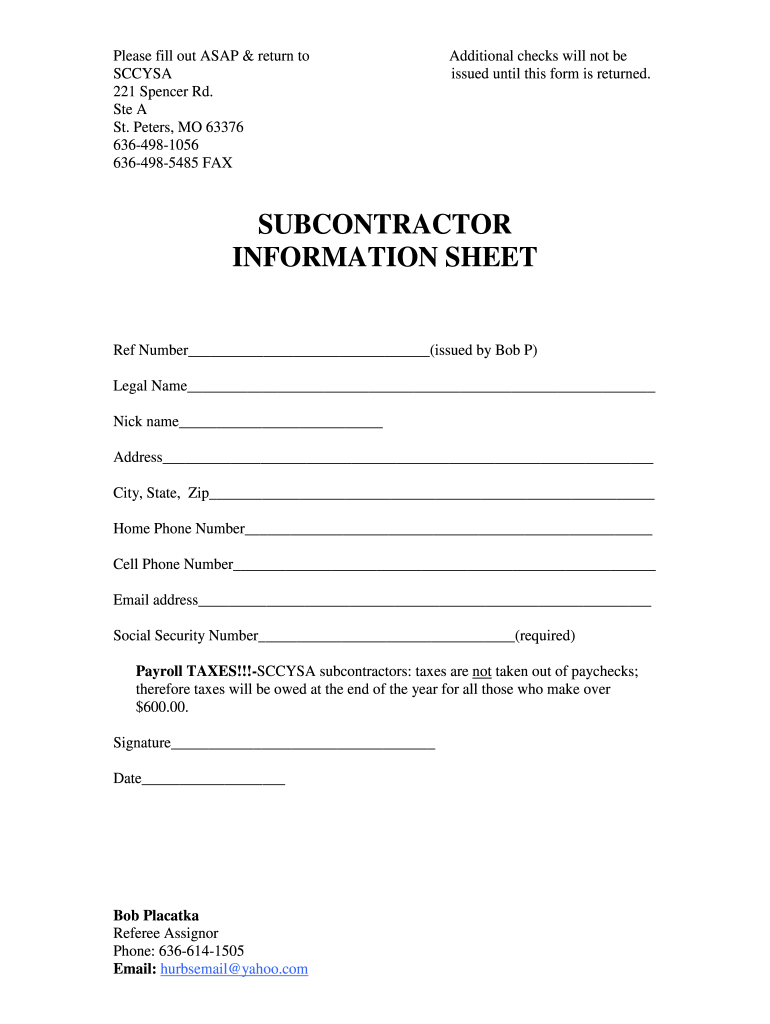







Definition and Importance of the Subcontractor Information Sheet
A subcontractor information sheet is a critical document that collects essential details about subcontractors engaged by a primary contractor. This form typically includes personal identification information, tax identification numbers, and contact details that are crucial for administrative and tax purposes.
The significance of accurately completing this sheet lies in its role in ensuring compliance with tax regulations. Specifically, it assists in determining whether taxes need to be withheld and provides necessary information for reporting to the IRS. For subcontractors, this information sheet serves as an opportunity to ensure that their payment details are correctly recorded, reducing the risk of errors in payments and tax reporting.
- Core Components:
- Legal name of the subcontractor
- Business address
- Contact information
- Social Security Number (SSN) or Employer Identification Number (EIN)
- Tax classification
How to Use the Subcontractor Information Sheet
Using the subcontractor information sheet is straightforward, but requires careful attention to detail. Follow these steps to utilize the form effectively:
- Download the Template: Obtain the latest version of the subcontractor information sheet from a trusted source or the project contractor.
- Fill in Personal Information: Enter your legal name, business address, and applicable contact information.
- Provide Tax Information: Include your Social Security Number or Employer Identification Number to facilitate tax reporting.
- Review and Verify: Double-check all entries for accuracy. Mistakes can lead to payment delays or issues with tax filings.
- Submit the Form: Return the completed document to the relevant contracting authority via the agreed submission method.
This systematic approach ensures that all required information is collected efficiently, prioritizing clarity and accuracy to avoid potential compliance issues.
Steps to Complete the Subcontractor Information Sheet
Completing the subcontractor information sheet involves several important steps. Each section of the form should be filled out with precision to meet legal requirements and facilitate accurate record-keeping.
1. Collect Required Information
Gather all necessary personal and business details before starting:
- Legal name as it appears on official documents
- Business address and any P.O. Box information
- Contact phone number and email address
- Social Security Number or Employer Identification Number
2. Complete Each Section of the Form
Follow this outline to accurately fill out the form:
- Header Information: Start by writing your name and contact details.
- Tax Identification: Indicate whether you are an individual, LLC, or corporation by selecting the appropriate box provided.
- Certification Box: Sign and date the certification verifying the information’s accuracy.
3. Finalize the Form
- Review: Ensure all sections are filled without omissions.
- Consult Reference Material: Use any provided guidelines or instructions to verify compliance.
4. Submit to Appropriate Parties
Submit the completed subcontractor information sheet to the primary contractor or designated authority according to organizational procedures.
Legal Use of the Subcontractor Information Sheet
The subcontractor information sheet is not just a procedural requirement; it holds legal significance. Its contents must comply with the IRS guidelines and state laws to avoid penalties associated with improper reporting.
- IRS Compliance: It is essential for tracking subcontractor payments and ensuring reporting matches what is filed with the IRS. Failing to maintain accurate forms can lead to tax-related complications for both the contractor and subcontractor.
- State Regulations: Some states may have specific requirements regarding subcontractor documentation, adding layers of obligation and potential legal consequences if overlooked.
Key Elements of the Subcontractor Information Sheet
Understanding the essential components of the subcontractor information sheet helps in recognizing its purpose and ensures completeness.
1. Identification Details
- Full legal name
- Business name if applicable
- Current physical address
- Contact information including phone numbers and email
2. Tax Information
- Social Security Number (for individuals) or Employer Identification Number (for businesses)
- Tax classification type, ensuring correct classification to prevent issues with tax filings
3. Authorization and Acknowledgment
Every subcontractor should affirm the accuracy of the information provided, understanding that any false statements can lead to legal repercussions. This section often requires a signature and date.
Important Terms Related to the Subcontractor Information Sheet
Being familiar with the terminologies in the subcontractor information sheet is vital for correct usage. Key terms include:
- Subcontractor: An individual or business that performs a part of the work under a contract.
- Tax Identification Number: A unique identifier assigned by the IRS, necessary for tax purposes.
- Independent Contractor: A person who provides services to another entity under terms specified in a contract.
Understanding these terms enhances the completion of the subcontractor information sheet and ensures compliance with relevant laws and regulations.




