Definition and Purpose of the Quest Requisition Form
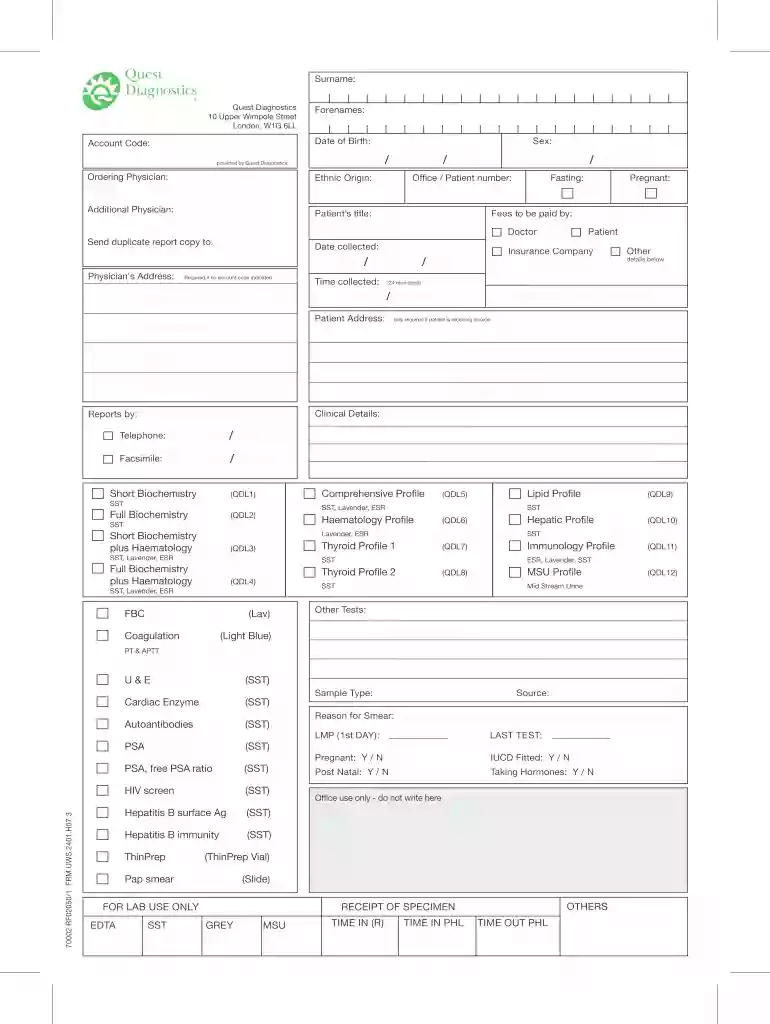
The Quest requisition form is an essential document used to request laboratory tests from Quest Diagnostics, a prominent provider of diagnostic information services. This form serves as a means for healthcare providers to communicate patient details, test requests, and necessary medical information to the laboratory. It ensures that all relevant data is presented clearly and efficiently, enabling the laboratory to process tests accurately and swiftly.
Key Components of the Quest Requisition Form
- Patient Information: This includes the patient’s full name, date of birth, and contact information.
- Insurance Details: Insurers, policy numbers, and authorization may be required for billing purposes.
- Test Requests: Specific laboratory tests being requested, such as blood tests or urinalysis.
- Physician Information: The ordering physician’s contact details and signature.
Steps to Complete the Quest Requisition Form
Filling out the Quest requisition form accurately is crucial for effective processing. To ensure thoroughness, follow these steps:
- Gather Patient Information: Collect personal data such as name, birth date, and insurance details.
- Select Appropriate Tests: Clearly indicate which tests are needed by either checking boxes or writing in the test names.
- Provide Physician Information: Fill in the ordering physician's name, signature, and contact information.
- Review for Accuracy: Check all entries for correctness; any errors can lead to processing delays.
- Submit the Form: Send electronically or print and deliver by mail or in person, as per practice protocols.
Common Mistakes to Avoid
- Forgetting to sign the form.
- Omitting key patient details.
- Selecting the wrong tests, leading to misdiagnosis or additional testing.
How to Obtain the Quest Requisition Form
Obtaining the Quest requisition form can be accomplished through several avenues:
- Online Access: You can download a PDF version directly from the Quest Diagnostics website or affiliated healthcare provider sites.
- Healthcare Providers: Many physicians and clinics offer printed versions of the requisition form when necessary.
- Laboratory Sites: Some lab locations may have physical copies available for patients.
Additional Resources
- Printable Forms: Some websites offer customizable versions of the form for specific needs.
- Mobile Applications: Certain healthcare apps allow for digital completion and submission of requisition forms.
Common Uses for the Quest Requisition Form
The Quest requisition form is predominantly utilized in medical settings to facilitate laboratory testing. It is essential for:
- Routine Health Screenings: Used in annual check-ups or preventive health screenings.
- Diagnostic Tests: Facilitating tests for specific conditions, such as diabetes or kidney disease.
- Specialized Testing: Supporting requests for genetic testing or toxicology screenings.
User Demographics
- Physicians: Most commonly used by doctors in outpatient and hospital settings.
- Nurses: Often assist in completing these forms for patient testing.
- Medical Assistants: Frequently handle the administrative tasks related to these forms.
Important Terms Related to the Quest Requisition Form
Familiarity with specific terminology associated with the Quest requisition form helps ensure accurate completion and submission:
- Lab Order: A directive to a laboratory to conduct specific tests.
- Diagnostic Codes: Standard codes, such as ICD-10, indicating the medical necessity of the tests requested.
- Authorization: Approval from an insurance provider that may be required before services can be billed.
Related Documentation
- Patient Consent Forms: Often required alongside the requisition form for sensitive tests.
- Billing Information Forms: May be needed for insurance and payment processing.
Legal Use of the Quest Requisition Form
The Quest requisition form is a legally binding document that must comply with healthcare regulations, including HIPAA. Key legal aspects include:
- Confidentiality: All patient data shared in the form must be handled in accordance with privacy laws.
- Informed Consent: Providers must ensure patients are informed about the tests being conducted and how their information will be used.
- Compliance with Insurance Regulations: Proper completion is necessary for insurance reimbursement and not to violate billing laws.
Consequences of Non-Compliance
Failure to adhere to legal requirements when using the Quest requisition form may result in:
- Denial of test requests.
- Fines or penalties for healthcare providers.
- Legal liability for breaches of patient confidentiality.
Important Elements of the Quest Requisition Form
Understanding the key elements of the Quest requisition form is crucial for efficient and accurate use:
- Patient Demographics: Essential for identifying the correct individual and ensuring accurate testing.
- Insurance Information: Necessary for billing and ensuring coverage.
- Testing Instructions: Includes guidance on sample collection and handling.
Examples and Clarifications
- The inclusion of specific tests, such as cholesterol levels or metabolic panels, helps the lab prepare the necessary resources.
- Noting special conditions, such as fasting before a blood draw, is vital for accurate results.
Conclusion
The Quest requisition form plays a pivotal role in laboratory test requests, encompassing essential elements that streamline the testing process. Understanding how to accurately complete and utilize the form can enhance operational efficiency within medical settings. As it is a legally binding document, adhering to regulations ensures patient safety and compliance with healthcare laws.