







Understanding the DTS Lost Receipt Form
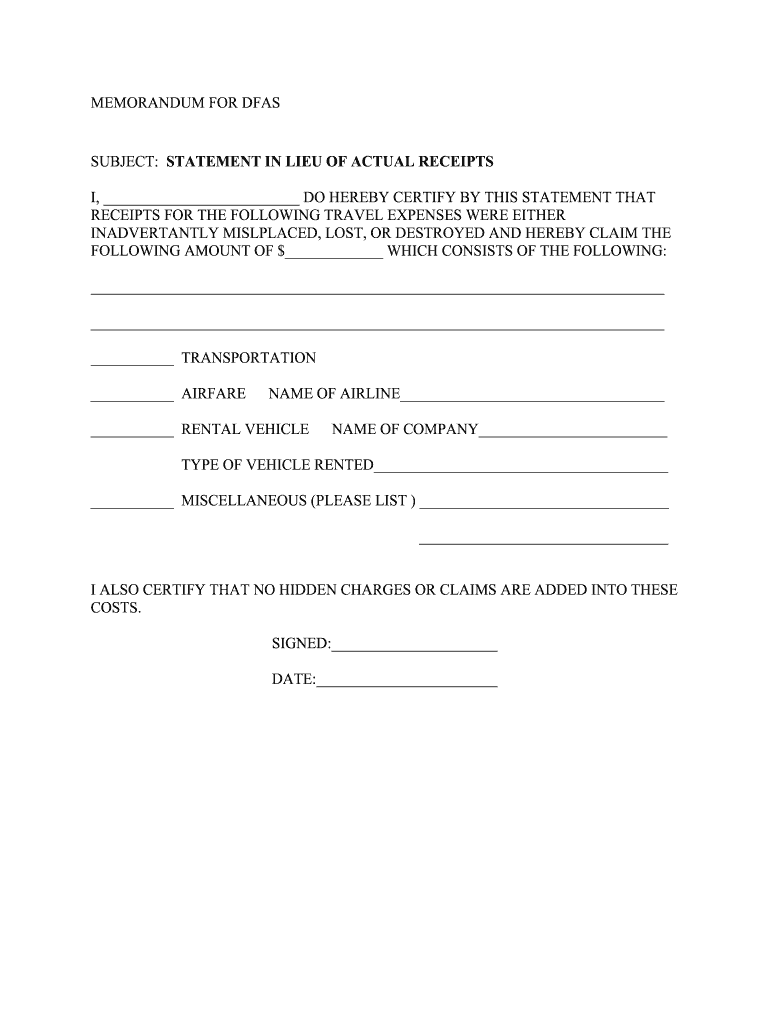
The DTS lost receipt form serves as a crucial document for individuals attempting to receive reimbursements for travel expenses when original receipts are unavailable. This form essentially functions as a statement in lieu of the missing receipts, allowing travelers to officially declare their expenditures for reimbursement despite the absence of standard supporting documents. By fulfilling the necessary requirements outlined, users can efficiently navigate through the Defense Travel System (DTS), ensuring that their claims are processed without unnecessary delays.
Key Components of the DTS Lost Receipt Form
When filling out the DTS lost receipt form, certain key elements need to be included to ensure its validity and appropriateness for claim processing:
- Personal Information: Complete details such as full name, rank, and contact information.
- Expense Details: A breakdown of the expenses incurred, including transportation, lodging, meals, and any other relevant costs.
- Amount Claimed: The total claimed amount should be clearly stated, matching the expenses itemized.
- Explanation of Loss: A brief statement describing how the receipts were lost or destroyed, which gives context to the claim.
- Signature and Date: The form must be duly signed and dated by the claimant to affirm its authenticity.
Each of these components plays a significant role in processing applications and ensuring that travelers are reimbursed according to the established guidelines.
How to Complete the DTS Lost Receipt Form
Completing the DTS lost receipt form involves several straightforward steps:
-
Gather Required Information: Start by collecting all the necessary information regarding the travel expenses. This includes details of lost receipts, alternatives if available, and confirmation of the expenses from any other sources, such as travel itineraries or bank statements.
-
Fill Out the Form: Enter personal information, details of the loss, and expense claims meticulously. Ensure each detail aligns accurately with your intended reimbursement request.
-
Include Explanation: Clearly articulate the circumstances surrounding the receipt loss. This may involve explaining why the receipts could not be produced or any related incidents, such as theft or loss en route.
-
Review for Accuracy: Prior to submission, take the time to review the form for errors or omissions. An accurate and thoroughly checked form reduces the risk of delays.
-
Submit the Form: Utilize the appropriate submission method, whether it be online through the DTS system, via email, or on paper to your finance office, depending on your workflow preferences.
Important Terms Related to the DTS Lost Receipt Form
Understanding several key terms associated with the DTS lost receipt form is essential for navigating reimbursement processes efficiently. Some important terms include:
- Statement in Lieu of Receipt: This phrase describes the form's primary function and establishes that the form acts as a substitute for the original receipts.
- Defense Travel System (DTS): DTS is a web-based system used by U.S. government personnel to manage travel requests, accounting, and reimbursements electronically.
- Substantiating Documents: These are necessary supporting documents that verify the legitimacy of reported expenses, crucial for ensuring compliance with travel policies.
Knowledge of these terms aids users in correctly interpreting guidelines and ensures they utilize the lost receipt form effectively.
Legal Considerations for Using the DTS Lost Receipt Form
When utilizing the DTS lost receipt form, it is paramount to remain compliant with legal requirements governing travel expenses. This includes adhering to the following regulations:
- Accurate Reporting: Intentionally misrepresenting expenses or fabricating costs can lead to severe penalties, including loss of benefits or disciplinary actions.
- Retention of Records: Even without original receipts, retaining any corroborative evidence—such as bank statements or emails related to travel arrangements—is prudent.
- Understanding Audits: Users should be aware that any submitted claims may be subject to audits. Thorough explanations and documented verification can help mitigate complications.
Complying with these legal standards upholds the integrity of the claim process and safeguards the user against allegations of fraud.
Examples of Using the DTS Lost Receipt Form
Illustrative scenarios can provide deeper insight into how the DTS lost receipt form is utilized effectively:
-
Scenario 1: A service member loses their lodging receipt during a travel assignment due to unforeseen circumstances. The individual requests reimbursement by completing the form, detailing the lodging dates and costs, thus facilitating reimbursement despite missing documentation.
-
Scenario 2: An employee’s airfare ticket is purchased online, but the confirmation email is inaccessible due to a technical glitch. By accurately filling out the DTS lost receipt form with other necessary details, the employee ensures that the expense is claimed and processed without hassle.
These examples highlight real-world applications of the form's processes, aiding users in understanding its practical implications.
By familiarizing oneself with the components, completion guidelines, relevant terms, legalities, and examples tied to the DTS lost receipt form, users can navigate the reimbursement process more effectively and with greater confidence.




