






Definition and Purpose of the Form 941
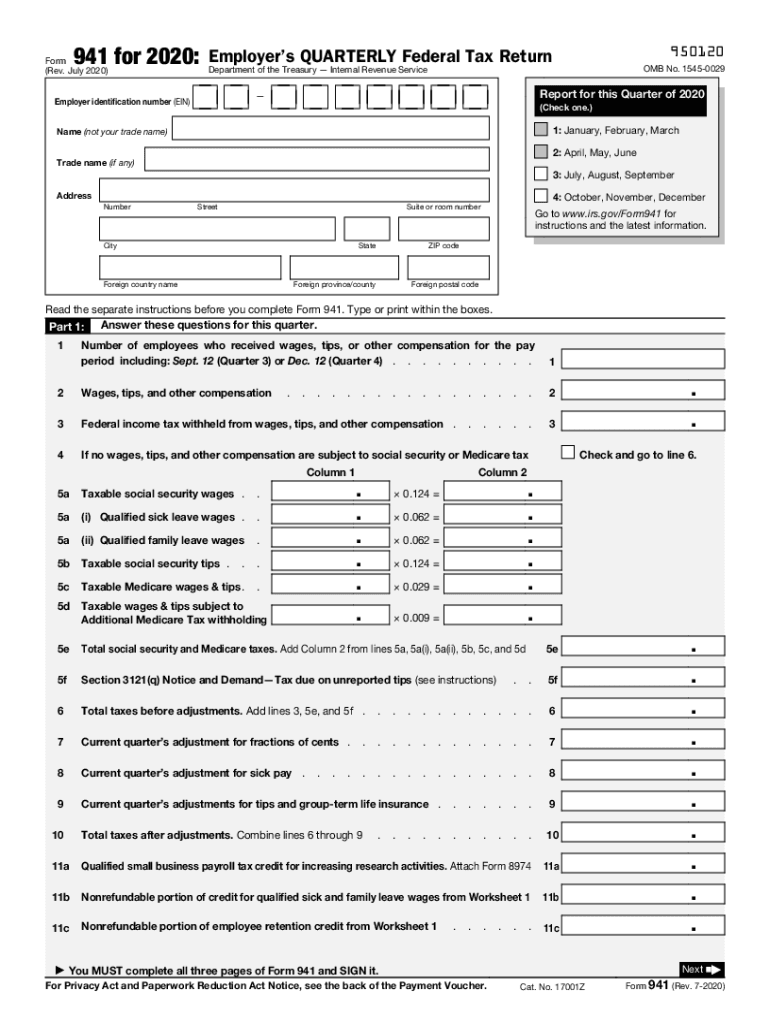
Form 941, also known as the Employer's Quarterly Federal Tax Return, is essential for businesses in the United States to report wages, tips, and other compensation paid to employees. It serves as a tool to inform the IRS about the federal income taxes, social security, and Medicare taxes withheld from employees' paychecks. In addition, the form requires employers to detail any adjustments made to employment taxes in the prior quarters, as well as any overpayment from the previous Form 941. This ensures that all tax obligations are met accurately and timely.
Responsibilities and Requirements
Employers are obligated to file Form 941 quarterly, regardless of whether there are any employees during that time frame. This requirement ensures that all taxable activities are accounted for, even if no wages were paid. As part of their responsibilities, employers need to report information such as:
- The total number of employees.
- Taxable social security and Medicare wages.
- Adjustments and credits for qualified sick and family leave wages.
- Additional Medicare Tax withholding, if applicable.
How to Obtain the Form 941
Form 941 is readily accessible through multiple channels. Employers can download the form directly from the IRS website, where it is available in PDF format for convenience. Alternatively, physical copies can be requested by contacting the IRS directly. Many tax preparation software programs, such as TurboTax and QuickBooks, also provide access to the form as part of their service offerings, streamlining the process of preparing and filing tax documents.
Accessing the Form through Software
Using tax preparation software offers additional advantages, including step-by-step guidance on filling out the form and automated calculations. This is particularly beneficial for businesses dealing with complex payroll structures and those who seek to ensure full compliance with tax regulations.
Steps to Complete the Form 941
Filling out Form 941 involves several detailed steps to ensure accuracy in reporting tax liabilities. Below is a structured guide for completing the form:
-
Provide Basic Information: Include your employer identification number (EIN), business name, and address. Ensure this information is accurate to avoid processing delays.
-
Complete Part 1 - Calculate Taxes:
- Record the total number of employees for the quarter.
- Report total wages, tips, and other compensation.
- Calculate social security and Medicare taxes accurately, considering any adjustments.
-
Complete Part 2 - Tax Deposits and Payments:
- Declare any deposits made through the Electronic Federal Tax Payment System (EFTPS).
- Include prior quarter overpayments applied as credit.
-
Complete Part 3 - Complex Situations:
- Address complex payroll circumstances like third-party sick pay, eligible health insurance costs, and corrections to prior quarters.
-
Complete Part 4 - Signing:
- The form must be signed by the employer or an authorized representative to confirm the accuracy of the information provided.
-
Review and Submit:
- Review all entries for accuracy.
- File the form by the quarterly deadline, either electronically or by mail, depending on your preference and access to filing systems.
Important Tips for Accuracy
Employers should double-check all financial figures to prevent errors that could lead to audits or penalties. Maintaining a reliable record-keeping system helps ensure historical data is accurate and readily available.
IRS Guidelines for Form 941
The IRS provides detailed guidance for each section of Form 941, emphasizing the importance of completing each part with precision. The IRS instructions include clarification on calculating taxable wages and guidance on the latest tax credits applicable to employers, such as those related to COVID-19 relief measures. Staying updated with these guidelines helps employers maximize credits and avoid miscalculations.
Following Changes and Updates
Employers must stay informed about changes to tax regulations and reporting requirements each year. Subtle changes can impact how taxes are calculated and what specific information is required. The IRS frequently updates its guidelines to reflect legislative changes, so utilizing IRS resources and tax professionals' expertise can be beneficial.
Filing Deadlines and Important Dates
Filing Form 941 promptly each quarter is crucial for compliance. Deadlines for submission are as follows:
- Quarter 1 (January - March): Due by April 30.
- Quarter 2 (April - June): Due by July 31.
- Quarter 3 (July - September): Due by October 31.
- Quarter 4 (October - December): Due by January 31 of the following year.
In cases where the filing date falls on a weekend or federal holiday, the form is due the next business day.
Consequences of Late Filing
Missing a deadline can result in penalties and interest on any unpaid tax liabilities. It is crucial for employers to ensure all information is submitted on time to avoid unnecessary financial repercussions. Automated reminders or using payroll services can help prevent oversight of these critical dates.
Who Typically Uses Form 941
Form 941 is generally used by employers operating within the U.S. to report their quarterly employment tax responsibilities. This includes most businesses that pay employees, regardless of the industry. There are variations in the form usage depending on the nature of the business entity:
Business Entity Implications
- Corporations: All corporations, including S-Corporations and C-Corporations, must file Form 941 to report employee wages and taxes.
- Limited Liability Companies (LLCs): LLCs that have elected to be taxed as C-Corporations or S-Corporations are also required to file Form 941.
- Nonprofits: Nonprofit organizations with payroll employees must complete the form; however, certain exemptions may apply to specific types of organizations.
Penalties for Non-Compliance
Failure to properly complete and submit Form 941 can result in significant penalties, impacting a business's financial stability. Penalties are generally categorized based on the nature and severity of the compliance error:
Types of Penalties
- Filing Late Penalties: Accumulate at 5% per month (up to 25%) for late submissions.
- Inaccurate Information Penalty: Involves a charge for inaccuracies that understate tax liabilities.
- Payment Shortfall Penalty: Occurs if there is a shortfall in tax deposits and is calculated as a percentage of the unpaid amount.
Preventative Measures
To mitigate risks, businesses should consider employing payroll professionals or services that specialize in tax compliance. Regular audits of company payroll processes can also identify potential issues before they lead to penalties.


