






Definition and Meaning of Personal Representative Deed in New Mexico
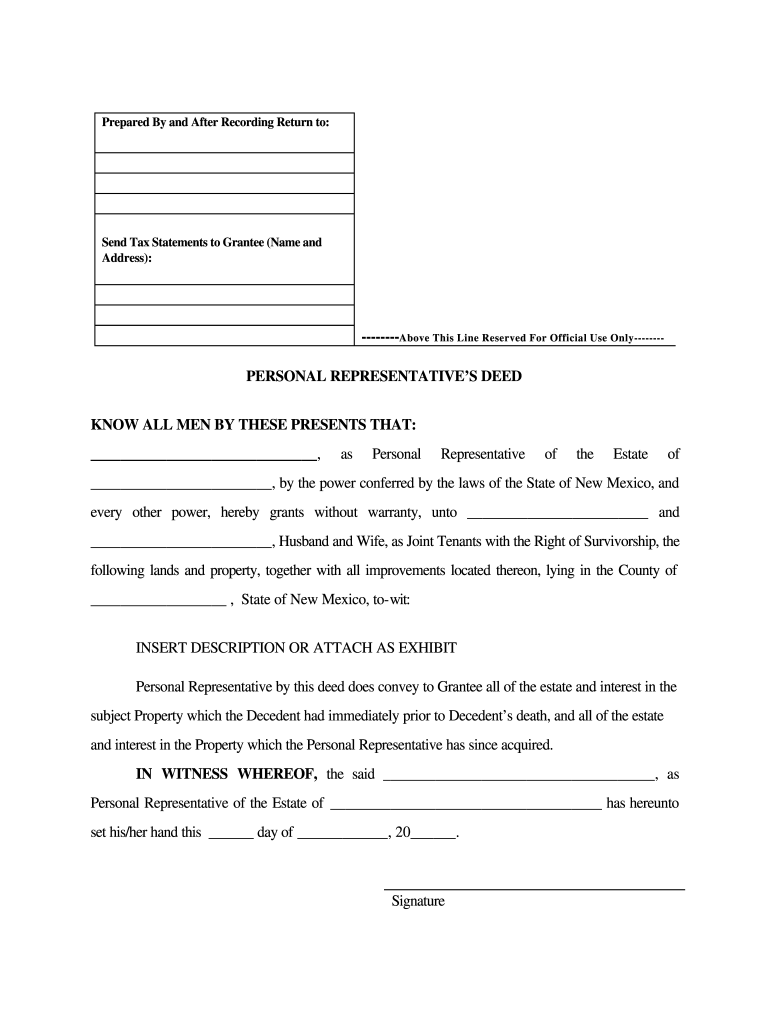
A personal representative deed in New Mexico is a legal document used to transfer real property from the estate of a deceased individual to the heirs or beneficiaries designated in the decedent's will or by state law if there is no will. This deed is executed by a personal representative, who is appointed by the probate court to administer the estate. The personal representative is tasked with ensuring that the deceased's assets are managed and distributed according to the wishes outlined in the will or according to state law.
Key Functions of a Personal Representative Deed
- Transfer of Property: The primary function of this deed is to officially transfer ownership of real property, such as land or buildings, from the estate of the decedent to the designated beneficiaries.
- Legal Authority: It grants the personal representative the authority to convey the decedent's interest in the property, ensuring that the transfer is recognized by law.
- Record Keeping: Filing the deed with the appropriate county clerk or recorder allows it to become a part of public record, providing legal proof of ownership transfer.
Who Typically Uses the Personal Representative Deed in New Mexico
The personal representative deed is primarily used by individuals or entities involved in the probate process. This includes:
- Personal Representatives: Individuals appointed by the probate court to handle the administration of the deceased's estate.
- Heirs or Beneficiaries: Those who stand to inherit property or assets from the estate, which may include family members, friends, or charitable organizations as specified in the will or state law.
- Estate Attorneys: Legal professionals who assist in navigating the probate process and ensuring that the necessary documentation is properly completed and filed.


Steps to Complete the Personal Representative Deed in New Mexico
Completing a personal representative deed involves several steps to ensure legality and compliance with state laws:
- Obtain the Necessary Forms: Access the appropriate personal representative deed form, which can often be found online or through local legal resources.
- Gather Required Information: Collect details about the deceased, including their legal name, date of death, and information about the property being transferred.
- Identify Beneficiaries: Clearly list all intended beneficiaries who will receive the property as per the decedent’s instructions.
- Complete the Deed: Fill out the deed accurately, including the necessary legal descriptions of the property and the names of the grantor (the estate) and grantee (the beneficiaries).
- Sign and Notarize: The personal representative must sign the deed in front of a notary public, who will notarize the document to confirm the identity of the signer.
- File with the County Clerk: Submit the signed and notarized deed to the local county clerk or recorder’s office for it to be officially recorded in public records.
Key Elements of the Personal Representative Deed in New Mexico
A personal representative deed must include specific elements to ensure its legal validity:
- Grantor Information: Details of the estate, including the deceased's name and identification.
- Grantee Information: Names and addresses of all beneficiaries receiving the property.
- Property Description: An accurate legal description of the property being transferred, which may involve parcel numbers or specific metes and bounds descriptions.
- Authority Clause: A statement that certifies that the personal representative has the authority to act on behalf of the estate as appointed by the probate court.
- Signatures and Notary: The original signature of the personal representative along with a notary's signature and seal to authenticate the deed.
Why Use a Personal Representative Deed in New Mexico
Utilizing a personal representative deed is crucial for several reasons:
- Legal Assurance: It provides a formal, legal method to transfer property ownership from the deceased to the beneficiaries, minimizing disputes.
- Probate Compliance: The deed serves as one of the essential documents in the probate process, fulfilling the legal requirements of transferring real estate.
- Preventing Title Issues: Proper utilization of this deed helps maintain clear titles, which can prevent future legal complications concerning ownership of the property.
State-Specific Rules for the Personal Representative Deed in New Mexico
New Mexico has specific regulations governing the use and execution of personal representative deeds that must be adhered to:
- Probate Court Appointment: Only individuals legally appointed by the probate court can act as personal representatives and execute deeds on behalf of the estate.
- Filing Fees: There may be specific fees associated with filing the deed with the county clerk, which vary by location.
- Compliance with State Laws: The deed must comply with New Mexico Statutes, including legal wording and format, to be considered valid and enforceable.
Important Terms Related to Personal Representative Deed in New Mexico
Understanding the terminology associated with personal representative deeds is essential for clarity and accurate execution:
- Grantor: The deceased individual whose estate is transferring property.
- Grantee: The beneficiary receiving property as specified in the deed.
- Probate: The legal process through which a deceased person's estate is administered and distributed.
- Personal Representative: An individual appointed to manage the estate, including property distribution.
Examples of Using a Personal Representative Deed in New Mexico
Real-world applications of the personal representative deed highlight its importance in property transfer:
- Inherited Family Home: If a property owner passes away and leaves a house to their spouse and children, a personal representative deed would facilitate the transfer of that home from the decedent’s estate to the family members named in the will.
- Estate Without a Will: In cases where a person dies intestate (without a will), the appointed personal representative can use the deed to transfer property to heirs as designated by New Mexico state law.