







Definition & Meaning
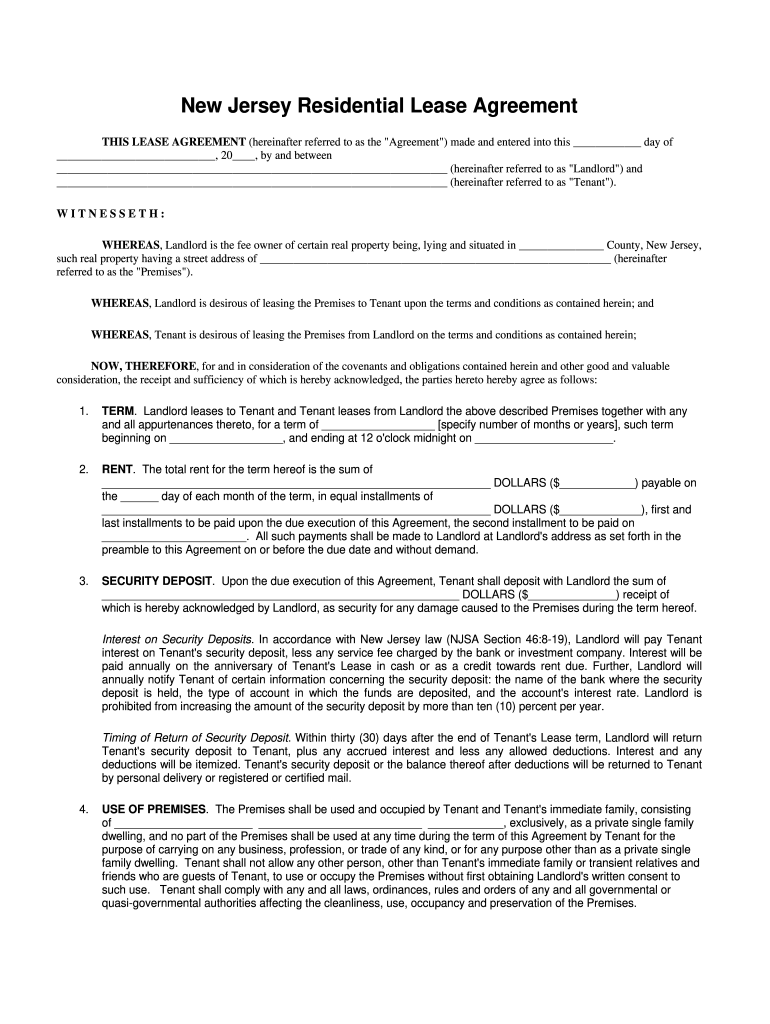
A New Jersey Residential Lease Agreement is a legally binding contract between a landlord and a tenant outlining the conditions under which a property is rented. This agreement specifies vital terms such as rental duration, payment obligations, responsibilities regarding maintenance, and stipulations about the use of the premises. It is crucial to ensure both parties are aware of their legal rights and duties, providing a framework for addressing any disagreements that may arise during the lease term. By signing this document, both parties demonstrate their consent to adhere to these conditions.
Key Elements of the New Jersey Residential Lease Agreement
Understanding the critical components of the lease agreement is essential for both landlords and tenants:
- Lease Term: Specifies the rental period, whether it is a fixed-term lease or a month-to-month arrangement. This clarity helps in planning future accommodations or tenancy changes.
- Rent Payment: Includes the monthly rental amount, due dates, and acceptable payment forms, ensuring timely and documented transactions.
- Security Deposit: Outlines the amount required, conditions for its return, and any lawful deductions that might be made once the lease ends.
- Use of Premises: Details the intended use of the property (e.g., residential) and restricts illegal activities and unauthorized alterations.
- Maintenance Requirements: Allocates responsibilities for property upkeep, such as repairs and general maintenance, ensuring the property remains in good condition.
- Termination and Default: Establishes the conditions under which the lease can be terminated, including notice periods and repercussions for breach of contract.
Important Terms Related to the New Jersey Residential Lease Agreement
Lease agreements often involve specific terminology that aids in legal clarity. Understanding these terms can help in navigating the contract more efficiently:
- Lessor and Lessee: Lessor refers to the landlord or property owner, while the lessee is the tenant.
- Tenancy at Will: A flexible arrangement where occupancy terms are under mutual agreement without a set expiry, subject to state laws and notice requirements.
- Quiet Enjoyment: An assurance that tenants can occupy the premises without unnecessary interference from the landlord.
- Indemnification: Protects the landlord from claims or damages arising due to tenant actions or negligence.
State-Specific Rules for the New Jersey Residential Lease Agreement
Leasing laws can vary significantly by state. In New Jersey, these specific regulations are crucial:
- Security Deposit Law: Security deposits cannot exceed one and a half months' rent and must be returned within 30 days of lease termination, subject to deductions.
- Rent Control Ordinances: Various municipalities in New Jersey may have rent control laws affecting rent increases and lease conditions.
- Discrimination and Fair Housing: Landlords must comply with the New Jersey Law Against Discrimination, ensuring no tenant is unfairly treated based on race, religion, or other protected class status.
Steps to Complete the New Jersey Residential Lease Agreement
Completing the lease agreement involves several precise steps to ensure legal compliance and clarity:
- Gather Necessary Information: Both parties must have personal information ready, including identification details and current contact information.
- Discuss and Agree on Terms: Landlords and tenants should negotiate and finalize terms such as rent amount, security deposit, and maintenance responsibilities.
- Draft the Agreement: Using a standardized lease template can help, but legal advice is advisable to customize clauses according to priority and necessity.
- Review and Sign the Document: Both parties should thoroughly review the agreement to ensure accuracy before signing. Each party should receive a copy for their records.
Legal Use of the New Jersey Residential Lease Agreement
The compliance aspects of using this lease ensure it holds legal weight in the state of New Jersey:
- Adhering to Laws: The contract must align with state landlord-tenant laws for enforceability.
- Proper Execution: Signatures and datelines are vital; incomplete agreements may lack enforcement power.
- Notarization: While not mandatory, notarizing the lease adds a layer of authentication to the document.
Who Typically Uses the New Jersey Residential Lease Agreement
Typically, several parties engage in residential lease agreements in New Jersey:
- Private Landlords: Individuals leasing out properties they own, from single-family homes to apartment units.
- Property Management Companies: Acting on behalf of property owners to administer rental properties.
- Tenants: Individuals or families looking to rent residential space for personal use.


Who Issues the Form
Typically, the landlord or property management company provides the initial draft of the lease agreement. This document must meet state standards and be adapted to address both parties' particular needs. While standardized sheets are commonly used, customization to specific circumstances is essential for clarity and legal sufficiency.
Examples of Using the New Jersey Residential Lease Agreement
Several scenarios highlight the utility of lease agreements:
- Professional Tenants Temporarily Relocating: Those on temporary work assignments in New Jersey can establish a clear understanding with landlords through standardized lease agreements.
- Long-Term Tenants Seeking Security: Multi-year contracts provide stability for tenants and a reliable income for landlords, with the lease solidifying the terms.
- Investment Property Owners: Engage tenants and protect their investment property by articulating specific tenant responsibilities and expectations through a clear lease.
These blocks collectively provide depth and utility in understanding and creating a New Jersey Residential Lease Agreement, adequately informing landlords and tenants of essential aspects and considerations.




