
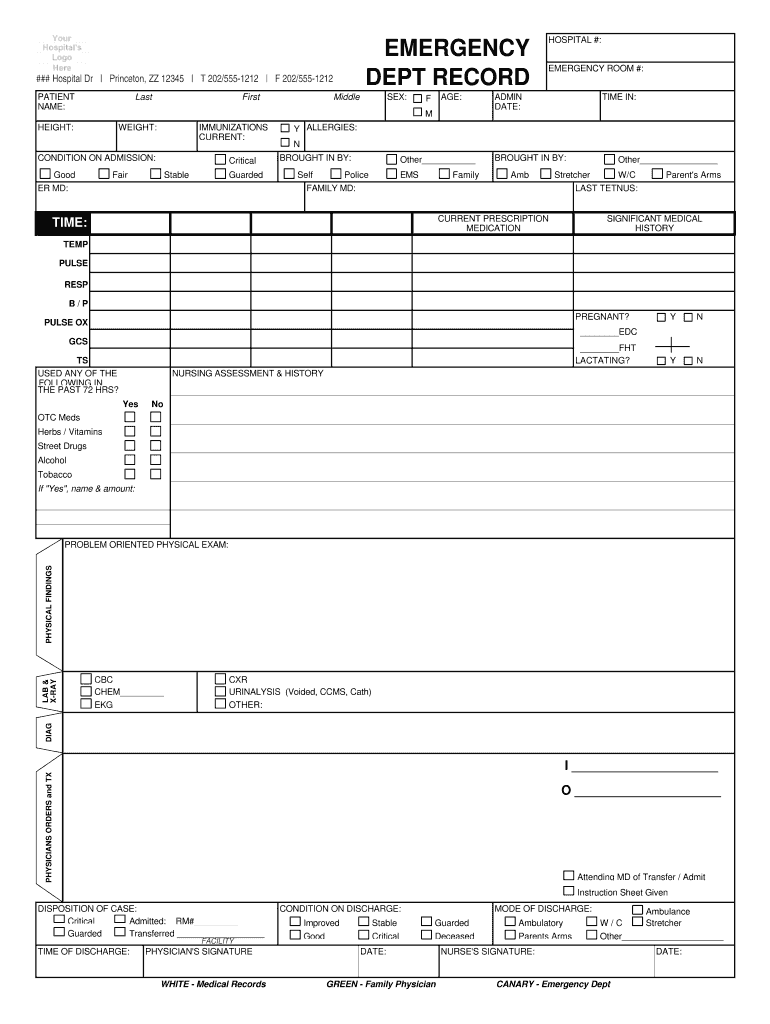







Overview of the DEPT RECORD EMERGENCY ROOM
The "DEPT RECORD EMERGENCY ROOM" form serves as a crucial tool for documenting patient admissions and assessments within a hospital emergency department. This comprehensive form captures vital information that guides medical professionals in providing immediate and appropriate care for patients presenting with various medical conditions. It contains several critical sections that outline patient details, medical history, and assessments performed upon admission.
Key Sections of the Emergency Room Record
-
Patient Information
- This section collects essential personal details, including the patient's name, age, gender, and contact information. It may also capture insurance information and emergency contacts to facilitate quick access to relevant data during treatment.
-
Condition on Admission
- Documenting the patient's condition upon arrival is vital in emergency settings. This portion includes a description of the patient's presenting symptoms, any observable distress, and pertinent notes regarding the circumstances of their arrival, which can inform initial medical interventions.
-
Medical History
- The medical history section provides a summary of the patient's past health issues, including previous surgeries, allergies, and current medications. This information allows healthcare providers to make informed decisions and avoid potential medication errors.
Vital Signs and Nursing Assessment
-
Vital Signs
- Accurate measurement of vital signs, such as heart rate, blood pressure, respiratory rate, and temperature, is essential during the initial assessment. This data helps determine the patient’s stability and informs immediate treatment decisions.
-
Nursing Assessment
- Nurses conduct a thorough assessment to evaluate the patient’s overall condition. This may include checking neurological status, skin assessments, and physical examinations relevant to the presenting complaints.
Physician's Orders and Disposition
-
Physician's Orders
- After the assessment, physicians provide directives for further diagnostics, treatments, and interventions. This section details any medications prescribed, imaging studies ordered, or referrals made to specialists.
-
Disposition of the Case
- This final section confirms the patient’s outcome within the emergency department. Whether the patient is admitted, discharged with follow-up instructions, or transferred to another facility, documentation of these decisions is critical for continuity of care.
Importance of Emergency Room Documentation
The DEPT RECORD EMERGENCY ROOM plays an integral role in ensuring that all relevant information regarding a patient is accurately recorded and easily accessible. This documentation not only aids in immediate patient care but also serves legal and compliance purposes. Comprehensive records help protect healthcare providers by providing evidence of care standards and decisions made during the visit.
Compliance and Electronic Records
-
Legal Considerations
- Emergency room documentation must align with legal standards set to protect patient rights and ensure confidentiality. Forms must be filled out accurately to comply with regulations like the Health Insurance Portability and Accountability Act (HIPAA), which governs the confidentiality of medical records.
-
Integration with Electronic Health Records (EHR)
- Using designated electronic systems for emergency room records ensures streamlined documentation, enhanced security, and better access for healthcare teams. EHR systems often offer templates that can facilitate quick data entry, thus reducing the potential for errors.
Variations and Templates
-
ER Report Templates
- Various emergency room documentation templates exist to support standardization within healthcare institutions. These templates can be tailored to meet the specific needs of different facilities and can include additional fields relevant to particular medical specialties or practices.
-
Emergency Room Documentation Templates
- The utilization of specialized templates expedites the writing process, ensures consistency, and can be especially beneficial in busy emergency department environments where time is of the essence.
Summary of Best Practices
To ensure effective documentation, healthcare providers should:
- Maintain clarity and precision in completing each section of the form.
- Regularly update professional training on documentation requirements and legal standards.
- Utilize available templates to streamline data entry and increase efficiency during patient encounters.
By adhering to these guidelines, healthcare providers can enhance the quality of care received in the emergency room while ensuring adherence to legal and regulatory requirements.




