Landlord liability 2026

Get Form
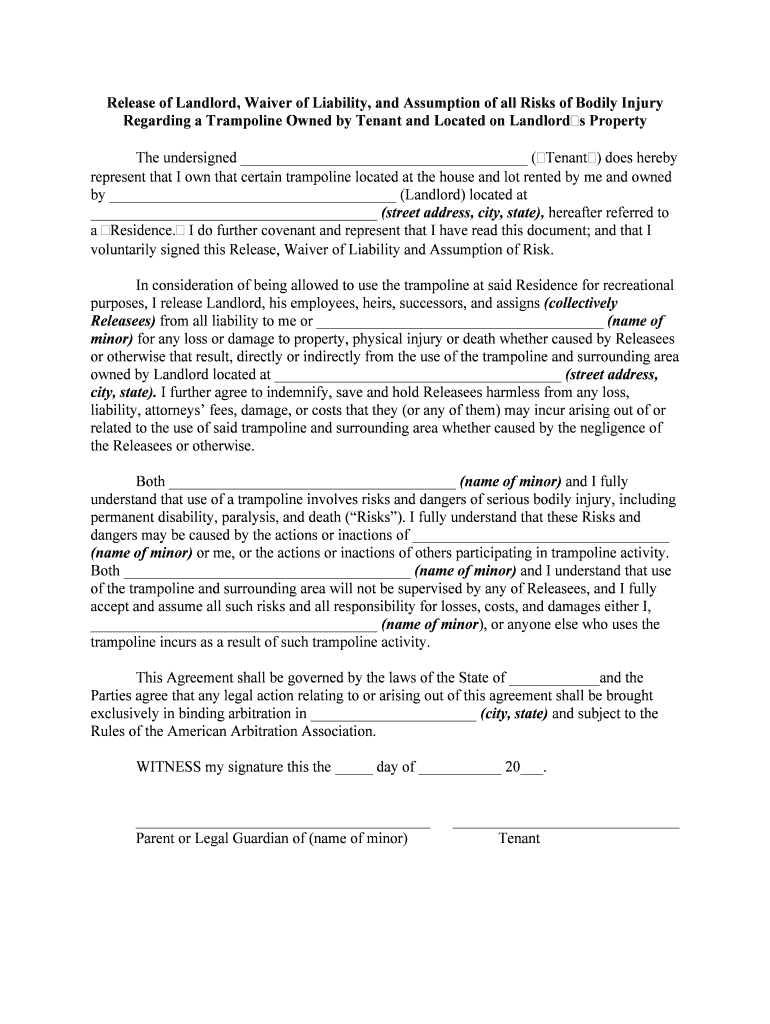
landlord liability Preview on Page 1

Here's how it works

01. Edit your landlord liability online
Type text, add images, blackout confidential details, add comments, highlights and more.
02. Sign it in a few clicks
Draw your signature, type it, upload its image, or use your mobile device as a signature pad.
03. Share your form with others
Send landlord property via email, link, or fax. You can also download it, export it or print it out.

How to use or fill out landlord liability with our platform

Form edit decoration
9.5
Ease of Setup
DocHub User Ratings on G2
9.0
Ease of Use
DocHub User Ratings on G2
  1. Click ‘Get Form’ to open the landlord liability document in the editor.
  2. Begin by filling in your name as the Tenant in the designated field. This identifies you as the individual responsible for the trampoline.
  3. Next, enter the Landlord's name and the complete address of the property where the trampoline is located. This ensures clarity on ownership and location.
  4. In the section regarding indemnification, specify any minors involved by entering their names. This is crucial for legal protection.
  5. Review and acknowledge your understanding of risks associated with trampoline use by reading through that section carefully before signing.
  6. Finally, sign and date the document at the bottom, ensuring all parties have completed their signatures for validity.

Start using our platform today to easily fill out your landlord liability form online for free!

See more landlord liability versions

We've got more versions of the landlord liability form. Select the right landlord liability version from the list and start editing it straight away!
Versions Form popularity Fillable & printable
2024 4.3 Satisfied (21 Votes)
2024 4.6 Satisfied (51 Votes)
2024 4.5 Satisfied (23 Votes)
2024 4.8 Satisfied (29 Votes)
2023 4.7 Satisfied (42 Votes)
2023 4.4 Satisfied (48 Votes)
2023 4 Satisfied (63 Votes)
2023 4.5 Satisfied (26 Votes)
2023 4.6 Satisfied (34 Votes)
2023 4.2 Satisfied (30 Votes)
2023 3.9 Satisfied (31 Votes)
2023 4.3 Satisfied (42 Votes)
2023 4.7 Satisfied (39 Votes)
2023 4.4 Satisfied (22 Votes)
2023 4.2 Satisfied (51 Votes)
be ready to get more

Complete this form in 5 minutes or less

Get form

Got questions?

We have answers to the most popular questions from our customers. If you can't find an answer to your question, please contact us.
Contact us
Liability insurance typically covers legal costs and payouts if the Insured is found legally liable for claims of harm or wrongdoing against a third party, including injuries or property damage. Unlike other types of insurance, liability insurance pays third parties, not policyholders.
A limitation of landlords liability clause protects landlords from unreasonable claims and excessive legal exposure, ensuring they are only held accountable for direct negligence or misconduct. It also helps tenants understand their own responsibilities, such as securing insurance for potential risks.
Liability coverage is a standard offering in most landlord insurance policies. Liability insurance on a landlords policy will cover liability due to bodily injury or property damage arising out of the ownership, maintenance, and use of the rental premises only.
What will you most likely need to insure as a landlord? Landlords need to insure the building, any provided contents (like appliances), and their liability as property owners. Optional coverages, like rent guarantee or flood protection, can provide added security.
Common exclusions include tenant-related damage, rental appliance breakdowns, and certain natural disasters like floods or earthquakes. Additional riders or endorsements can be added to a policy to fill coverage gaps, depending on the rental property location and risk factors.

Security and compliance

At DocHub, your data security is our priority. We follow HIPAA, SOC2, GDPR, and other standards, so you can work on your documents with confidence.

Learn more

People also ask

Personal liability coverage on your renters policy may cover you if a claim or lawsuit is brought against you for damages due to bodily injury or property damage, up to the limits of your coverage. It may also pay for legal costs resulting from lawsuits.

Related links