lab report rubric Preview on Page 1

Lab rubric template 2026

Here's how it works

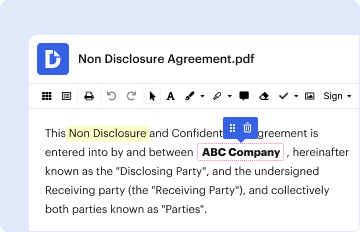
  • 01. Edit your lab report rubric online

    Type text, add images, blackout confidential details, add comments, highlights and more.

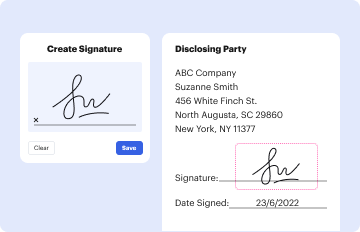
  • 02. Sign it in a few clicks

    Draw your signature, type it, upload its image, or use your mobile device as a signature pad.
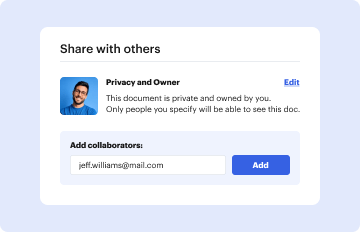
  • 03. Share your form with others

    Send lab rubric template via email, link, or fax. You can also download it, export it or print it out.

How to use or fill out lab rubric template with our platform

Form edit decoration
9.5
Ease of Setup
DocHub User Ratings on G2
9.0
Ease of Use
DocHub User Ratings on G2
  1. Click ‘Get Form’ to open the lab rubric template in the editor.
  2. Begin by entering your name in the designated field at the top of the form. This personalizes your submission and ensures proper identification.
  3. Review each section of the rubric, starting with 'Introduction'. For each criterion, select the appropriate rating (Exceeds, Meets, Partially Meets, Does Not Meet) based on your performance.
  4. Continue through sections such as 'Methods', 'Results', and 'Discussion'. Fill in any specific comments or notes that reflect your understanding and execution of each part.
  5. In the 'Work Cited' section, ensure all references are correctly formatted. Use our platform's editing tools to adjust formatting as needed.
  6. Once completed, review your entries for clarity and accuracy before saving or sharing your document directly from our platform.

Start using our platform today to streamline your lab report submissions for free!

See more lab report rubric versions

We've got more versions of the lab report rubric form. Select the right lab report rubric version from the list and start editing it straight away!

VersionsForm popularityFillable & printable
20124.5 Satisfied (63 Votes)

be ready to get more

Complete this form in 5 minutes or less

Got questions?

We have answers to the most popular questions from our customers. If you can't find an answer to your question, please contact us.

A good lab report is composed of seven parts: a Title Page, an Abstract, an Introduction, a section on Methods and Materials, a section on Results, a Discussion, and a Works Cited/References page.
Example Holistic Rubric Above Average: The audience is able to easily identify the focus of the work and is engaged by its clear focus and relevant details. Information is presented logically and naturally. There are no more than two mechanical errors or misspelled words to distract the reader.
A rubric is a tool that has a list of criteria, similar to a checklist, but also contains descriptors in a performance scale which inform the student what different levels of accomplishment look like.
A rubric is a type of scoring guide that assesses and articulates specific components and expectations for an assignment. Rubrics can be used for a variety of assignments: research papers, group projects, portfolios, and presentations.
How to create and use rubrics Step 1: Analyze the assignment and determine your purpose. Step 2: Decide what kind of rubric you will use (holistic, analytic, single point) Step 3: Choose your starting point (example, AI-generated, from scratch) Step 4: Define the grading criteria. Step 5: Define levels of performance.

Security and compliance

At DocHub, your data security is our priority. We follow HIPAA, SOC2, GDPR, and other standards, so you can work on your documents with confidence.

People also ask

It has three parts: 1) performance criteria; 2) rating scale; and 3) indicators. For you and your students, the rubric defines what is expected and what will be assessed.
A rubric is the grading criteria . MESSENGER. CBC New Curriculum.

Related links

Collaborative Creation of a Lab Rubric - PMC - NIH

by C Miller-DeBoer 2011 Rubrics are often developed to help both the instructor and the students see what is expected and understand how each dimension of an assignment is prioritizedRead more

Learn more
Tabor: Experiments

Prepare the competent E. coli DH5alpha in a vial. 2. Add 2mL LB medium to the competent E. coli. 3. Transfer the solution to a 5mL vial.Read more

Learn more
If you believe that this page should be taken down, please follow our DMCA take down process here