
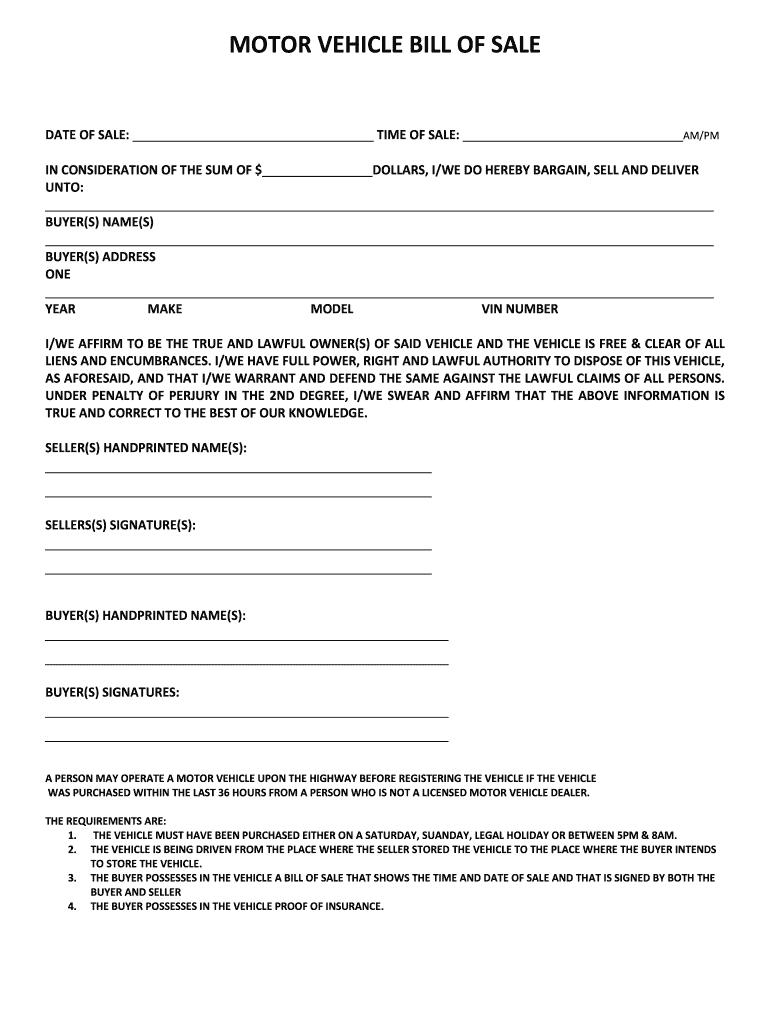







Definition and Meaning of Bill of Sale in Colorado
A bill of sale in Colorado is a legal document that signifies the transfer of ownership of an asset, commonly used for motor vehicles, boats, and personal property. This document serves as a written record of the transaction between a seller and a buyer, including essential details such as the purchase price, vehicle identification information, and the date of the sale. In the context of motor vehicles, a bill of sale is not only helpful for private sales but often required when registering the vehicle with the Colorado Department of Motor Vehicles (DMV).
Key Elements of the Bill of Sale
When preparing a bill of sale in Colorado, it is important to include specific elements to ensure its legal validity:
- Identification of Parties: Full names, addresses, and contact information of both the seller and buyer.
- Description of the Item: Complete details about the vehicle or item being sold, such as make, model, year, VIN (Vehicle Identification Number), and any special features.
- Purchase Price: Clearly state the amount for which the item is being sold.
- Date of Transaction: The date when the sale is completed should be noted.
- Signatures: Both the buyer and seller must sign the document to validate the transfer.
Additionally, it can be beneficial to include a statement regarding the condition of the item, any warranties, or disclaimers about the sale.
How to Use the Bill of Sale in Colorado
Utilizing the bill of sale involves more than simply filling out a template. It serves multiple purposes that help protect both parties involved in a transaction.
Practical Uses of the Bill of Sale
- Registration Process: A bill of sale is often required when registering a motor vehicle with the Colorado DMV. It provides proof of ownership and serves as part of the documentation needed to transfer the title.
- Legal Protection: It offers legal protection to both buyers and sellers by documenting the details of the transaction, which can prevent disputes over ownership.
- Proof of Sale: In case of any legal proceedings or questions regarding the transaction, the bill of sale serves as a reliable form of evidence.
Understanding how to properly fill out and use this document ensures a smoother transaction and aids in the legal transfer process.
Steps to Complete the Bill of Sale in Colorado
Completing a bill of sale involves a systematic approach to ensure all necessary details are accurately recorded. The following steps outline the process:
- Gather Information: Collect all the required information, including vehicle details, seller and buyer names, and purchase price.
- Download or Create a Template: Use a free Colorado bill of sale template available online or draft your own by including all key elements.
- Fill in the Details: Accurately enter all required details into the bill of sale template, ensuring clarity and correct spelling.
- Review the Document: Double-check all information for accuracy and completeness. Look out for any missing or incorrect details.
- Sign the Document: Both parties must sign the bill of sale. Consider having a witness sign as well for additional verification.
Completing Additional Requirements
After signing the bill of sale, the buyer can proceed to complete the registration process at the local DMV, providing the bill of sale along with other necessary documents.
Important Terms Related to Bill of Sale in Colorado
Familiarizing oneself with certain legal terms associated with the bill of sale can enhance understanding of the document's implications and use. Here are some key terms:
- Title: The legal document proving ownership of a vehicle. The bill of sale often assists in transferring the title.
- VIN: Vehicle Identification Number, a unique code used to identify individual motor vehicles. It is crucial for accurate documentation.
- Warranty: A legal assurance regarding the quality or state of the item being sold, which may or may not be included in a transaction.
- As-Is Condition: A statement indicating that the buyer accepts the item in its current state, without additional guarantees from the seller.
Understanding these terms helps clarify the contractual nature of the bill of sale and its role in the transaction.
Legal Use of the Bill of Sale in Colorado
The legal framework surrounding the bill of sale in Colorado mandates specific guidelines that both buyers and sellers must adhere to.
Adhering to Legal Requirements
- Compliance with State Laws: The bill of sale must meet the specific requirements outlined by Colorado law to be considered valid. This includes proper formatting and necessary signatures.
- Retention of Copies: It is advisable for both parties to keep a copy of the signed bill of sale for future reference. This can help in case of disputes or legal issues.
Enforceability of the Document
As a legally recognized document, a properly executed bill of sale can be enforced in a court of law. It protects the rights of the parties involved by serving as evidence of the transaction and ownership transfer.
Examples of Using the Bill of Sale in Colorado
Using the bill of sale can vary based on the item being sold and the parties involved. Here are some common scenarios where a bill of sale is applicable:
- Selling a Used Vehicle: When selling a car, the seller provides a bill of sale that details the vehicle's condition, history, and any warranties, protecting both parties.
- Transferring Ownership of Personal Property: When transferring ownership of items such as furniture or electronic devices, a bill of sale can document the transaction.
- Business Asset Sales: Companies may use a bill of sale to transfer ownership of business assets, ensuring all terms and conditions are documented.
In each case, the bill of sale serves as a legal safeguard, clarifying the agreement between parties and providing necessary documentation for future reference.




