
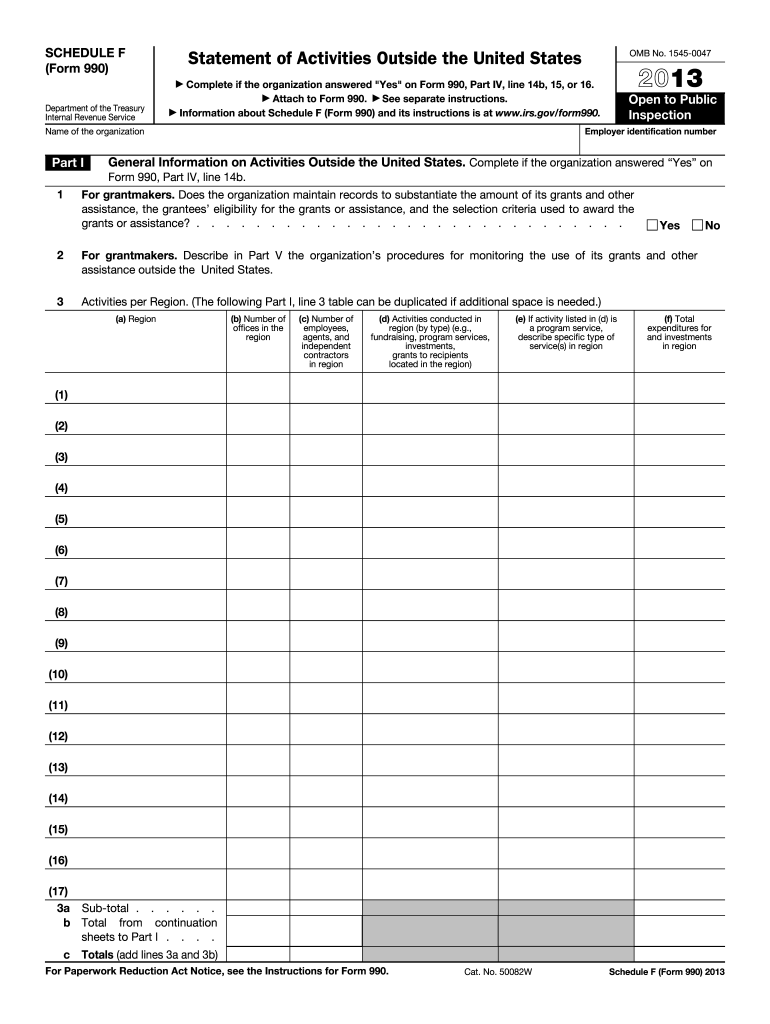






Definition and Meaning of the 2013 IRS Schedule F Form
The 2013 IRS Schedule F form is an integral part of the U.S. tax system, designed specifically for farmers. It is used to report income and expenses related to agricultural activities, allowing sole proprietor farmers to document their business profits or losses. This form is a vital tool for ensuring the accurate calculation of taxable income, as it provides a detailed breakdown of earnings from farming operations, including crop sales, livestock sales, and government payments.
Key Aspects of the Form
- Income Reporting: Farmers must record revenues from the sale of products grown or raised on their farms.
- Expense Documentation: It allows the deduction of farming-related costs, such as seed purchases, feed, supplies, and machinery repair.
- Profit and Loss Calculation: By deducting total expenses from total income, the form helps determine the business's net farm profit or loss.
How to Use the 2013 IRS Schedule F Form
The Schedule F form requires careful attention to detail to ensure accurate tax reporting. Farmers should follow these guidelines to complete the form efficiently.
Detailed Instructions
- Collect All Relevant Income Information: Gather documentation of all payments received for farm products, both cash and non-cash.
- Record Expenses Methodically: Ensure all expenses are itemized correctly in the appropriate categories on the form.
- Calculate Net Farm Profit or Loss: Subtract total expenses from the gross income to find the net profit or loss.
Tips for Accurate Filing
- Maintain Organized Records: Regularly update financial records throughout the year to simplify the filing process.
- Use Accounting Software: Taking advantage of software solutions can help manage calculations and reduce errors.
Steps to Complete the 2013 IRS Schedule F Form
Successfully completing the Schedule F form requires following a structured process, focusing on accurately reflecting all aspects of farm income and expenses.
Comprehensive Steps
-
Identify Income Sources:
- Note all sources of income, including sales of livestock, produce, and other agricultural goods.
- Include subsidies and any other payments related to farming.
-
Expense Breakdown:
- List all deductible expenses, providing details for each category, such as chemicals, conservation expenses, and feed.
- Cross-check entries against receipts and invoices for accuracy.
-
Summarize Financial Performance:
- Complete calculations to establish the farm's net income or loss, ensuring all figures align with supporting documents.
Who Typically Uses the 2013 IRS Schedule F Form
The form is mainly utilized by individuals who operate farms as sole proprietors within the U.S. agricultural sector. These include:


Typical Users
- Family Farmers: Individuals running small family-owned farming businesses.
- Self-Employed Farmers: Owners that independently manage both crop production and livestock breeding.
- Partnership and Joint Ventures: While Schedule F is primarily for sole proprietors, some partnerships may also use it, requiring additional forms like K-1s.
Important Terms Related to 2013 IRS Schedule F Form
Understanding the language of the Schedule F form is crucial for accurate completion.
Core Terminology
- Gross Income: Total earnings from all farm activities before expenses are deducted.
- Net Farm Profit: The remaining income after subtracting expenses from gross income.
- Subsidies: Government financial aids meant to support agriculture, serving as additional income.
Key Elements of the 2013 IRS Schedule F Form
The form is broken down into specific sections that require detailed data inputs.
Essential Components
- Part I - Farm Income: This section captures all earnings related to farming activities.
- Part II - Farm Expenses: A dedicated area for reporting and itemizing operational costs.
- Summary of Net Gain or Loss: A conclusive calculation to confirm financial outcomes.
Filing Deadlines and Important Dates
Ensuring timely filing is essential to avoid penalties and ensure compliance with tax regulations.
Critical Dates for Farmers
- Tax Return Filing: Typically due on April 15th of each year, unless extensions are applied.
- Estimated Tax Payments: Farmers often make estimated tax payments throughout the year; specific due dates apply to avoid underpayment penalties.
Penalties for Non-Compliance with the 2013 IRS Schedule F Form
Failing to properly complete and file the Schedule F can result in serious financial consequences.
Possible Penalty Incidents
- Late Filing Penalties: Imposed on those who fail to submit forms by the due date.
- Inaccurate Reporting: May result in additional charges, including interest on any unpaid taxes.
A thorough understanding of the 2013 IRS Schedule F form and its requirements can help streamline the tax filing process, minimizing potential errors and ensuring compliance with federal regulations.