







Definition and Purpose of Form SE (Form 1040)
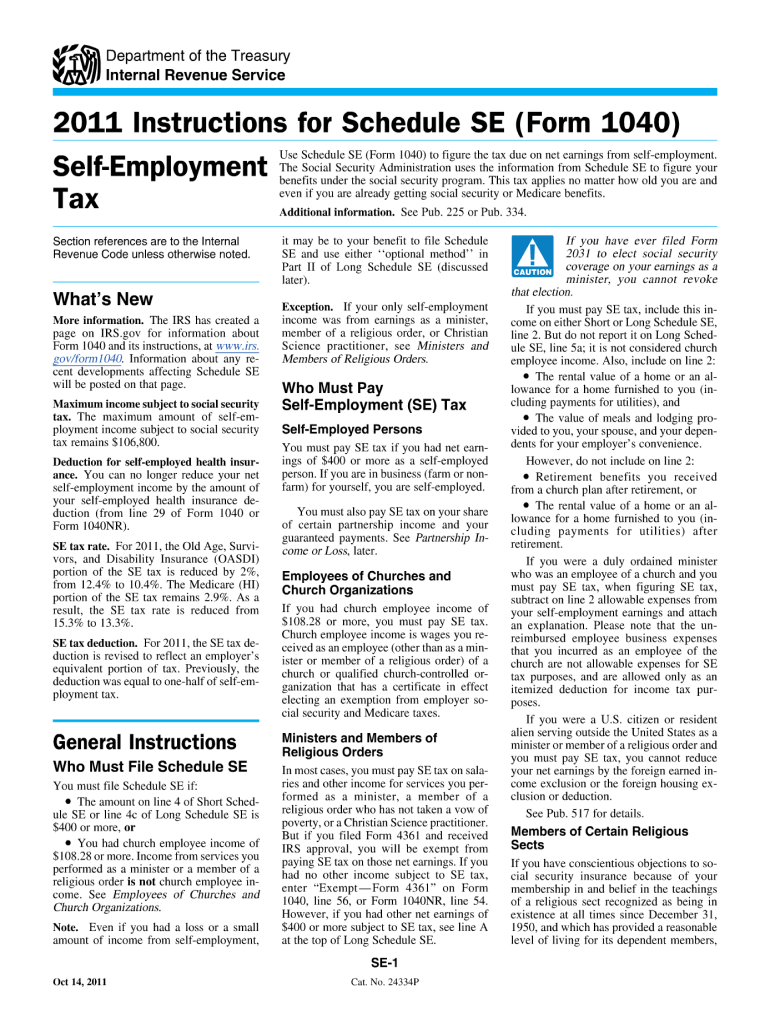
Form SE, also known as Schedule SE (Form 1040), is used by individuals to calculate the self-employment tax owed based on net earnings. This tax comprises Social Security and Medicare taxes and is required for those who are self-employed. The form helps ensure that individuals accurately compute their tax obligations resulting from self-employment income. It is a vital document for self-employed professionals, including freelancers, independent contractors, and small business owners, as it helps determine the specific tax liability due on their income.
How to Use Form SE (Form 1040)
To use Form SE effectively, individuals must first gather all documents reflecting their self-employment income and expenses. After computing their total net earnings from self-employment, individuals input these figures into the appropriate sections of the form. The form will then guide them through a series of calculations to determine the amount of self-employment tax owed. Familiarity with the nuances of this process is crucial as miscalculations can result in underpayment penalties or overpayment, which can be more challenging to rectify.
Steps to Complete Form SE (Form 1040)
- Calculate Net Earnings: Begin by determining total income derived from self-employment, subtract allowable expenses, and calculate net earnings.
- Fill Out Personal Information: Enter personal details as required on the form.
- Perform Tax Calculation: Use the form to calculate the self-employment tax by multiplying net earnings by the applicable tax rate.
- Report Additional Income: Include any additional incomes subjected to self-employment tax.
- Finalize and Review: Check all entries for accuracy and completeness. Ensure all required fields are filled out correctly before submitting.
Who Should File Form SE (Form 1040)
Form SE must be filed by individuals who have net earnings from self-employment of $400 or more in a tax year. This form is essential for those who derive their primary income from freelance work, as well as individuals operating small businesses. Additionally, specific conditions may require members of the clergy and certain church employees to file this form to cover Social Security and Medicare taxes on their income.
Important Terms Related to Form SE (Form 1040)
- Net Earnings: The amount of income remaining after deducting eligible business expenses.
- Self-Employment Tax: Tax used to fund Social Security and Medicare, required from self-employed individuals.
- Social Security Tax Rate: The percentage of earnings subject to Social Security tax.
- Medicare Tax Rate: The percentage of earnings subject to Medicare tax.
- Optional Methods: Alternative methods available on the form to potentially reduce taxable income under specific conditions.
Legal Requirements and Compliance
Filing Form SE is legally required for individuals meeting the self-employment income threshold. Compliance with these requirements ensures continued eligibility for Social Security and Medicare benefits. Non-compliance can lead to penalties and interest charges on unpaid taxes. It's critical for filers to be aware of their legal obligations and the implications of not adhering to them.
IRS Guidelines for Form SE
The Internal Revenue Service (IRS) provides comprehensive guidance on completing Form SE. These guidelines are updated periodically, reflecting changes in tax rates or legislation. It is important for taxpayers to review these guidelines annually to ensure adherence to the latest requirements. IRS instructions also provide optional methods for computing net earnings, which might benefit taxpayers under specific situations.
Filing Deadlines and Important Dates
Form SE should be filed in conjunction with an individual's annual tax return, Form 1040. Typically, this is due by April 15 each year. However, if the 15th falls on a weekend or holiday, the deadline may extend to the next business day. Extensions can be requested, but any taxes owed must be paid by the original due date to avoid penalties and interest. It is important to mark these dates to ensure timely compliance.




