







Understanding the 2014 SE Form
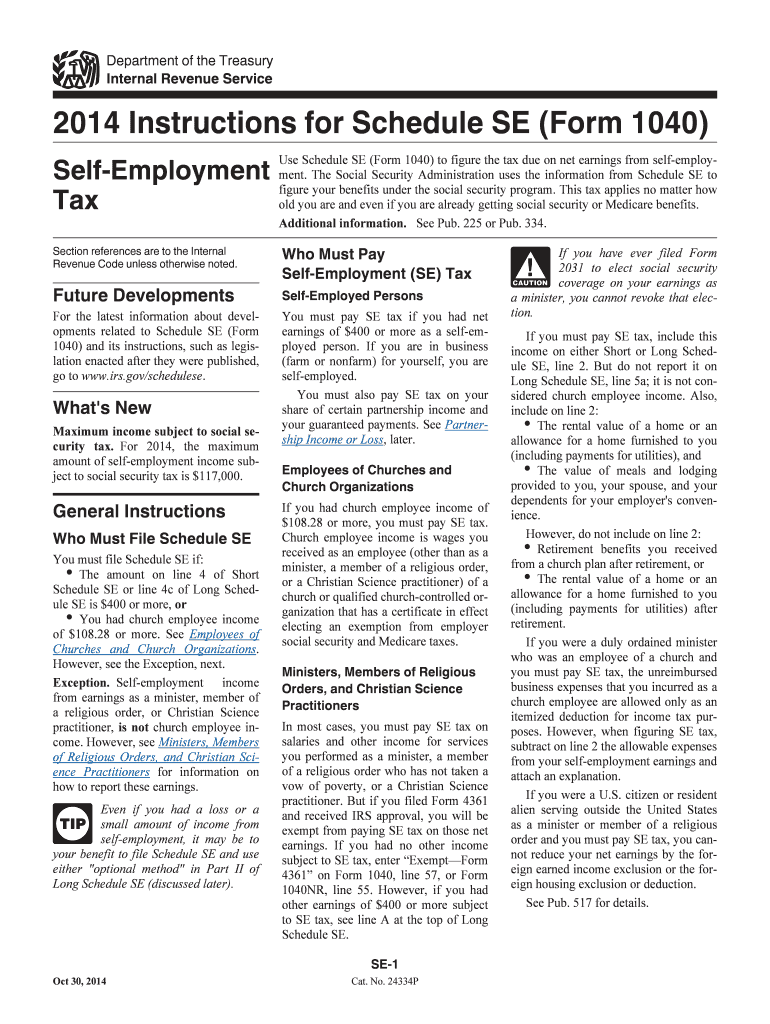
The 2014 SE form, also known as the Schedule SE (Form 1040), is used to calculate self-employment tax based on net earnings for the year 2014. This form is a crucial part of filing tax returns for individuals who earn income through self-employment. Its purpose is to ensure that self-employed individuals pay Social Security and Medicare taxes, similar to those withheld for employees.
Purpose of the 2014 SE Form
Self-employment tax is a combination of Social Security and Medicare taxes primarily for individuals who work for themselves. Understanding the purpose of the 2014 SE Form helps taxpayers correctly identify their tax liabilities and ensures they meet federal tax requirements. The form takes into account net earnings from self-employment, distinct from general income tax calculations, and ensures contributions to social security.
Obtaining the 2014 SE Form
You can obtain the 2014 SE Form from the IRS website or through tax preparation software like TurboTax or QuickBooks, which often provide digital access to tax forms for prior years. If you prefer a physical copy, local IRS offices or libraries may have backdated forms. Additionally, accountants and tax professionals often keep archived copies.
Steps to Complete the 2014 SE Form
Completing the 2014 SE Form requires careful attention to detail. Here’s a step-by-step guide to filling it out:
-
Calculate Net Earnings: Start by determining your net earnings from self-employment. This is gross income minus business expenses.
-
Apply the Self-Employment Tax Rate: For 2014, the self-employment tax rate was 15.3%, consisting of 12.4% for Social Security and 2.9% for Medicare.
-
Deductions: Calculate your deduction by multiplying net earnings by 92.35% to determine the taxable amount.
-
Complete Part I of the Form: Report net earnings and multiply by the tax rate to find your tax responsibility.
-
Attach to Form 1040: Once completed, attach the Schedule SE to your Federal Form 1040 before submission.
Important Terms Related to the 2014 SE Form
Understanding terminology is key to correctly filling out the form:
- Net Earnings: Total income minus expenses from self-business.
- SE Tax Rate: The designated tax percentage for self-employment (15.3%).
- Social Security and Medicare Taxes: Constituents of the SE tax.
Legal Use and Compliance
The SE Form must be used appropriately to comply with U.S. tax laws. It is designed for individuals who have self-employment income above the IRS threshold for the given year. Failing to file or incorrectly filing can result in penalties, so accuracy is paramount. IRS guidelines suggest maintaining records, such as receipts and expense documents, to validate claims on the form.
Who Typically Uses the 2014 SE Form
This form is primarily for self-employed individuals, but it also applies to church employees earning more than $108.28 in wages. Independent contractors, freelancers, and small business owners are common users. Identifying as a sole proprietor or having part-time business income also necessitates using the SE Form for accurate tax reporting.


Taxpayer Scenarios
Self-employed taxpayers need to consider several scenarios:
- Multiple Income Streams: Consolidate all self-employment income when calculating net earnings.
- Partnerships: Include income reported from partnerships impacting self-employment earnings.
- Retirees with Side Business: Those with post-retirement self-employment can have dual income streams, affecting the SE Form calculations.

IRS Filing Guidelines and Important Dates
Timeliness is critical when submitting the 2014 SE Form. IRS deadlines for tax returns, including Schedule SE, were April 15, 2015, for that tax year. Extensions might have been available, but penalties for late filing include fees and interest on unpaid taxes.
Examples of Using the 2014 SE Form
Examples help clarify its usage:
- Freelancer Income: A graphic designer calculating their net earnings from project work minus allowable expenses would use this form to determine tax owed.
- Small Business Owner: An owner of a local bakery would report income from sales against costs, using the form to determine self-employment tax.
Differences in State Regulations
Though the SE Form is federal, state-specific tax obligations could influence local or additional requirements. It’s crucial to also check state tax guidelines, which may have differing filing requirements or tax treatment of self-employment income.
Penalties for Non-Compliance
Failure to file the 2014 SE Form can lead to IRS penalties. Non-compliance includes both failure to submit on time and inaccuracies in reporting, which could prompt IRS audits and result in financial penalties or increased scrutiny for future filings.
By understanding these comprehensive aspects of the 2014 SE Form, taxpayers ensure correct and responsible fulfillment of their tax obligations.




