







Definition & Meaning
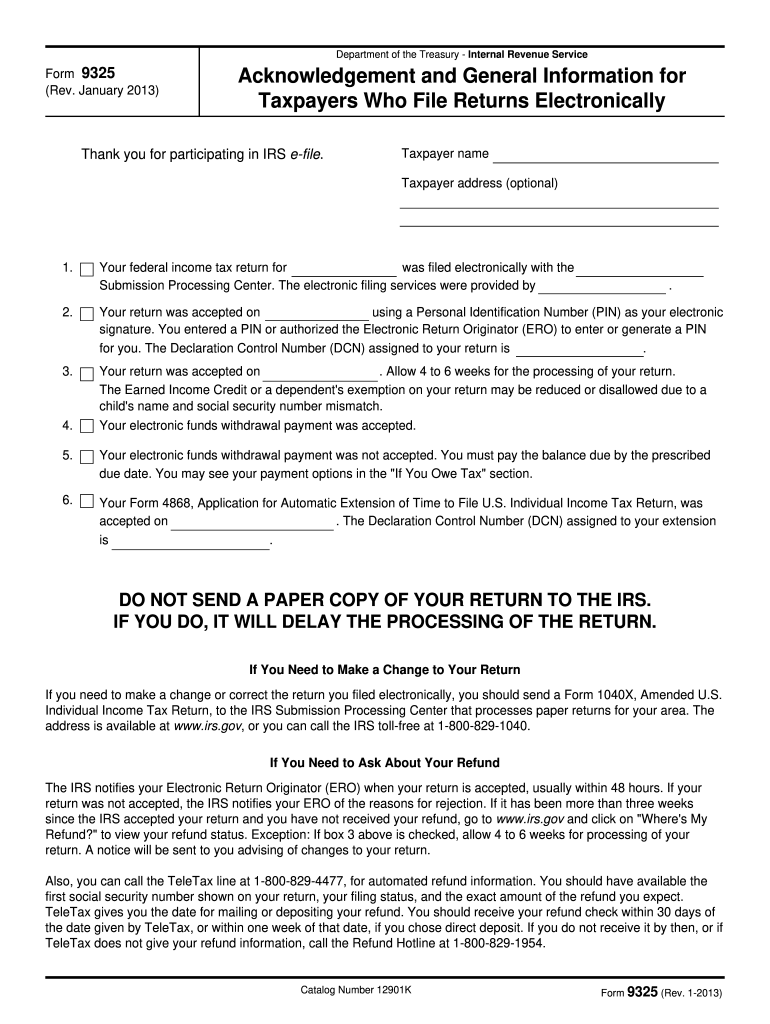
The 2013 Form Acknowledgement, specifically Form 9325 from the IRS, serves as an acknowledgment for taxpayers who file their federal income tax returns electronically. It confirms the acceptance of electronic filings and provides general information related to the electronic submission process. This document is crucial because it outlines the necessary steps taxpayers must follow to ensure a successful electronic filing, including confirmation of receipt by the IRS and details about further actions that might be necessary.
Key Elements of the 2013 Form Acknowledgement
The 2013 Form Acknowledgement contains several key components essential for taxpayers to understand their responsibilities after submitting their tax returns electronically. Elements include confirmation of the electronic filing receipt, guidelines on how to inquire about refunds, and instructions on making amendments to previously filed returns. Furthermore, the form emphasizes the importance of not submitting paper copies of tax returns that have been filed electronically, as this can lead to processing delays.
How to Obtain the 2013 Form Acknowledgement
To obtain the 2013 Form Acknowledgement, taxpayers who submit their returns electronically will automatically receive this form as a part of the filing submission process. This acknowledgment can usually be accessed through the electronic filing software used, whether it be the IRS e-file system, third-party tax software like TurboTax or QuickBooks, or with the assistance of a tax professional. This ensures that all documents are readily available for future reference.
Steps to Complete the 2013 Form Acknowledgement
Completing the 2013 Form Acknowledgement involves several straightforward steps. First, the taxpayer electronically files their tax return through the appropriate channels. After submission, they should check their email or the e-file system for confirmation that includes the form. If additional information is needed, such as making amendments, detailed instructions will be provided within the form, which should be followed carefully to ensure compliance with IRS regulations.
Who Typically Uses the 2013 Form Acknowledgement
The 2013 Form Acknowledgement is used predominantly by individual taxpayers and businesses who choose to file their federal income tax returns electronically. This includes individuals from various taxpayer scenarios such as self-employed individuals, retirees, and students. Business entities that often utilize this form include Limited Liability Companies (LLCs), Corporations, Partnerships, and other business structures required to file taxes electronically.


Important Terms Related to 2013 Form Acknowledgement
Understanding key terms is vital when dealing with the 2013 Form Acknowledgement. Some important terms include:
- Electronic Filing (e-file): The process of submitting federal tax returns to the IRS utilizing electronic methods.
- Acknowledgement Receipt: The confirmation provided by the IRS when an electronic return is accepted.
- Amendments: Refers to the changes made to a previously filed tax return.
- Refund Inquiries: The process to follow if there are questions regarding the status of a tax refund.
Filing Deadlines / Important Dates
The filing deadlines for electronically submitted tax returns generally align with those for traditional paper filings. For the tax year 2013, returns were typically due by April 15, 2014. If extensions were necessary, taxpayers could request additional time, extending the deadline usually by six months. It is crucial to adhere to these deadlines as late submissions may result in penalties or interest charges.
Required Documents
To support the electronic filing process and the completion of the 2013 Form Acknowledgement, taxpayers need to ensure they have all necessary documents on hand. These generally include:
- W-2 Forms: For employees showing their annual wages and taxes withheld.
- 1099 Forms: For reporting different types of income earned throughout the year.
- Receipts for Deductions: Records of deductible expenses that may decrease taxable income.
- Previous Tax Returns: For reference and possibly to carry forward certain items like losses.
IRS Guidelines
IRS guidelines stipulate that taxpayers are encouraged to keep copies of the 2013 Form Acknowledgement along with their tax filing records. These documents are crucial for tracking their submission status and should be retained for at least three years from the original filing date. Additionally, the IRS advises taxpayers to review their forms for accuracy and ensure all information is correct before submitting, as errors can delay the processing or acceptance of the returns.
Legal Use of the 2013 Form Acknowledgement
The legal implication of using the 2013 Form Acknowledgement correctly is significant in ensuring compliance with federal tax laws. Being a formal acknowledgment from the IRS, it serves as evidence of filing and acceptance, providing legal assurance that the taxpayer's obligations in submitting their federal returns have been met. Non-compliance or failure to retain this form can result in disputes or issues concerning tax submissions.
Digital vs. Paper Version
While the 2013 Form Acknowledgement is primarily digital due to its nature of confirming an electronic transaction, it is crucial for taxpayers to understand the differences between digital and paper submissions. The electronic filing offers benefits including faster processing times, quicker refunds, and immediate confirmation upon acceptance. Paper submissions, in contrast, often experience delays and lack the immediate acknowledgment that the electronic method provides, reinforcing the importance of utilizing the e-file system when eligible.
Software Compatibility (TurboTax, QuickBooks, etc.)
The 2013 Form Acknowledgement is designed to be compatible with a wide range of tax software solutions. Popular platforms such as TurboTax and QuickBooks integrate seamlessly with the IRS's e-file system, allowing users to file taxes electronically and receive confirmations like Form 9325 directly through these applications. This compatibility streamlines the filing process, making it easier for both individual taxpayers and businesses to meet their tax obligations efficiently.
Penalties for Non-Compliance
Failing to comply with tax filing requirements can result in several penalties, particularly if electronic submission obligations are not met. For example, inaccurate or late submissions can lead to financial penalties or interest charges. Additionally, businesses that are required to file electronically but fail to do so might face additional penalties. Retaining the 2013 Form Acknowledgement is vital as it serves as proof of timely submissions, helping taxpayers avoid such punitive measures.




