
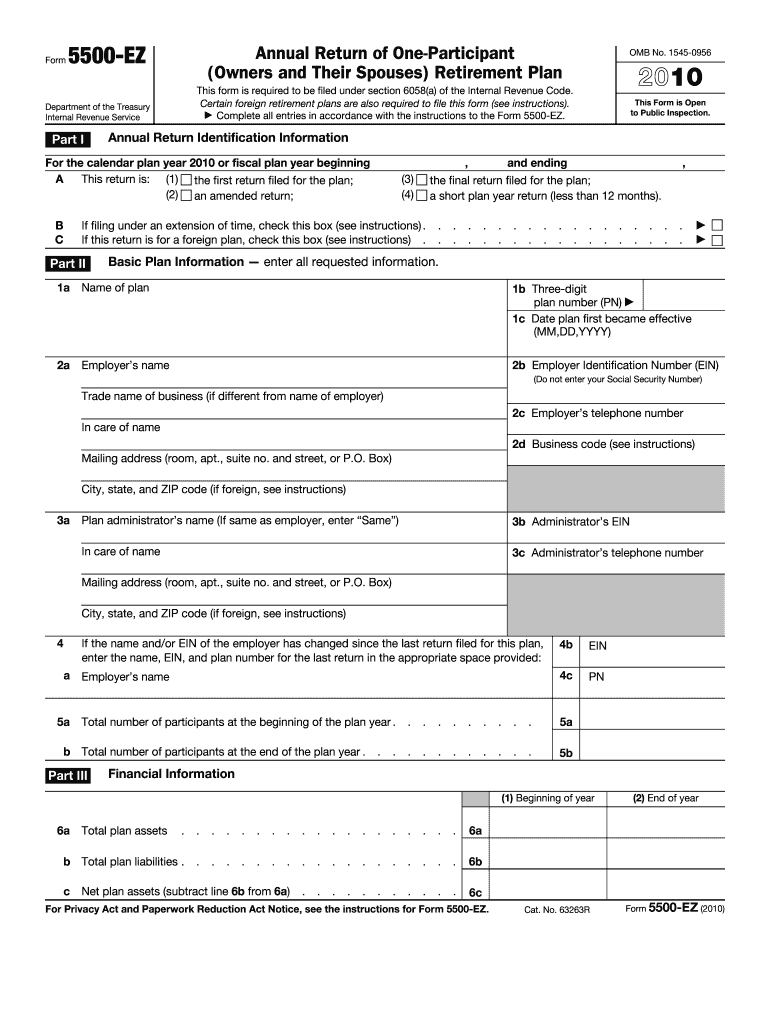







Definition of Form 5500-EZ 2010
Form 5500-EZ is a specialized annual return designed for one-participant retirement plans and small businesses. Specifically, it is used for owner-only plans or plans only covering the owner and their spouse. This form provides essential data to the IRS, detailing aspects of the financial standing, compliance status, and basic information of the retirement plan.
- Owner-only Plans: These are retirement plans limited to the business owner, often utilized by self-employed individuals.
- Compliance Information: This section includes questions that ascertain the plan’s adherence to stipulated IRS requirements.
- Public Inspection: Submitted forms may be open for public scrutiny, underlining the importance of accuracy and honesty in its completion.
Steps to Complete Form 5500-EZ 2010
Completing Form 5500-EZ requires precision to ensure compliance with IRS regulations. Here is a step-by-step guide:
- Gather Necessary Information: Collate all relevant retirement plan data, including financial transactions.
- Complete Basic Plan Information: Fill out the introductory section, detailing the employer and plan identification.
- Input Financial Data: Accurately detail plan financials, such as assets and liabilities.
- Answer Compliance Questions: These questions verify the plan's adherence to legal standards.
- Review and Sign: Ensure all entries are accurate before signing, as this document holds legal significance.
- Signature Protocol: The employer must sign and certify the accuracy of the information provided.
- Detailed Review: Double-check figures and details to prevent errors that may lead to penalties.
Filing Deadlines and Important Dates
Timeliness is crucial in filing Form 5500-EZ. Missing deadlines can lead to penalties and other complications.
-
Filing Deadline: Typically, the form is due seven months after the end of the plan year. For many, this coincides with the tax filing deadline, such as July 31 for calendar year plans.
-
Extension Options: If necessary, request an extension using Form 5558 prior to the deadline to extend the filing period by an additional two and a half months.
-
Late Filing Penalties: Failure to meet filing deadlines can result in fines of up to $50 per day.
Legal Significance and Use of Form 5500-EZ 2010
The Form 5500-EZ holds significant legal implications.
- Tax Reporting: Ensures clarity and transparency in retirement plan operations.
- Compliance Verification: Offers a method for both the IRS and plan administrators to confirm adherence to federal pension laws.
- Legal Audit Trail: Serves as a historical record of plan compliance and financial health.
Key Elements of Form 5500-EZ 2010
Each section of Form 5500-EZ plays a crucial role in its overall purpose:
- Basic Plan Information: Contains key identifying details about the retirement plan.
- Financial Data: Requires input of plan assets, liabilities, contributions, and disbursements.
- Compliance Questions: Involves a checklist that confirms the plan’s compliance with specific legal requirements.
- Signature Requirement: Validation by the responsible party, usually the business owner.
Who Typically Uses Form 5500-EZ 2010
The form is primarily utilized by specific business entities and individuals in certain retirement plan contexts:
- Self-Employed Owners: Ideal for entrepreneurs managing their retirement savings.
- Small Business Owners: Those intending to offer retirement benefits to themselves and their spouses.
- One-participant Retirement Plans: Plans involving only the business owner or owner and spouse without additional employees.
IRS Guidelines and Requirements
Adhering to IRS guidelines is crucial for effective filing:
-
Plan Eligibility: Confirm that you qualify under the one-participant plan rules.
-
Filing Criteria: Understand the specific financial thresholds that necessitate filing Form 5500-EZ.
-
Detailed Instruction Manual: IRS provides a comprehensive set of instructions for completing Form 5500-EZ, which should be reviewed thoroughly.
Penalties for Non-Compliance
Failure to comply with Form 5500-EZ requirements can incur significant consequences:
-
Initial Penalties: Starting at $25 per day, with the potential to reach $15,000.
-
Rectification Measures: The IRS offers programs to correct late filings, potentially reducing penalties if addressed proactively.
-
Consequences of Misrepresentation: Providing inaccurate information can lead to audits and further legal action.
Important Terms Related to Form 5500-EZ 2010
Familiarity with relevant terminology ensures accurate form completion:
-
Plan Sponsor: The entity responsible for managing the retirement plan.
-
Plan Year: The fiscal period for reporting plan activities, typically matching the calendar year.
-
Investment Assets: These include stocks, bonds, or mutual funds held under the plan.
-
Distribution: Any amounts taken out of the plan by participants, typically involving retirement payouts.




