







Definition & Meaning
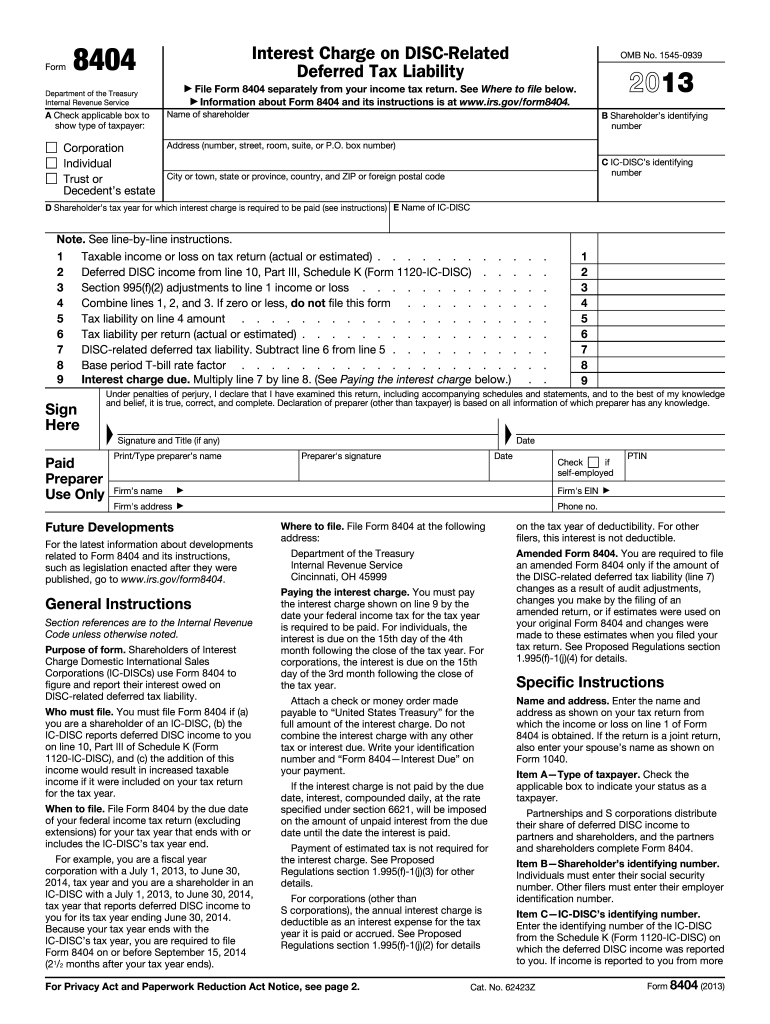
The 2013 DISC tax form, officially known as Form 8404, is used by Domestic Interest Charge Domestic International Sales Corporations (IC-DISCs) to report and calculate interest on deferred tax liabilities associated with DISC-related taxable income. An IC-DISC is a unique type of corporation that provides tax benefits to encourage U.S. companies to increase their exports. The form comprises several sections that require detailed financial disclosures about the IC-DISC’s income and deferred tax liabilities. This form facilitates the compliance of tax obligations related to DISC income and ensures proper interest computation on deferred amounts.
Important Terms Related to the 2013 DISC Tax Form
Understanding the terminology associated with the 2013 DISC tax form is crucial for accurate completion. Common terms include:
- IC-DISC: An entity that allows U.S. companies to defer taxes on a portion of export income.
- Deferred Tax Liabilities: Taxes that are postponed or delayed under the IC-DISC framework.
- Taxable Income: The amount of income subject to taxation after deductions and exemptions.
- Interest Charge: The calculated charge on deferred tax amounts the IC-DISC must pay.
These terms reflect the operational and financial nuances of the form and are vital for correctly processing your tax liabilities under the DISC’s structure.
Who Typically Uses the 2013 DISC Tax Form
The 2013 DISC tax form is typically utilized by shareholders and entities involved in IC-DISCs. These typically include:
- Export Companies: U.S.-based businesses that wish to take advantage of the tax deferral benefits provided by setting up an IC-DISC.
- Shareholders of IC-DISCs: Individuals or entities owning shares in IC-DISCs must complete this form for compliance and reporting.
- Certified Public Accountants (CPAs) and Tax Professionals: Experts who assist businesses in preparing and filing the form accurately.
Entity involvement in exports and international sales activities significantly determines the need for using this form.


Steps to Complete the 2013 DISC Tax Form
Completing the 2013 DISC tax form involves several steps that ensure accuracy:
- Collect Relevant Financial Data: Gather all relevant financial records, including income statements and tax deferral data.
- Fill Out Identifying Information: Accurate completion of sections related to the entity’s and shareholders' personal information.
- Calculate Deferred Tax Liabilities: Use the prescribed computation methods to determine the deferred tax liabilities.
- Determine Interest Charges: Compute the interest charges due on the deferred amounts using the IRS guidelines.
- Verify and Submit: Review the form meticulously before submission to ensure all entries are accurate and complete.
Utilizing a structured approach helps mitigate errors and ensures compliance with IRS requirements.
Required Documents
To effectively complete the 2013 DISC tax form, ensure the following documents are available:
- Financial Statements: Current and relevant financial data of the DISC.
- Tax Records: Previous filings related to the IC-DISC, if any.
- Identifying Information: Documentation that verifies the identity of the corporation and its shareholders.
These documents facilitate precise completion and provide the necessary backing for entries made on the tax form.
Filing Deadlines / Important Dates
Adhering to the filing deadlines is critical for the 2013 DISC tax form:
- Annual Filing Deadline: Typically, the form must be filed by the 15th day of the ninth month following the end of the fiscal year.
- Extensions: Extensions may be available upon request, offering additional time to prepare.
Meeting these deadlines is crucial to avoid penalties and ensure compliance.
Legal Use of the 2013 DISC Tax Form
Legally, the form is used to ensure correct reporting and payment of interest on deferred tax liabilities related to a DISC's income. Compliance with the Internal Revenue Code's requirements for IC-DISCs is essential, as it enables entities to leverage tax-deferral benefits without contravening federal tax laws.
Penalties for Non-Compliance
Failure to file the 2013 DISC tax form accurately and timely can lead to significant penalties:
- Monetary Fines: Imposed for late filing or inaccuracies.
- Interest Accruals: Additional interest may accrue on unpaid tax liabilities.
- Legal Consequences: Continued non-compliance may result in further legal action by the IRS.
Remaining compliant through proper documentation and timely submissions helps avert such penalties.




