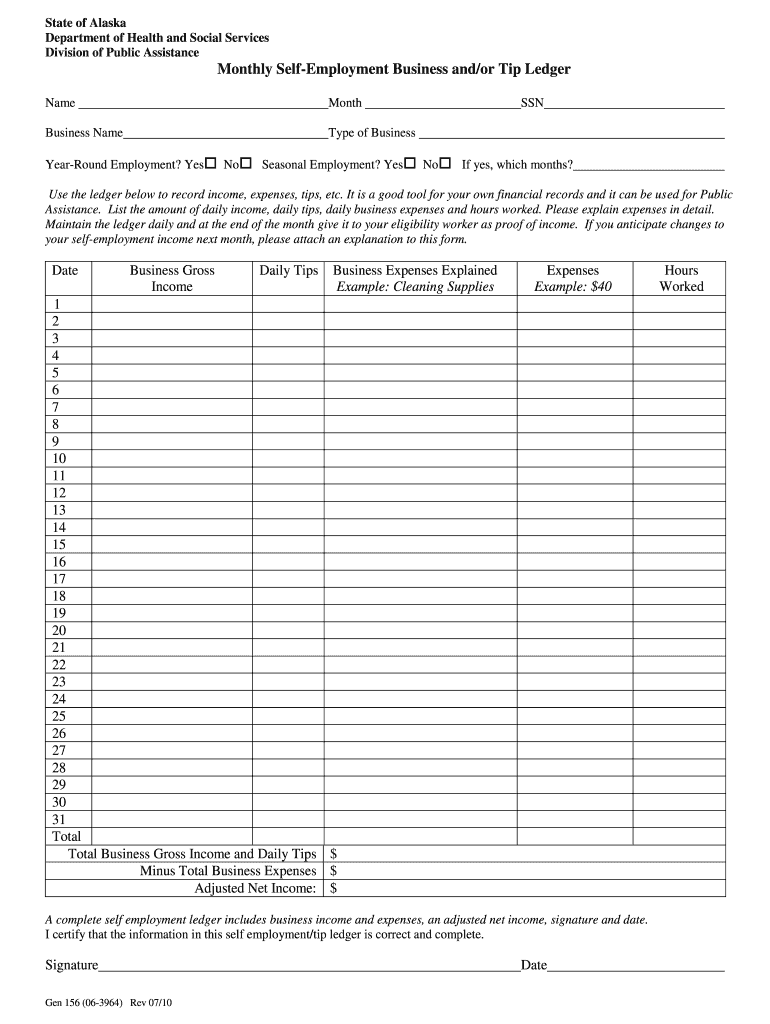







Definition and Purpose of the Self Employment Ledger for Marketplace
The self employment ledger for marketplace is a comprehensive tool designed for individuals engaged in self-employment, particularly when participating in marketplace health insurance plans. This ledger documents income, expenses, and hours worked, enabling users to track their financial status accurately. It serves a critical function for self-employed individuals who seek to provide proof of income when applying for public assistance or health insurance subsidies, especially under the Affordable Care Act (ACA).
Key Features of the Ledger
- Income Tracking: Users can record various sources of income, including wages, business profits, and tips. Accurate tracking helps determine eligibility for specific health coverage programs.
- Expense Documentation: It allows users to itemize business-related expenses, which can significantly impact taxable income and subsidies.
- Hours Worked Logging: Recording hours provides insights into work patterns and helps establish a clear picture of business activity.
The ledger is not only essential for personal financial management but also for meeting compliance requirements set by health marketplaces or financial assistance programs. By maintaining a detailed record, self-employed individuals can navigate the complexities of tax filings and governmental regulations more effectively.
Steps to Complete the Self Employment Ledger for Marketplace
Completing the self employment ledger for marketplace involves several structured steps that ensure accuracy and compliance. Each section requires careful attention to detail to reflect the financial activities adequately.
- Gather Necessary Documentation: Collect all relevant financial documents, including invoices, receipts, and bank statements. These records will substantiate the entries in the ledger.
- Record Monthly Income: Enter daily income amounts into the ledger consistently. It can include various revenue streams such as sales, freelance work, and tips received.
- Track Expenses: Log business expenses regularly. Examples include supplies, travel costs, and equipment purchases. This step is crucial for accurately calculating adjusted net income.
- Calculate Adjusted Net Income: Deduct total expenses from gross income to determine adjusted net income. This figure is vital for applying for marketplace health insurance or public assistance.
- Review and Finalize Ledger: Regularly review entries for accuracy and completeness. Finalizing the ledger at the end of the month prepares it for submission, if required, to relevant authorities.
Maintaining this level of detail ensures that the ledger reflects a true picture of financial health and compliance, which is essential for self-employed individuals who rely on marketplace insurance.
Important Terms Related to the Self Employment Ledger for Marketplace
Understanding key terminology associated with the self employment ledger for marketplace is crucial for correctly filling it out and ensuring compliance with health regulations.
- Gross Income: The total income earned before any expenses are deducted. This figure is important for calculating potential eligibility for subsidies.
- Net Income: The income that remains after deducting allowable business expenses from gross income. This number often plays a crucial role in subsidies and tax obligations.
- Adjusted Net Income: This figure results from further modifications to net income. It is particularly important when determining the qualification for public assistance programs.
- Marketplace Health Insurance: Insurance plans offered through government health marketplaces. Eligibility is often assessed based on income demonstrated in ledgers like this.
Understanding these terms helps self-employed individuals navigate the complexities of financial reporting and health coverage under ACA guidelines.
Who Typically Uses the Self Employment Ledger for Marketplace
The self employment ledger for marketplace is used by a variety of individuals, each with unique financial circumstances.
- Freelancers: Solitary workers who provide services on a project or contract basis often rely on the ledger to maintain a clear overview of fluctuating income streams.
- Small Business Owners: Entrepreneurs managing their operations use this ledger to track not only personal income but also expenditure related to business activities.
- Gig Economy Workers: Individuals working through platforms such as ride-sharing or delivery services can use the ledger to document income derived from multiple, irregular jobs.
- Contract Workers: Those who operate as independent contractors need precise records to ascertain income for both tax purposes and health insurance applications.
This ledger is critical across various self-employment contexts, as it helps individuals meet financial reporting requirements while ensuring they have a clear and accessible record of their income and expenses.


Legal Use of the Self Employment Ledger for Marketplace
The self employment ledger for marketplace has the legal standing to serve as financial documentation required by various governmental programs. Proper usage ensures compliance with local and federal regulations and can prevent legal issues regarding income reporting.
Legal Compliance Aspects
- Adherence to IRS Regulations: Maintaining a self employment ledger helps ensure that income taxes are paid accurately, reflecting true earned income and allowable expenses.
- Eligibility Verification: The ledger serves as a recognized document to verify income when applying for public assistance or tax credits related to health insurance.
- Audit Protection: In the event of an audit, having a detailed ledger can substantiate income claims and protect individuals from penalties.
Users should be aware of the legal implications of discrepancies in their ledger, emphasizing the importance of accuracy and thorough record-keeping.