
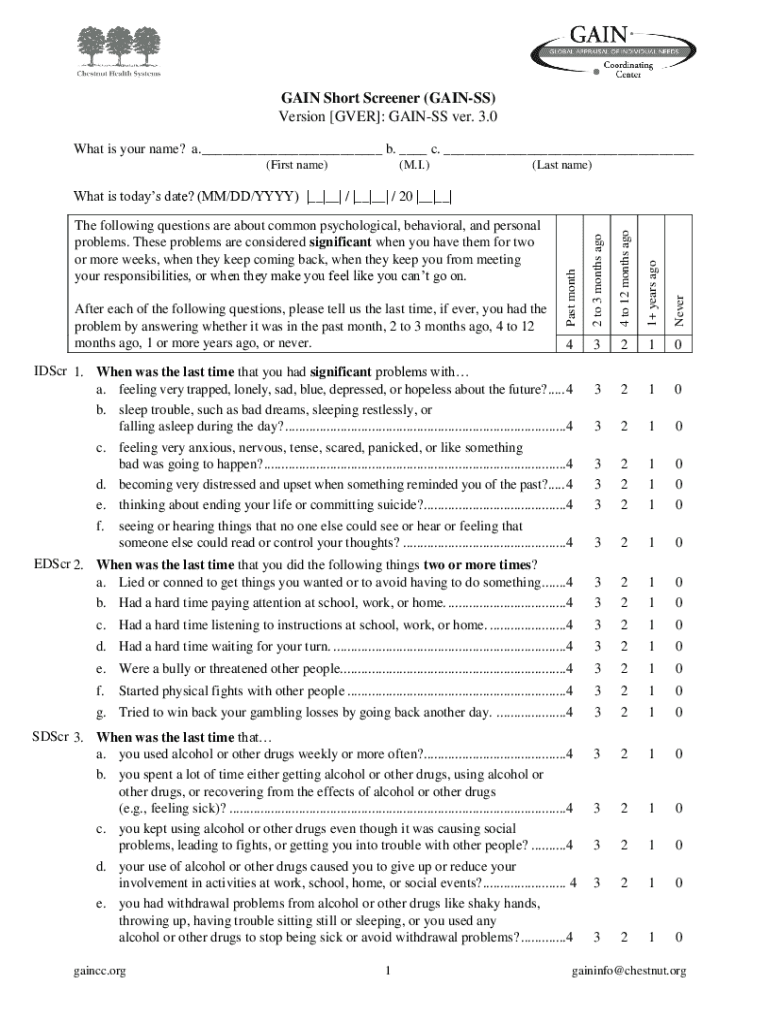







Definition and Purpose of the Gain Short Screener PDF
The Gain Short Screener PDF, often referred to as GAIN-SS, is a structured assessment tool used to evaluate various psychological, behavioral, and personal issues that individuals may encounter. This tool is primarily focused on identifying symptoms related to depression, anxiety, substance use, and behavioral issues. It includes a series of standardized questions that help gauge the frequency and severity of these problems across different timelines.
The primary purpose of the GAIN-SS is to provide clinicians and practitioners with a reliable method for assessing the mental health and behavioral status of clients. It is designed to facilitate targeted clinical interventions and improve treatment outcomes by providing a clear understanding of an individual's struggles. Utilized widely in mental health settings, the GAIN short screener also assists organizations in collecting data for research and treatment efficacy.
Steps to Complete the Gain Short Screener PDF
Completing the Gain Short Screener PDF involves several key steps to ensure accurate and effective assessment results.
-
Access the Document: Obtain the latest version of the Gain Short Screener PDF from a reliable source or the relevant health department website.
-
Personal Information Section: Fill out the initial section that gathers demographic information. This may include your name, age, gender, and contact information, which helps in identifying the respondents.
-
Respond to Questions: Answer the questions honestly. These typically cover various time frames and assess the frequency of experienced symptoms. The responses may range from "never" to "very often," offering significant insight into your condition.
-
Scoring the Screener: Once completed, the answers are typically scored using a pre-defined scoring key included with the screener. This scoring is critical for analyzing the severity of issues and determining the next steps in the treatment plan.
-
Interpreting Results: After scoring, the results may guide further evaluation or be discussed with a clinician for interpretation. The clinician may use these findings to develop a tailored treatment plan.
Each step is crucial in ensuring that the information gathered reflects an accurate assessment of psychological and behavioral health.
Important Terms Related to the Gain Short Screener PDF
Understanding the terminology associated with the Gain Short Screener PDF is essential for both practitioners and clients.
- Assessment: A systematic process to evaluate an individual's mental health, personality traits, and behavior patterns.
- Scoring Key: A reference tool that allows practitioners to convert responses into numerical values, helping to determine levels of risk or need.
- Respondent: The individual completing the screener, typically a patient or client in a clinical setting.
- Severity Levels: Categories used to interpret scores, often ranging from mild to severe mental health concerns.
Familiarity with these terms enhances comprehension of both the screener's intent and its application in various professional scenarios.
Who Typically Uses the Gain Short Screener PDF
The Gain Short Screener PDF is utilized by a variety of professionals in different contexts:
- Mental Health Clinicians: Therapists, psychologists, and counselors use the screener to evaluate clients during an initial intake process or when updating a treatment plan.
- Substance Abuse Counselors: Professionals in addiction treatment programs may use this tool to assess clients entering their programs and monitor progress.
- Educational Institutions: School psychologists and counselors use the screener to identify students who may require additional mental health support or interventions.
- Research Organizations: Institutions conducting studies on mental health trends and interventions may apply this assessment tool as part of their data collection methods.
In sum, the Gain Short Screener PDF serves as a comprehensive evaluation tool across various settings, aiding mental health assessments and interventions.


Examples of Using the Gain Short Screener PDF
Practical applications of the Gain Short Screener PDF encompass diverse scenarios in both clinical and non-clinical settings.
- Clinical Setting: A therapist uses the screener during the first session with a new client. The results reveal significant levels of anxiety, which prompts the clinician to propose cognitive-behavioral therapy as a treatment method.
- Substance Abuse Treatment: A counselor administers the screener to individuals entering rehabilitation. The results help identify specific issues related to substance use, guiding the development of tailored treatment plans for each client.
- Educational Environment: A school counselor uses the screener as part of a mental health awareness initiative. Students who score high on depression indicators are offered counseling services and ongoing support.
- Research Studies: In a study aimed at understanding the prevalence of mental health issues among college students, researchers incorporate the Gain Short Screener PDF to quantify the severity of issues across a large sample.
These examples illustrate the versatility and efficacy of the Gain Short Screener PDF in various professional landscapes, reflecting its role as a critical tool in addressing and understanding mental health concerns.




