







Definition & Meaning
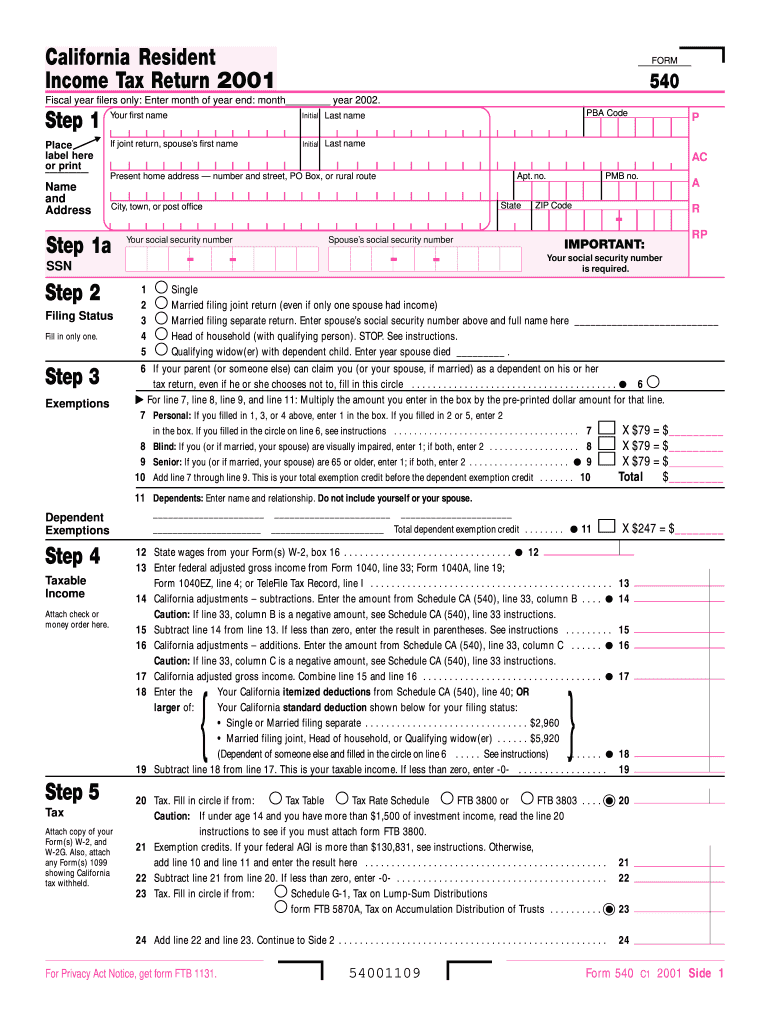
The "2001 form" typically refers to specific documents used for processing tax returns for the fiscal year 2001. On a general level, forms like these capture individual or business income data, allowable deductions, credits, and details about taxes owed or to be refunded. They play a crucial role in ensuring the taxpayer's financial information is accurately reported and legally compliant with IRS regulations. In particular, the 2001 California Resident Income Tax Return, known as Form 540, helps California residents report their state-specific income and tax responsibilities for that year.
How to Obtain the 2001 Form
Obtaining a 2001 form can be challenging as these forms are archived and not typically used for current filing purposes. However, if you need to access this form, you have several options. These include visiting the IRS website or your state's tax authority's site to check if they have archival copies available for download. Alternatively, contact the IRS directly or a tax professional who specializes in historical tax forms. Occasionally, specialized tax preparation software might offer access to archived forms.
Steps to Complete the 2001 Form
-
Gather Necessary Documents: Before beginning, compile all relevant documents such as W-2s, 1099s, and other records of income and deductions for the fiscal year 2001.
-
Filing Status and Personal Information: Enter your filing status (e.g., single, married filing jointly) and personal details, including name, Social Security number, and address.
-
Report Income: Fill out sections related to wages, salaries, interest, dividends, and other income streams. This typically involves entering figures from W-2s and 1099s into the appropriate lines.
-
Calculate Adjustments and Deductions: Identify any adjustments to income, such as educator expenses or IRA contributions. Then, apply deductions — either standard or itemized — based on your eligibility.
-
Determine Tax and Credits: Calculate the taxes owed using the appropriate tax tables from 2001. Apply any tax credits you may qualify for, like the child tax credit or dependent care credit.
-
Review and Submit: Double-check all entries for accuracy. Depending on your choice, submit the form via mail or e-file, adhering to the instructions for the 2001 tax year.
Key Elements of the 2001 Form
- Personal Information: Section for your full name, SSN, and filing status.
- Income Reporting: Detailed spaces for wages, business income, capital gains, and other earnings.
- Deductions and Credits: Areas to enter deductions, tax credits, and other adjustments.
- Payments and Refunds: Fields to report estimated payments and other credits, determining the final amount owed or refunded.
Legal Use of the 2001 Form
The 2001 form, like other annual tax documents, is used to comply with federal and state tax laws, ensuring that all revenue streams are reported accurately according to the regulations in force during that fiscal year. Compliance is crucial for avoiding audits, penalties, or legal action from tax authorities.
State-Specific Rules for the 2001 Form
While federal filing requirements are consistent across the U.S., state forms like California's Form 540 have additional specific rules. These rules often include different taxable income calculations, credits, and deductions tailored to state residents. You should consult the 2001 California tax instructions if filing or reviewing state obligations for that year.
Penalties for Non-Compliance
Failing to file or incorrectly filing the 2001 form results in several potential penalties:
- Late Filing Fee: Charged if the form is not submitted by the deadline.
- Interest on Unpaid Taxes: Accrues daily from the due date of the return until payment is made.
- Accuracy Penalties: Applicable if underpayments are due to negligence or substantial understatement of income.
Required Documents
- Income Statements (W-2, 1099s): Records of received income.
- Deduction Support: Documentation for claimed deductions like mortgage interest, property taxes, or charitable contributions.
- Previous Year's Tax Return: Helpful for consistency in carrying over information.
Filing Deadlines / Important Dates
The general deadline for filing the 2001 form was April 15, 2002. Extensions could be filed, shifting the deadline to October. These timestamps are critical for compliance to avoid penalties or interest on unpaid taxes.




