




01. Edit your emergency lighting test sheet pdf online
Type text, add images, blackout confidential details, add comments, highlights and more.

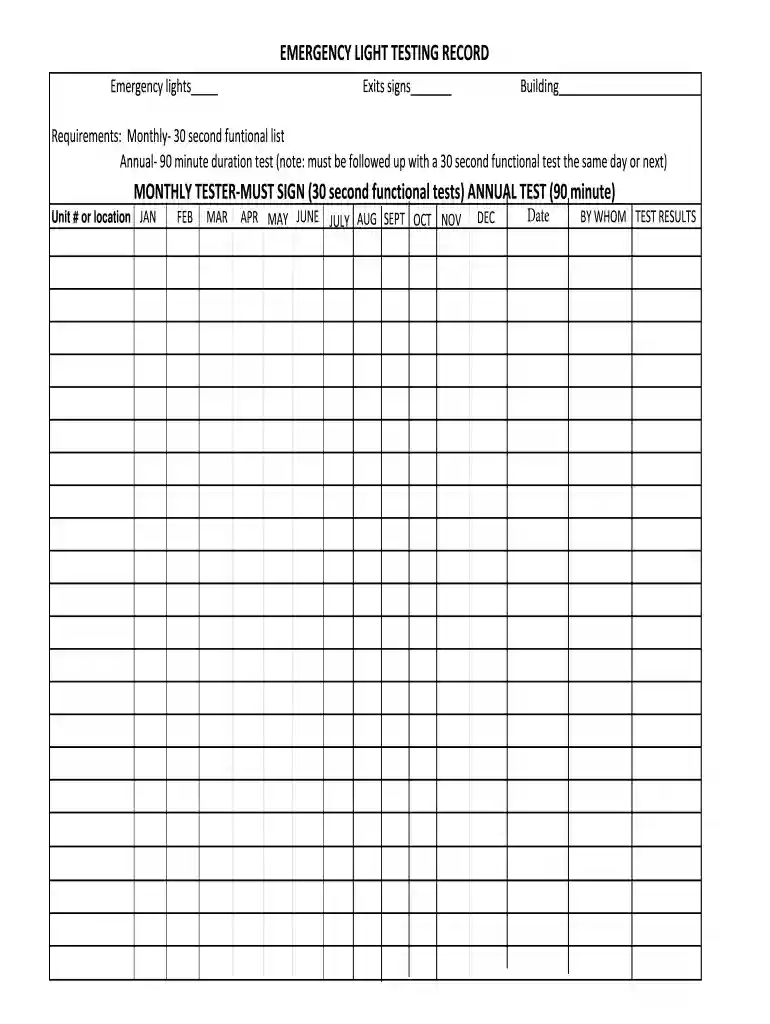
Type text, add images, blackout confidential details, add comments, highlights and more.

Draw your signature, type it, upload its image, or use your mobile device as a signature pad.

Send free printable emergency lighting test log template via email, link, or fax. You can also download it, export it or print it out.
The emergency light record is a crucial document that serves to track the testing and maintenance of emergency lighting systems within a building, including exit signs. These records ensure compliance with safety regulations and provide a reliable reference for building inspections and audits. Proper documentation helps verify that emergency lights are functioning effectively to safeguard occupants during emergencies.
Maintaining accurate emergency light records is pivotal for compliance with national and local fire codes, which may require regular inspections and testing. These records can also be critical during liability assessments if an incident occurs, demonstrating that proper safety protocols were followed.
Using the emergency light record involves a systematic approach to testing emergency lighting systems, documenting results, and ensuring all regulatory requirements are met. This process typically includes the following steps:
Completing the emergency light record involves specific actions that ensure thorough documentation and compliance. The following step-by-step procedure can guide you through the process:
Gather Necessary Tools and Materials:
Conduct the Tests:
Document Your Findings:
Maintain a Copy of the Record:
Implement a Review Schedule:
The emergency light record is utilized by a diverse range of professionals, including:


To effectively utilize the emergency light record, it is essential to include the following critical components:
In conclusion, maintaining an emergency light record is essential for the safety and compliance of any facility. Proper usage and diligent documentation protect occupants and ensure facilities meet regulatory standards.
At DocHub, your data security is our priority. We follow HIPAA, SOC2, GDPR, and other standards, so you can work on your documents with confidence.
At the same time of emergency treatment, it is necessary to report to the instructor and record the specific location and degree of the accident and injury inRead more
Learn how to get a permit for flashing (siren) lights if you drive an emergency vehicle like an ambulance, or a highway maintenance vehicle in CT.
Sheet Emergency Lighting Test Log Book: Emergency Lighting Inspection Book/. Emergency Light Register/ Emergency Lighting Testing Record Sheet 8. 5 X 11, 120


