







Definition & Meaning
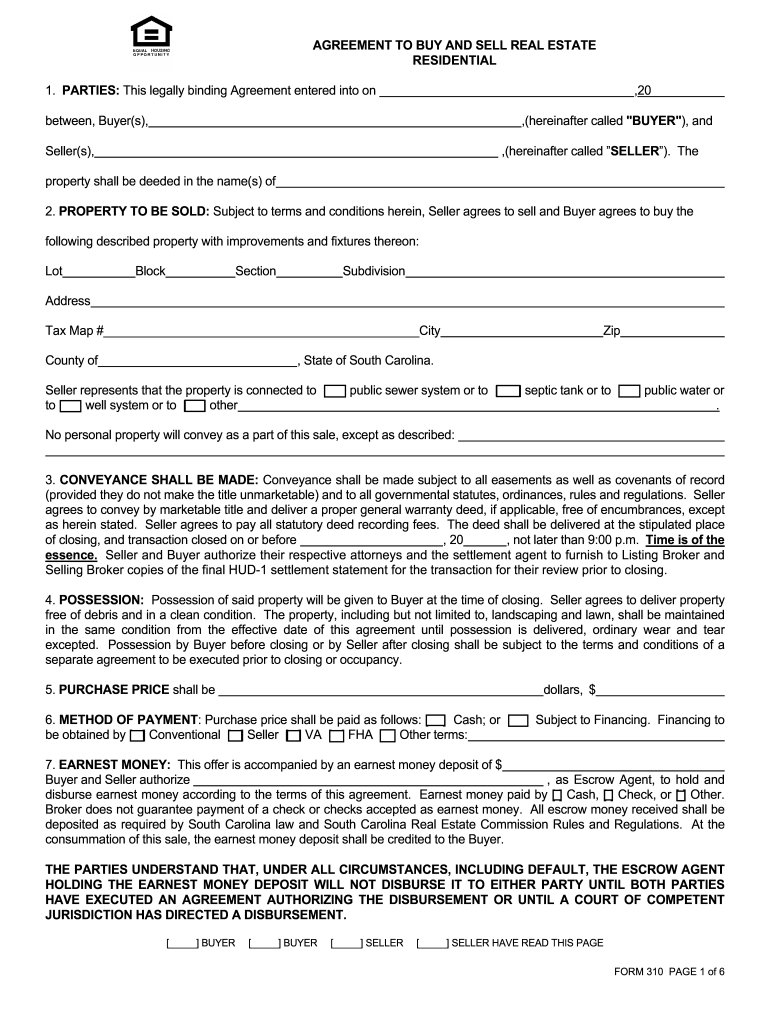
The "SC real estate contract," officially known as the Agreement to Buy and Sell Real Estate in South Carolina, is a legally binding document used for property transactions in South Carolina. It establishes the contractual relationship between the buyer and seller of residential real estate. This agreement outlines the essential terms of the sale, including property details, purchase price, and conditions both parties must adhere to for the transaction to proceed as legally agreed.
How to Use the SC Real Estate Contract
To effectively use the SC real estate contract, understanding its structure and requirements is crucial. Begin by reviewing the entire contract to familiarize yourself with its sections and terms. Buyers and sellers should carefully fill out the property description, ensuring accuracy regarding the address and legal identification of the property. The purchase price and payment details should be clearly outlined, including any terms related to financing and deposits. Make sure to note any conditions or contingencies that could impact the sale, such as inspection findings or appraisal discrepancies.
Steps to Complete the SC Real Estate Contract
- Gather Information: Collect all necessary information, including property details, buyer and seller identification, and financial terms.
- Fill In Property Details: Accurately record the property address, legal description, and any specific features that might influence the sale.
- Negotiate Terms: Discuss and agree on the purchase price, payment methods, and earnest money deposit with all parties involved.
- Specify Conditions: List contingencies such as inspections, financing approval, and any mandatory repairs.
- Review the Document: Both parties should carefully examine the completed contract for accuracy and completeness.
- Signing and Execution: Obtain signatures from all parties involved to execute the agreement, making it legally binding.
Important Terms Related to SC Real Estate Contract
Understanding key terms in the SC real estate contract is essential:
- Earnest Money Deposit: A deposit made by the buyer, demonstrating commitment to the transaction. This amount is typically held in escrow until closing.
- Contingencies: Conditions that must be met for the sale to proceed, often relating to financing, property inspection, and appraisal.
- Closing Costs: Expenses over and above the property price that buyers and sellers incur to complete a real estate transaction. These can include attorney fees, taxes, and title insurance.
- Possession Date: The agreed date when the buyer takes possession of the property.
Key Elements of the SC Real Estate Contract
The SC real estate contract comprises several critical elements that ensure clarity and mutual understanding between parties:
- Identification of Parties: Clearly lists the buyer(s) and seller(s) involved.
- Property Description: Includes the legal address and any identifying characteristics of the property.
- Purchase Price and Payment Terms: Details the agreed price and any conditions regarding the payment structure.
- Closing Details: Specifies who pays for what and how closing costs are handled.
- Contingencies: Lists any conditions that could impact the finalization of the sale, such as repairs and inspections.
State-Specific Rules for the SC Real Estate Contract
South Carolina has specific real estate laws and regulations impacting how contracts are managed:
- Disclosure Requirements: Sellers must provide a property disclosure report reflecting any known issues with the home that might affect its value or desirability.
- Legal Representation: Both parties often engage real estate attorneys to ensure compliance with state laws and to protect their interests.
- Approval Processes: Certain contingencies, such as zoning regulations or homeowners association agreements, require alignment with state regulations.
Examples of Using the SC Real Estate Contract
Consider a scenario where a family is purchasing a house in Charleston, SC. They would start with an inspection contingency, allowing them to negotiate repairs with the seller based on inspection results. Alternatively, a couple selling their vacation home in Myrtle Beach might include a possession date post-closing, giving them time to vacate the property.
Legal Use of the SC Real Estate Contract
The SC real estate contract is legally binding, with significant obligations for both buyers and sellers. It ensures that both parties comply with agreed-upon terms, thus safeguarding their legal rights. Buyers and sellers are advised to seek legal counsel to fully understand contract stipulations, especially concerning contingencies and disclosures. Non-compliance or breach of any contract terms can result in penalties or even legal action.




