




01. Edit your homeowners insurance questions and answers worksheet online
Type text, add images, blackout confidential details, add comments, highlights and more.

Type text, add images, blackout confidential details, add comments, highlights and more.

Draw your signature, type it, upload its image, or use your mobile device as a signature pad.

Send homeowners insurance questionnaire via email, link, or fax. You can also download it, export it or print it out.
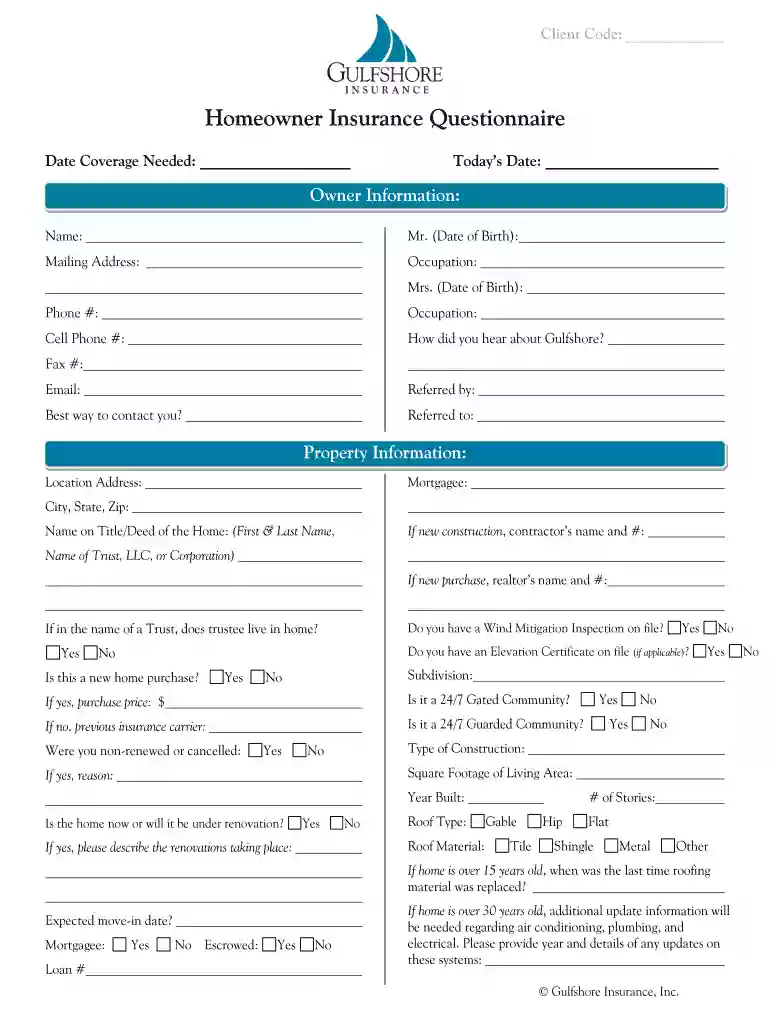
The homeowners insurance questionnaire is a critical document designed to collect vital information from individuals seeking homeowners insurance coverage. This form helps insurance providers assess risk and determine appropriate coverage. It typically includes inquiries about the property, the homeowner’s details, previous insurance history, and any unique factors that may influence coverage, such as renovations or safety features. Understanding the specific components of this questionnaire is essential for both homeowners and insurance agents to facilitate the quote process effectively.
The homeowners insurance questionnaire generally encompasses several sections that are crucial for gauging the potential risk involved in insuring a property, which include the following:
Owner Information: This section requests personal details such as the homeowner’s name, contact information, and any co-owners. Accurate information is critical for effective communication and claim processing.
Property Details: This segment captures essential details about the home, including the construction type, square footage, and any prior renovations. Key factors like the age of the home and the roof are also included, as they significantly impact insurance premium calculations.
Coverage Needs: Homeowners must indicate their desired coverage limits for various aspects, such as the dwelling, personal property, and liability. A clear understanding of coverage needs ensures that the homeowner is adequately protected in the event of a loss.
Safety Features: Information about security systems, smoke detectors, and fire extinguishers may lower premiums. Insurers often reward homeowners who take proactive steps to enhance property safety.
Providing accurate and complete information in the homeowners insurance questionnaire is vital for several reasons:
Risk Assessment: Insurers determine the risk level associated with providing coverage based on the information submitted. Incomplete or misleading data can result in higher premiums or denial of coverage.
Claim Processing: If a claim arises, comprehensive and accurate details ensure that the claims process runs smoothly. Inaccuracies can delay claims or lead to coverage disputes.
Cost of Premiums: Detailed forms enable insurers to more effectively evaluate the risk and, as a result, tailor premiums. Factors such as geographic location, property history, and safety enhancements all play significant roles in determining the final cost.
Filling out the homeowners insurance questionnaire may seem daunting, particularly with the variety of questions involved. Nevertheless, following a structured approach can simplify the process significantly.
Gather Relevant Documents: Before starting the questionnaire, collect necessary documentation such as property deeds, previous insurance policies, and any records of home renovations.
Answer Each Section Thoroughly: Pay attention to all sections of the form, ensuring each query is answered comprehensively. Missing details may hinder accurate evaluations by insurers.
Review Safety Features: Make sure to include information about safety features installed in the home. This detail can be advantageous for securing lower premiums.
Consider Coverage Needs: Reflect on the desired level of coverage before concluding the questionnaire. Understanding your requirements can prevent underinsurance, which may lead to significant financial repercussions in the event of a claim.
Consult an Agent if Needed: If there are uncertainties while completing the form, consider reaching out to your insurance agent for clarification or assistance. They can provide insights that clarify questions and ensure accuracy.
Many homeowners have questions when filling out the homeowners insurance questionnaire. Below are some common inquiries and their respective answers:
What if I don't know the answers to certain questions? It's best to provide estimates if exact figures are unavailable. Incomplete information can lead to issues later on.
Are there specific requirements based on state? Yes, certain states may have regulations affecting the homeowners insurance questionnaire. It's advisable to check for state-specific guidelines related to home insurance.
How should I handle prior insurance claims? Disclosure of previous claims is crucial, as insurers use this history to evaluate risk. Be transparent about any past claims for accurate coverage assessments.
Homeowners can choose between digital and paper formats for the homeowners insurance questionnaire. Both options have their merits:
Digital Version: Often more convenient, allowing users to fill out and submit the form online. Digital submissions can expedite the application process, often resulting in quicker responses from insurers.
Paper Version: This may be preferred by those who are less comfortable with technology. Paper forms can be reviewed and edited manually, ensuring detailed accuracy before submission.
Advantages of each format should be weighed against personal comfort and technological capability. Transitioning to digital options can enhance efficiency and accessibility for many homeowners.
Understanding the legal implications surrounding the homeowners insurance questionnaire is essential for homeowners. This document is not merely a routine piece of paperwork but carries legal weight in the insurance industry.
Binding Agreements: The information provided can form part of a binding insurance policy. Any misrepresentation or omission can have serious consequences, such as the denial of coverage or cancellation of current policies.
Consumer Protections: Homeowners should be aware of the consumer protection laws in their state that govern the insurance industry. These regulations often mandate that sectors disclose comprehensive reasons for premium changes or claim denials.
Potential Consequences of Non-Disclosure: Failing to disclose material information may lead to insurer claims being voided. Understanding the importance of thorough and honest reporting while completing the questionnaire can prevent future complications.
The homeowners insurance questionnaire is a fundamental tool for acquiring adequate coverage. By providing accurate information, security details, and prior insurance history, homeowners can benefit from tailored policies and potentially lower premium costs. Engaging with the questionnaire comprehensively can facilitate a smoother transition from inquiry to coverage, ensuring peace of mind for homeowners in the event of unforeseen circumstances.
At DocHub, your data security is our priority. We follow HIPAA, SOC2, GDPR, and other standards, so you can work on your documents with confidence.
Feb 2, 2021 Homebuilding income before income taxes increased 25% in 2020, primarily as the result of higher revenues, improved gross margins, and strong.Read more
Welcome to the University of Michigans Detroit Metro Area Communities Study survey! Your participation in this study is completely voluntary.Read more
Jun 12, 2025 Questionnaire for Homeowners and For homeowners and other residential property insurance lines, if the insurer has any manner of.Read more


