
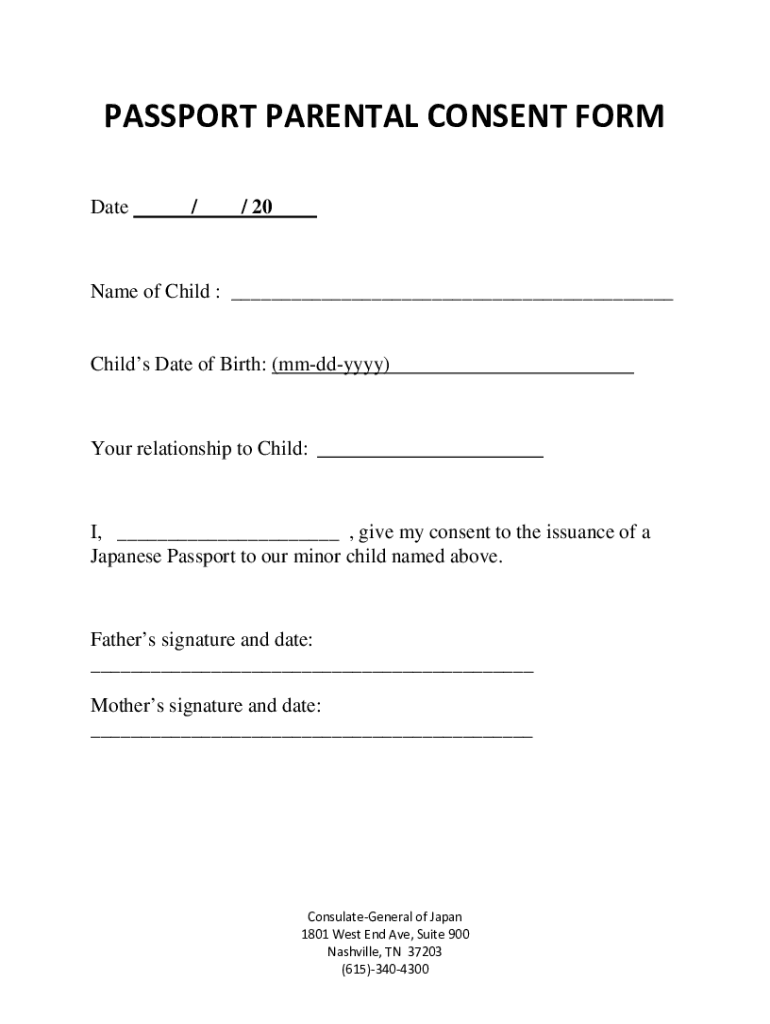







Definition and Meaning of the PASSPORT PARENTAL CONSENT FORM
The Passport Parental Consent Form is an official document required when a minor applies for a passport. This form provides legal authorization from one or both parents or guardians, allowing the issuance of a passport for a child under the age of eighteen. This form is essential to ensure that both parents are in agreement regarding the child's travel plans, thus preventing abductions or unauthorized travel.
Typically, the form will document the child's information, including their full name, date of birth, and identifying details. It requires signatures from both parents or legal guardians if both are present, ensuring that all parties acknowledge and consent to the passport application.
Furthermore, in cases where one parent cannot be present, such as due to travel or other obligations, the absent parent can provide consent through a signed letter or an alternative consent form. Understanding this is crucial, especially for single parents or those with complex custody arrangements.
Key Elements of the PASSPORT PARENTAL CONSENT FORM
The key elements of the Passport Parental Consent Form include several vital components that need careful attention to ensure the form is completed correctly.
- Child’s Information: This section requires the child’s full name, date of birth, and sometimes the current address.
- Parent/Guardian Information: Both parents’ or guardians’ names, addresses, and phone numbers must be included.
- Signatures: Both parents usually must sign the form. If only one parent signs, a notarized statement may be required from the absent parent stating their consent.
- Notary Section: In some instances, the form must be notarized to validate the signatures provided, especially if the application will be submitted by mail.
- Date of Consent: It's important to include the dates when consent was given to establish a timeline for the document.
These elements ensure proper authentication and help authorities verify that the passport application is legitimate and that the intention behind the document is valid.
How to Complete the PASSPORT PARENTAL CONSENT FORM
Completing the Passport Parental Consent Form requires careful attention to detail. Here are the essential steps involved in the process.
- Gather Necessary Information: Collect all required information, including the child's details and parent/guardian identification.
- Fill Out the Form: Enter the child's name, date of birth, and the details of both parents. Ensure accuracy to avoid delays.
- Signing the Form: Both parents must read and sign the consent form. If one cannot be present, ensure you obtain a signed consent letter from the absent parent.
- Notarization: If required, take the completed form to a notary public, who will verify the identities and signatures.
- Submission: Decide whether the form will be submitted online, by mail, or in person at a passport acceptance facility.
Completing the form accurately is vital for efficient processing. Errors or omissions can lead to delays in obtaining a passport, so taking these steps seriously is essential.
Important Considerations When Using the PASSPORT PARENTAL CONSENT FORM
Various considerations and nuances arise when using the Passport Parental Consent Form.
- Custody Arrangements: For divorced or separated parents, understanding the custody agreement is crucial. Both parents may need to sign regardless of who is the custodial parent.
- Single Parent Scenarios: In situations where one parent is deceased or has lost parental rights, specific documentation, such as a death certificate or court order, may be required.
- Travel Restrictions: Some states may have additional laws regarding minors traveling out of the country. It is advisable to check local regulations to ensure compliance.
- International Travel: If the child is traveling internationally, familiarize yourself with the destination country's entry requirements, as these may differ significantly.
Being informed about these aspects helps prevent complications during the passport application process and ensures adherence to legal obligations.
Who Typically Uses the PASSPORT PARENTAL CONSENT FORM?
The Passport Parental Consent Form is primarily used by parents or guardians of minors seeking to obtain passports.
- Parents: Both biological and adoptive parents typically use this form to authorize their child’s passport.
- Guardians: Legal guardians appointed by a court may also use the form to apply for a passport on behalf of a minor.
- Relatives: In some cases, a relative may apply for the passport if they hold legal custody or have been given the authority by the parents.
This form plays a vital role in facilitating international travel for minors while ensuring that all custody and legal obligations are respected.


Legal Use of the PASSPORT PARENTAL CONSENT FORM
Legal use of the Passport Parental Consent Form involves its application within the framework of U.S. laws governing minors and travel.
- Federal Law: Under the U.S. Department of State regulations, a minor's passport application requires parental consent to prevent potential abduction and ensure both parents' rights are observed.
- Notarization Requirements: Certain circumstances may necessitate notarization of the form to ensure the authenticity of consent, especially if one parent cannot present the form in person.
- State Laws: Each state may have additional requirements for the Consent Form, which should be considered when preparing the document for submission.
Understanding these legal aspects is important for ensuring the form's validity and compliance with governmental regulations governing minor travel.
Sample Scenarios for Using the PASSPORT PARENTAL CONSENT FORM
Several scenarios highlight the application of the Passport Parental Consent Form successfully.
- International Family Vacation: A mother plans a trip to Europe with her child. Before applying for the passport, she completes the form with her consent, including the father’s signature, given that both parents are involved.
- Legal Guardian Application: A legal guardian completes the form for a minor who has lived with them due to parental challenges. The guardian must provide the child’s details and proof of their legal relationship to the child.
- Travel for Sports Events: A child must travel abroad for a sports competition. The parents fill out the form, ensuring it is notarized to prevent any legal issues at the border.
These scenarios demonstrate varied situations in which the consent form is crucial, underscoring its importance across different family dynamics and travel conditions.




