




Definition & Meaning of the Equifax Cover Letter
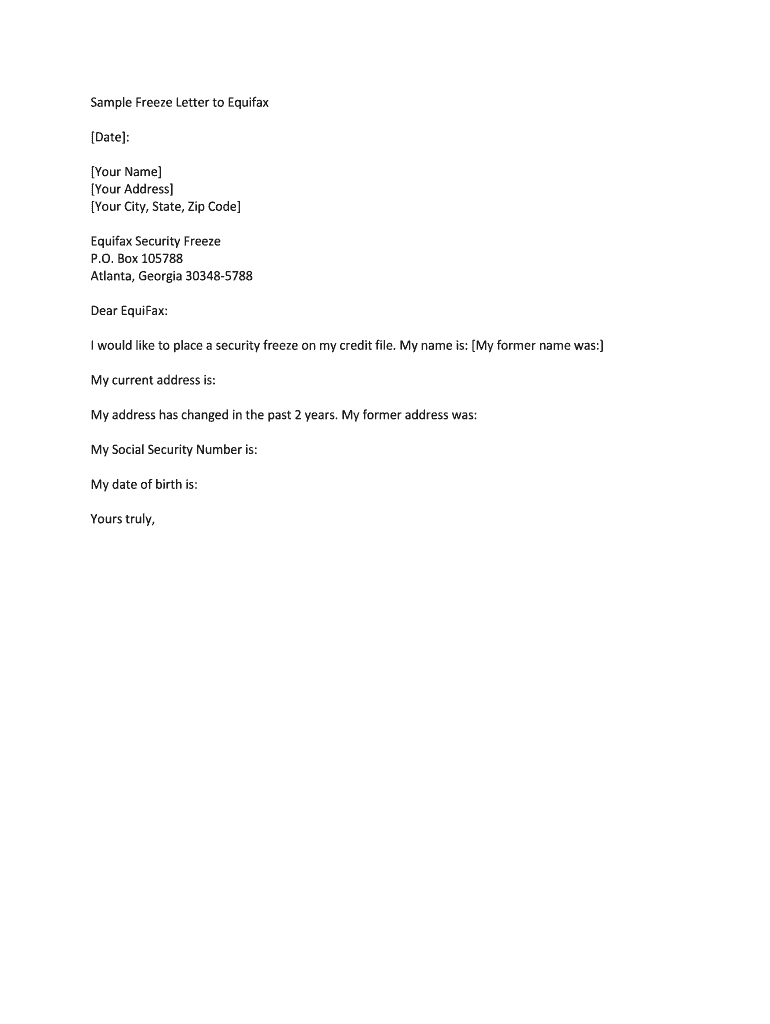
An Equifax cover letter is a formal letter crafted to communicate with Equifax, one of the major credit reporting agencies in the United States. The primary purpose of this letter is generally to request actions related to your credit report, such as initiating a security freeze, disputing inaccuracies, or requesting a copy of your credit file. The letter serves as an official record of your communication, outlining your specific requests and ensuring that Equifax can process your inquiry effectively.
Key Features of an Equifax Cover Letter
-
Personal Information: The letter should include your personal details, such as your full name, current address, former address (if applicable), date of birth, and Social Security Number. This information helps validate your identity and connect your request to your specific credit file.
-
Clear Purpose Statement: A well-defined purpose statement is critical. It should directly state what you are requesting, such as initiating a credit freeze or disputing erroneous information.
-
Contact Information: It's advisable to include your contact details, such as a phone number and an email address, to enable follow-up regarding your request.
-
Documentation: Mention any attached documents that support your request, such as identification or proof of residency, which may be necessary for a security freeze or dispute.
How to Use the Equifax Cover Letter
Utilizing an Equifax cover letter involves several well-defined steps to ensure that your communication is effective and will be taken seriously.
-
Identify the Purpose: Before writing the letter, determine what specific action you want from Equifax. Common reasons include freezing your credit, correcting errors, or requesting information.
-
Gather Documents: Collect any necessary documentation that may support your request, such as proof of identity, previous correspondence with Equifax, or evidence of an error.
-
Crafting the Letter: Write your letter clearly and concisely. Address it to the appropriate department at Equifax, and be sure to include all required personal information. Clearly state your request and attach supporting documents as needed.
-
Choose Delivery Method: Decide whether you'll send the letter by mail or electronically. If you choose mail, consider using certified mail for tracking purposes.
-
Follow Up: After sending the letter, it's advisable to follow up with Equifax to ensure that your request has been received and is being processed.
How to Obtain the Equifax Cover Letter
Acquiring a template or sample for the Equifax cover letter can facilitate the writing process. Various online resources offer templates that you can customize with your specific information.
-
Online Templates: Websites focused on consumer rights and credit report management often provide free templates. These can serve as starting points and can be tailored to your individual needs.
-
Credit Services: Some credit monitoring services may provide assistance in drafting an Equifax cover letter, either through direct guidance or by offering their own customizable templates.
-
Legal Aid Organizations: Non-profit organizations that focus on financial literacy or consumer rights may also have sample letters and resources.
-
Documentation from Other Requests: If you have previously communicated with Equifax, you may use past correspondence as a guide for what to include in your new letter.
Steps to Complete the Equifax Cover Letter
Writing an effective Equifax cover letter follows a clear method. Here are the steps to consider:
-
Start with Your Address: Format the letter by including your address at the top, followed by the date.
-
Address Equifax: Direct your letter to the correct Equifax address. It's essential to ensure your letter reaches the right department, which can often be found on the Equifax website.
-
Salutation: Use a professional salutation such as "To Whom It May Concern," unless you have a specific contact.
-
Clear Explanation of Your Request: In the body of the letter, clearly articulate your request. Be specific and concise to avoid ambiguity.
-
Close Formally: End with a formal closing, such as "Sincerely," followed by your signature and printed name.
-
Attach Supporting Documents: Don’t forget to include any necessary attachments that substantiate your claim.
-
Make Copies: Before sending, make copies of the letter and all documents for your records.
Important Terms Related to the Equifax Cover Letter
Understanding terms related to the Equifax cover letter can enhance your communication with the agency. Here are some key terms:
-
Credit Freeze: A security measure that restricts access to your credit report, making it difficult for identity thieves to open accounts in your name.
-
Dispute: A formal objection to the accuracy of information on your credit report. You can request investigations into inaccuracies through your cover letter.
-
Identity Verification: The process by which Equifax confirms your identity when processing requests related to your credit file.
-
Credit Report: A detailed report containing your credit history, payment history, and other personal financial information.
-
Supporting Documents: Any documentation that provides evidence for your claim, such as utility bills or identification.
Legal Use of the Equifax Cover Letter
The Equifax cover letter has established legal significance under U.S. law. Here are critical aspects to consider:
-
Consumer Rights Protection: Individuals have the right to dispute inaccurate information and request credit freezes under the Fair Credit Reporting Act (FCRA).
-
Legally Binding Requests: A properly written cover letter serves as a formal request to Equifax and legally obligates them to respond in accordance with consumer protection laws.
-
Documentation for Future Reference: Keeping copies of your cover letter and any correspondence establishes a record that can be referenced in disputes or legal matters.
In summary, understanding how to create and use the Equifax cover letter effectively plays a critical role in managing your credit information and safeguarding your identity.