




Here's how it works

01. Edit your what profit and loss online
Type text, add images, blackout confidential details, add comments, highlights and more.

02. Sign it in a few clicks
Draw your signature, type it, upload its image, or use your mobile device as a signature pad.

03. Share your form with others
Send what is profit loss statement via email, link, or fax. You can also download it, export it or print it out.
How to use or fill out sample loss and profit statement with our platform

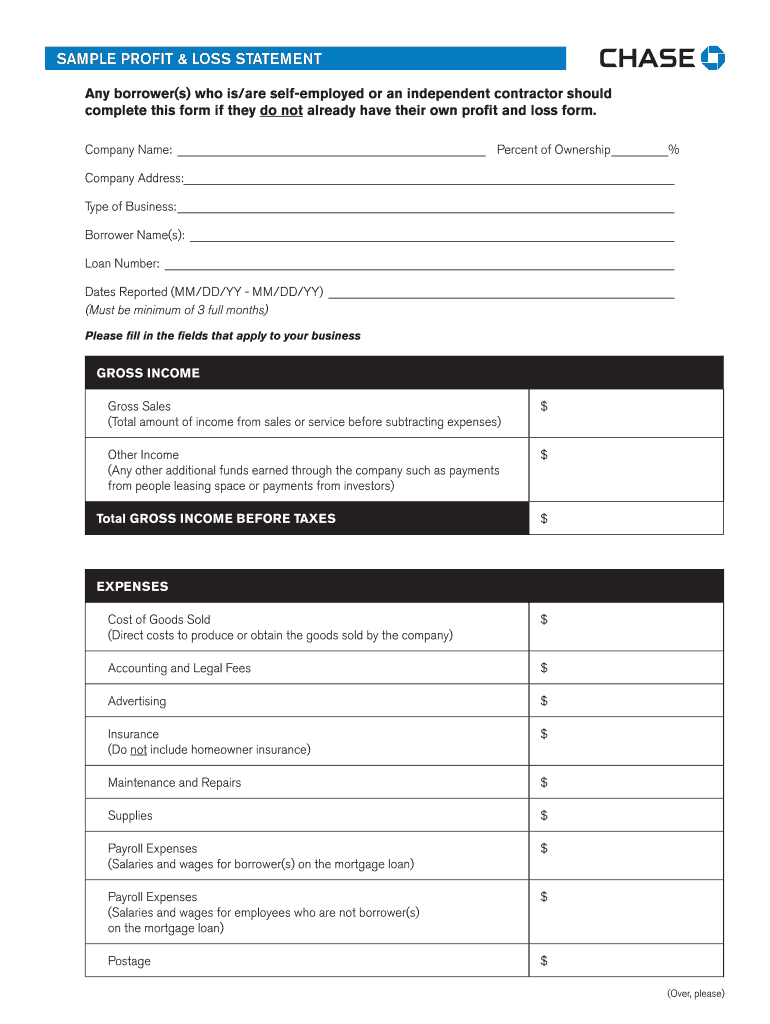
- Click ‘Get Form’ to open the sample loss and profit statement in the editor.
- Begin by entering your company name and percent of ownership in the designated fields. This information is crucial for identifying your business.
- Fill in your company address and type of business. Ensure accuracy as this will be used for verification purposes.
- Input the borrower names and loan number, followed by the dates reported. Remember, these dates must cover a minimum of three full months.
- In the GROSS INCOME section, enter your gross sales and any other income sources. The total gross income before taxes will automatically calculate based on your entries.
- Proceed to the EXPENSES section. Fill in all applicable fields such as cost of goods sold, accounting fees, advertising costs, and payroll expenses. Be thorough to ensure an accurate representation of your financials.
- Finally, calculate your net income by entering taxes paid on business income to determine total net income after taxes.
- Sign the document at the bottom to certify that all information provided is truthful before submitting it.
Start using our platform today for free to streamline your document editing and form completion!
Fill out sample loss and profit statement online
It's free
It's free
See more sample loss and profit statement versions
We've got more versions of the sample loss and profit statement form. Select the right sample loss and profit statement version from the list and start editing it straight away!
| Versions | Form popularity | Fillable & printable |
|---|---|---|
| 2012 | 4.9 Satisfied (384 Votes) |
Got questions?
We have answers to the most popular questions from our customers. If you can't find an answer to your question, please contact us.
Contact us
How do you explain PL?
A profit and loss statement, or PL, is an effective tool for managing your business. It is a financial statement that provides a snapshot of how much your company is making (revenue) compared to how much is being spent (costs and expenses).
How do you explain a profit and loss statement?
In its most basic form, the PL statement shows the profitability of the business for a set time period. The time period can be for the year, quarter, month, or even a day whatever you need to understand. Profit is how much you are making from the business; loss is how much you are losing on the business.
How to write a profit and loss statement?
Heres a general step-by-step guide to creating a profit and loss statement: Choose a reporting period. Gather financial statements and information. Add up revenue. List your COGS. Record your expenses. Figure your EBITDA. Calculate interest, taxes, depreciation, and amortization. Determine net income.
What is a profit and loss statement with an example?
A profit and loss statement, formally known as an income statement or simply as a PL, tracks the amount of profit that remains after a business subtracts all of its costs from its revenue during a specific accounting period, typically monthly, quarterly, and annually.
What do profit and loss statements look like?
It is a financial statement that provides a snapshot of how much your company is making (revenue) compared to how much is being spent (costs and expenses). Simply put, your PL shows your businesss revenue minus costs and expenses, typically over a specified period. The outcome is your net profit or bottom line.
Security and compliance
At DocHub, your data security is our priority. We follow HIPAA, SOC2, GDPR, and other standards, so you can work on your documents with confidence.
Learn more


Related forms

1040x 2018
The document is Form 1040X, an Amended U.S. Individual Income Tax Return for the year 2018, issued by the Internal Reven ...

Aftc application form
The West Virginia Schedule AFTC-1 outlines the process for taxpayers to claim various Alternative-Fuel Tax Credits, incl ...
What is a short form order after hearing
The document FL-688 is a legal form used in California courts for issuing a short form order after a hearing related to ...
Fl 374
The document FL-347 outlines the court's decision to bifurcate the status of a marriage or domestic partnership, allowin ...
Jv 364
The document JV-364 is a legal form used in the Superior Court of California to officially terminate juvenile dependency ...
Bbs responsibility statement
The document outlines the responsibilities and requirements for supervisors of Associate Professional Clinical Counselor ...
Hawaii divorce decree
The document is a Divorce Decree from the Family Court of the First Circuit in Hawaii, detailing the dissolution of marr ...
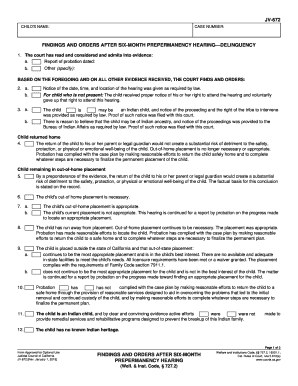
JV-672 Findings and Orders After Six-Month Prepermanency HearingDelinquency. Judicial Council forms
JV-672 Findings and Orders After Six-Month Prepermanency HearingDelinquency. Judicial Council forms
The document is a court order detailing the findings and decisions made during a six-month prepermanency hearing regardi ...
People also ask
How do you write a simple profit and loss statement?
How To Create a Profit and Loss Statement Choose a reporting period. Gather financial statements and information. Add up revenue. List your COGS. Record your expenses. Figure your EBITDA. Calculate interest, taxes, depreciation, and amortization. Determine net income.
What is profit and loss with an example?
For example, for a shopkeeper, if the value of the selling price is more than the cost price of a commodity, then it is a profit and if the cost price is more than the selling price, it becomes a loss.


