




01. Edit your irs form 8812 online
Type text, add images, blackout confidential details, add comments, highlights and more.

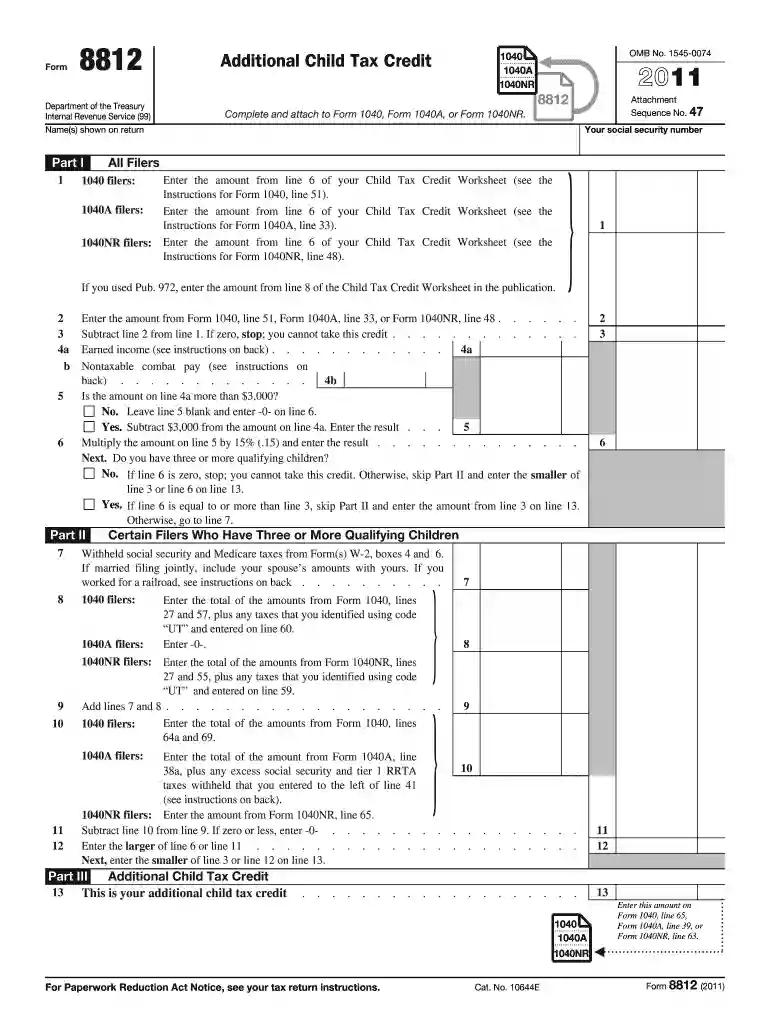
Type text, add images, blackout confidential details, add comments, highlights and more.

Draw your signature, type it, upload its image, or use your mobile device as a signature pad.

Send irs form 8812 worksheet via email, link, or fax. You can also download it, export it or print it out.
The child tax deduction refers to a tax benefit offered to taxpayers in the United States, aimed at reducing the tax liability for families with qualifying children. It is designed to provide financial relief to taxpayers who are responsible for the costs associated with raising children. The child tax credit can provide substantial saving on taxes, helping families manage childcare and other child-related expenses.
To be eligible for the child tax deduction, several criteria must be met. The qualifying child must be under the age of 17 at the end of the tax year and must be a citizen, national, or resident alien of the United States. The child must be related to the taxpayer, meaning they could be a son, daughter, stepchild, foster child, sibling, step-sibling, or a descendant of any of these. Additionally, the child must have lived with the taxpayer for more than half of the tax year and must be claimed as a dependent on the taxpayer's return. It's also essential that the taxpayer does not exceed a certain income threshold, as the credit may be phased out for higher-income families.


Utilizing the child tax deduction involves incorporating it into the taxpayer's annual tax filing process. Eligible families can claim this deduction when they file their federal tax returns, using Forms 1040, 1040A, or 1040NR. The deduction is typically applied directly against any taxes owed, thereby reducing the overall tax liability. The credit is partially refundable, which means it can increase a taxpayer's refund if the credit exceeds tax liability. This provides broader financial relief beyond mere tax reduction.
The Internal Revenue Service (IRS) provides comprehensive guidelines regarding the child tax deduction, detailing eligibility criteria, calculation methods, and the process for claiming the credit. The IRS outlines how different types of income might affect the credit's value and provides scenarios where the credit could be partially or fully refundable. Understanding IRS publications related to credits and tax law changes is crucial for accurate filing.
Filing for the child tax deduction requires several documents:
The typical filing deadline for claiming the child tax deduction aligns with the federal tax deadline, which is usually April 15 for the given tax year. Extensions beyond this date are possible but may require additional forms and can affect the timing of any potential refund. Taxpayers should stay informed about changes in the federal filing deadline as announced by the IRS.
Consider a single parent with two qualifying children. If this parent meets all eligibility criteria, they may reduce their taxable income significantly through the child tax credit, directly lowering their tax amount owed. In cases where the parent's income is relatively low, the Additional Child Tax Credit may result in a larger tax refund than anticipated, easing financial burdens. Another example is a married couple whose combined income falls just within the phase-out range, benefiting partially from the credit and needing to calculate the amount carefully using IRS guidelines.
By understanding these intricate details and scenarios, taxpayers can maximize the financial benefits associated with the child tax deduction, ensuring they leverage all available resources and credits to their advantage.
We've got more versions of the irs form 8812 form. Select the right irs form 8812 version from the list and start editing it straight away!
At DocHub, your data security is our priority. We follow HIPAA, SOC2, GDPR, and other standards, so you can work on your documents with confidence.
Mar 3, 2026 The Child Tax Credit (CTC) is a non-refundable credit that allows people with a qualifying child to reduce their tax liability. The AdditionalRead more
This publication includes a detailed example of a tax- payer who figures the child tax credit and the additional child tax credit. If you were sent here fromRead more


