
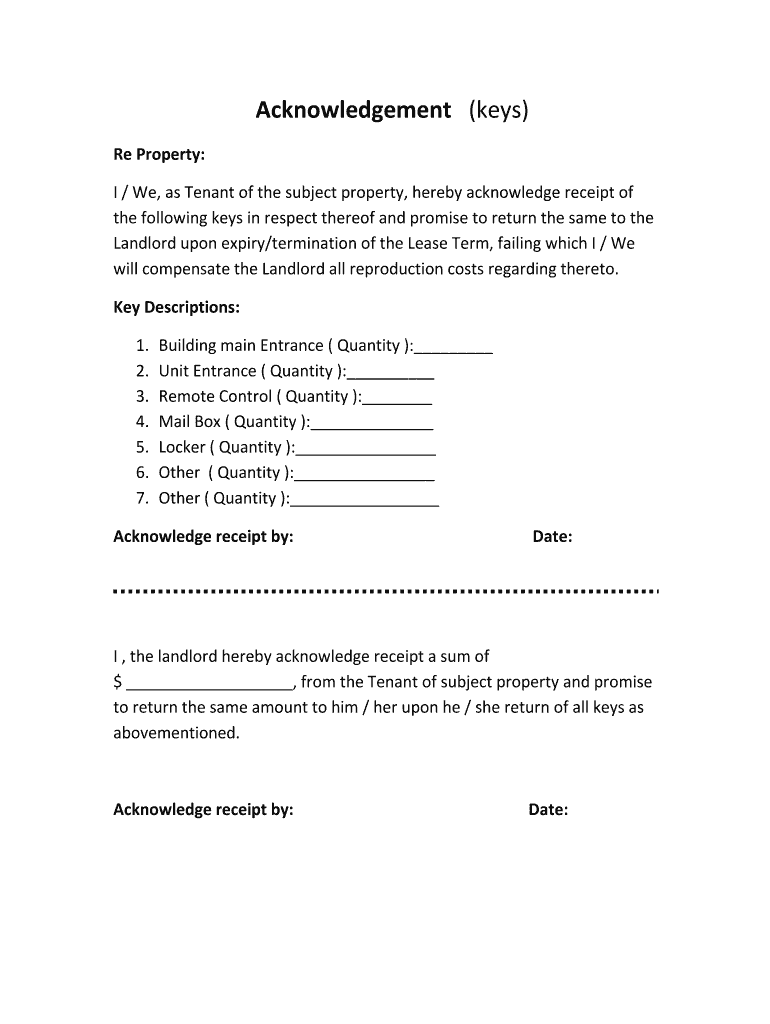







Definition and Purpose of the Tenant Key Receipt Acknowledgement Form
The tenant key receipt acknowledgement form serves as an official document that records the transfer of keys from a landlord to a tenant. This form is essential in rental agreements as it outlines the specific keys provided to the tenant, such as those for the main entrance, mailbox, garage, or any other locks pertinent to the rental property. It ensures mutual understanding between the landlord and tenant regarding the keys' availability and responsibilities.
Importance of the Form
Using this form not only provides clarity regarding which keys were issued but also highlights the tenant's obligation to return these keys upon lease termination. Failure to return the keys can lead to charges for replacement, and this form secures both parties’ interests by documenting the arrangement. It enhances accountability, proving that the tenant has received specific assets from the landlord.
Common Applications
- Rental Properties: It is primarily used in residential rental agreements but can also apply to commercial leases.
- Maintenance Records: Landlords can use the form to track key distribution for maintenance staff or contractors who require temporary access.
Steps to Complete the Tenant Key Receipt Acknowledgement Form
Completing the tenant key receipt acknowledgement form involves several crucial steps to ensure accuracy and completeness. Below is a detailed outline of this process.
-
Identify the Parties Involved:
- Clearly state the names of both the landlord and tenant.
- Include contact information for both parties to facilitate communication.
-
List the Keys Provided:
- Document each key type issued to the tenant, detailing their specific purpose (e.g., front door, mailbox).
- Include unique identifying features if applicable, such as color or number.
-
Specify the Terms of Agreement:
- Outline any conditions related to the keys, such as the obligation to return them upon lease termination.
- Mention potential penalties for lost or unreturned keys to ensure clarity on consequences.
-
Signatures:
- Both the landlord and tenant should sign and date the form to signify their agreement to the terms outlined within.
-
Keep Copies:
- Each party should retain a copy of the signed acknowledgment for their records to resolve any disputes that may arise in the future.
Example Scenarios
- New Tenant Move-In: When a new tenant moves in, this form is completed to confirm receipt of all keys handed over during the move-in process.
- Key Replacement: If a lock is changed and new keys are issued, a new acknowledgment form should be filled out to document the updated keys.
Important Terms Related to the Tenant Key Receipt Acknowledgement Form
Understanding specific terminology associated with the tenant key receipt acknowledgement form is vital for all parties involved. Here are key terms commonly associated with this document:
- Landlord: The individual or entity that owns the rental property and issues the keys.
- Tenant: The individual renting the property who is receiving the keys.
- Keys: Physical items that grant access to specific areas of the property, including the main entrance and service doors.
- Lease Termination: The conclusion of the rental agreement, at which point the tenant is required to return all keys.
- Obligation to Return: The tenant’s responsibility to return the keys upon vacating the property.
Why These Terms Matter
- Clarity and Accountability: Familiarity with these terms facilitates better communication between landlords and tenants, reducing the likelihood of misunderstandings.
- Legal Compliance: Using correct terminology ensures that both parties are bound by the respective laws governing rental agreements and property access.
Legal Use of the Tenant Key Receipt Acknowledgement Form
The tenant key receipt acknowledgement form carries specific legal implications that both landlords and tenants should understand. Here’s how this form is used in a legal context:
Binding Agreement
By signing the acknowledgement form, both parties enter into a binding agreement regarding the keys. The signed document can serve as evidence in case of a dispute over key return or any related issues.
Jurisdictional Compliance
Laws governing landlord-tenant relationships can vary by state, which may impact how this form is interpreted and enforced. It's crucial to ensure that any specific legal language is compliant with state requirements. For instance, some jurisdictions have laws affecting the charges that landlords can impose for lost keys.
Document Preservation
- It is advisable for both landlords and tenants to maintain copies of the signed form as part of their records. In circumstances involving disputes over key returns or related responsibilities, this document can substantiate claims or defenses.
Key Elements of the Tenant Key Receipt Acknowledgement Form
The tenant key receipt acknowledgement form should have key elements that ensure its effectiveness and clarity. Below are the critical components that should be included:
- Header Section: The title "Tenant Key Receipt Acknowledgement Form" should be prominent.
- Landlord Information: Include the full name and contact details of the landlord or property manager.
- Tenant Information: Capture the full name and current address of the tenant.
- Key Description Table: Create a section listing the keys, including descriptions and identifying characteristics.
- Termination Obligations: State the penalties for not returning the keys.
- Signatures and Dates: Ensure space for both parties' signatures and the date of signing.
Importance of Each Element
Each of these elements serves a specific purpose in strengthening the document's clarity and legal standing. Proper documentation minimizes confusion and protects both parties’ rights regarding key access and responsibilities.




