




01. Edit your homeowners insurance application form online
Type text, add images, blackout confidential details, add comments, highlights and more.

Type text, add images, blackout confidential details, add comments, highlights and more.

Draw your signature, type it, upload its image, or use your mobile device as a signature pad.

Send home insurance application form via email, link, or fax. You can also download it, export it or print it out.
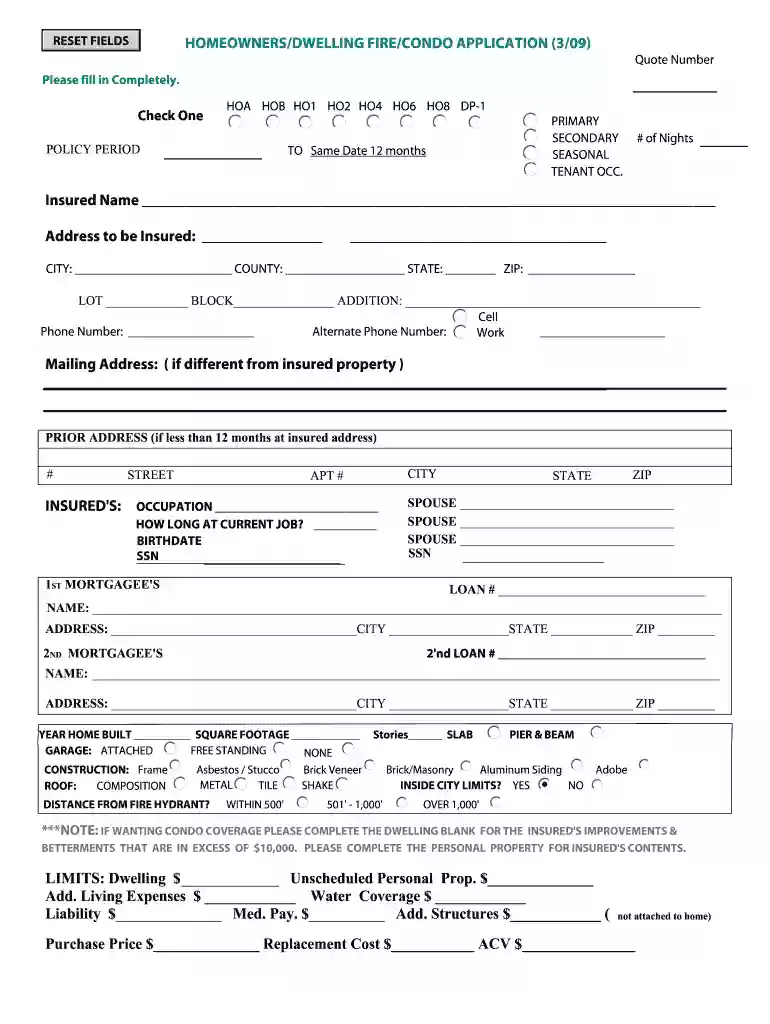
The home insurance application form is a vital document that homeowners must complete to obtain insurance coverage for their property. This form collects necessary information about the insured property and personal details of the homeowner, ensuring that the insurance provider can assess risk and determine eligibility for coverage.
The home insurance application form requires comprehensive data regarding both the insured property and the applicant. Key sections of the form typically include:
Personal Information: This includes the homeowner's name, contact information, and social security number. Accurate details are crucial for underwriting and communication.
Property Details: Homeowners must provide specifics about the property, including its address, type (single-family home, condo, etc.), age, and size (square footage).
Mortgage Information: If the property is mortgaged, details regarding the lender and loan amount are often requested. This information is necessary for determining coverage needs and liabilities.
The home insurance application form outlines various types of policies available to homeowners. Common options include:
Dwelling Coverage: This covers the structure of the home itself against damages from events such as fire, theft, or natural disasters.
Personal Property Coverage: This portion covers the insured's belongings within the home, including furniture, electronics, and clothing.
Liability Coverage: This protects homeowners from legal claims resulting from injuries or damages caused by the homeowner or guests on the property.
It's important for homeowners to understand the different types of coverage and select the appropriate options that fit their specific needs.
Every home insurance application form will typically include notable exclusions and limitations regarding coverage. Homeowners should review this section carefully, as it outlines scenarios that may not be covered under the policy, such as:
Flood Damage: Most standard policies do not cover flood damage unless additional flood insurance is obtained.
Maintenance Issues: Claims arising from lack of maintenance or neglect, such as mold or pest infestations, are often excluded.
Home-Based Businesses: Those operating a business from home may find that certain business-related damages or liability may not be covered.
Understanding these exclusions helps homeowners make informed decisions and avoid potential disputes during the claims process.
Filling out the home insurance application form accurately is critical for ensuring coverage. Homeowners should follow these steps to complete the form:
Gather Necessary Documentation: Collect all required documents, including previous insurance policies, property deeds, mortgage statements, and any other pertinent information.
Fill in Accurate Information: Ensure that all fields are filled accurately. Mistakes can delay processing or result in inadequate coverage.
Review for Completeness: After completing the form, review each section to ensure no information is missing and that all details are correct.
Sign and Submit: Once satisfied, sign the document and submit it to the insurance provider via the preferred method (online, mail, or in-person).
Providing complete and accurate information on the home insurance application is essential. Insurers rely on this data to:
Assess Risk: Accurate information allows insurers to evaluate the risk associated with providing coverage for the property and to set appropriate premiums.
Facilitate Quick Underwriting: Complete forms can expedite the underwriting process, leading to quicker approval and issuance of the policy.
Prevent Disputes During Claims: Inaccuracies or omissions can lead to issues during claim processing, including denial of benefits.
Homeowners should take great care in the completion of their home insurance application forms to ensure they receive beneficial coverage tailored to their needs.
We've got more versions of the homeowners insurance application form form. Select the right homeowners insurance application form version from the list and start editing it straight away!
| Versions | Form popularity | Fillable & printable |
|---|---|---|
| 2009 | 4.5 Satisfied (54 Votes) |
At DocHub, your data security is our priority. We follow HIPAA, SOC2, GDPR, and other standards, so you can work on your documents with confidence.
Application shall be made by notifying the Commissioner of the sale of the property, the sale price, and income and expenses incurred in connection with theRead more
To print any of your Insurance Policy Documents from your online account, click the print button located on the. Page 7. Homeowner Insurance ApplicationRead more
Find the right, dependable coverage for your auto, home, motorcycle, business and more at an affordable price with Mapfre Insurance. Get an insurance quote


