




Here's how it works

01. Edit your colorado square footage disclosure online
Type text, add images, blackout confidential details, add comments, highlights and more.

02. Sign it in a few clicks
Draw your signature, type it, upload its image, or use your mobile device as a signature pad.

03. Share your form with others
Send square footage disclosure via email, link, or fax. You can also download it, export it or print it out.
How to use or fill out Chapter 6: Brokerage Relationship and Listing Agreements with our platform

- Click ‘Get Form’ to open the Chapter 6: Brokerage Relationship and Listing Agreements in the editor.
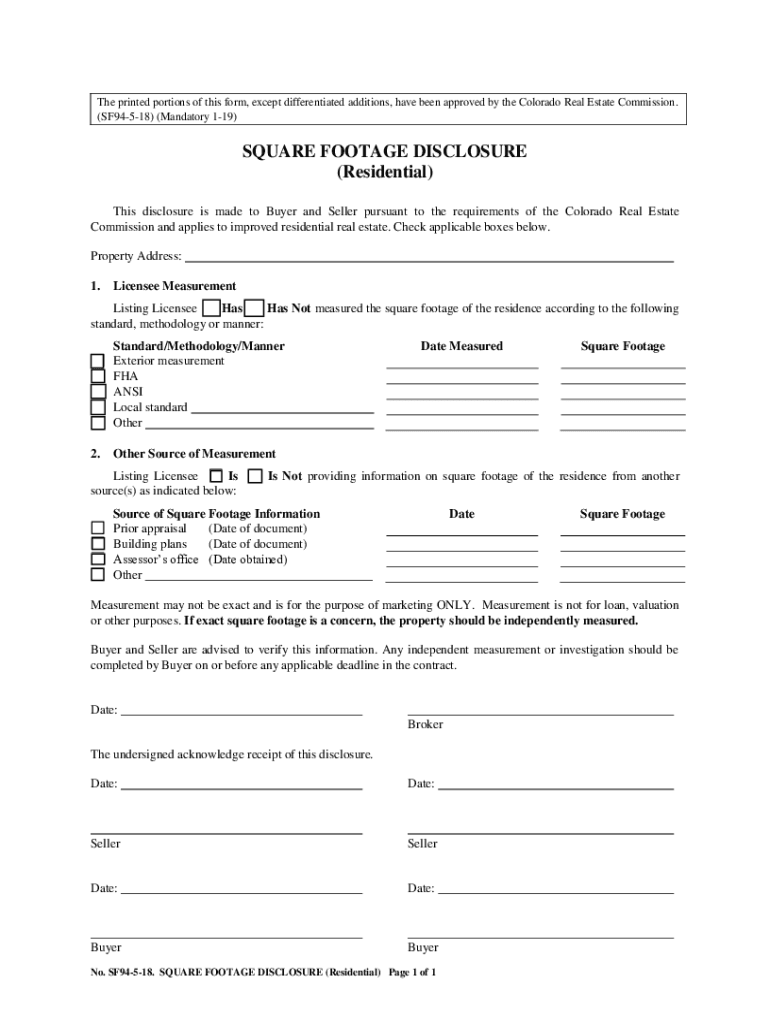
- Begin by entering the property address in the designated field. This is crucial for identifying the specific real estate involved.
- Next, indicate whether the listing licensee has measured the square footage of the residence by checking 'Has' or 'Has Not'. Choose the appropriate standard or methodology used for measurement from options like Exterior measurement, FHA, ANSI, or Local standard.
- Fill in the date when the measurement was taken and provide the square footage value in the respective fields.
- If applicable, specify any other sources of square footage information such as prior appraisals or building plans. Include dates for these documents as well.
- Finally, ensure all parties (Buyer and Seller) acknowledge receipt of this disclosure by signing and dating where indicated at the bottom of the form.
Start using our platform today to streamline your document editing and signing process for free!
Fill out Chapter 6: Brokerage Relationship and Listing Agreements online
It's free
See more Chapter 6: Brokerage Relationship and Listing Agreements versions
We've got more versions of the Chapter 6: Brokerage Relationship and Listing Agreements form. Select the right Chapter 6: Brokerage Relationship and Listing Agreements version from the list and start editing it straight away!
Got questions?
We have answers to the most popular questions from our customers. If you can't find an answer to your question, please contact us.
Contact us
What determines the agency or brokerage relationship in a listing agreement?
The agency relationship usually is created by a signed listing contract. The buyers representative (also known as a buyers agent) is hired by prospective buyers to and works in the buyers best interest throughout the transaction.
Which brokerage relationship duty applies to all three types of brokerage relationships?
The statute clarifies that the relationship between a licensee and agency can work one of three ways: a transaction broker, a single agent, and a no-brokerage relationship. All three relationships must adhere to the following duties: Loyalty, confidently, and obedience. Accounting for all funds and transactions.
What are the 4 types of listing agreements?
There are four main types: open listings, exclusive right-to-sell, exclusive agency, and net listings. Understanding these agreements ensures smooth transactions by clarifying expectations, responsibilities, and commission terms between brokers and clients.
What is a brokerage relationship agreement?
The brokerage agreement shall state whether the real estate licensee will represent the client as an agent or an independent contractor. Brokerage relationship means the contractual relationship between a client and a real estate licensee who has been engaged by such client to provide brokerage services.
What is the purpose of a brokerage agreement?
A brokerage agreement is a statutory agreement between a broker and a customer, summarizing the terms and conditions of their professional association. In addition, brokers can offer different services, including managing portfolios, purchasing and selling securities, and offering investment advice.
Security and compliance
At DocHub, your data security is our priority. We follow HIPAA, SOC2, GDPR, and other standards, so you can work on your documents with confidence.
Learn more


People also ask
How to get out of an exclusive buyer brokerage agreement?
Termination is possible, but only with mutual agreement. The process requires completing a Mutual Release from the Buyers Exclusive Agency Contract form. This document formally dissolves the agency relationship, ensuring that both parties are free to pursue other opportunities.
What is a brokerage relationship in real estate?
A broker is usually not an employee. Rather, a broker acts as a special agent of his or her principal to accomplish the limited and specific purposes of the agency. In this relationship, the broker is authorized to solicit, negotiate and to act on behalf of the principal within the course and scope of the agency.