

Classification of sentences according to structure 2026

Get Form
classification of sentences according to structure Preview on Page 1

Here's how it works

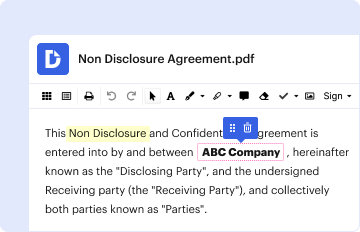
01. Edit your form online
Type text, add images, blackout confidential details, add comments, highlights and more.
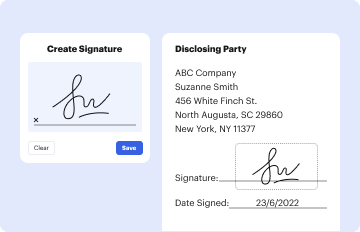
02. Sign it in a few clicks
Draw your signature, type it, upload its image, or use your mobile device as a signature pad.
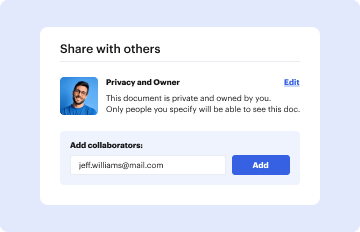
03. Share your form with others
Send it via email, link, or fax. You can also download it, export it or print it out.

How to use or fill out classification of sentences according to structure with our platform

Form edit decoration
9.5
Ease of Setup
DocHub User Ratings on G2
9.0
Ease of Use
DocHub User Ratings on G2
  1. Click ‘Get Form’ to open it in the editor.
  2. Begin with Exercise A. Read each sentence carefully and determine its structure. Use the abbreviations provided: S for simple, CX for complex, CD for compound, and CD-CX for compound-complex.
  3. For each sentence, write the appropriate abbreviation on the line before it. Ensure you understand the definitions of each type of sentence to classify them accurately.
  4. Move on to Exercise B and repeat the process. Pay attention to any additional clauses or conjunctions that may affect your classification.
  5. Once completed, review your classifications for accuracy. You can easily edit any mistakes directly in the editor.

Start classifying sentences today using our platform for free!

be ready to get more

Complete this form in 5 minutes or less

Get form

Got questions?

We have answers to the most popular questions from our customers. If you can't find an answer to your question, please contact us.
Contact us

You need to use only trustworthy software solutions with strong security compliance to sign your paperwork electronically. DocHub is just the type of service you need! It stores data on Amazon Web Servers and complies with all essential security criteria and eSignature laws, so it’s a reliable way to eSign your classification of sentences according to structure or other documents with this tool.

If you need to edit your classification of sentences according to structure online easily, it does not matter what web browser you employ. DocHub’s straightforward editing tools are available using any internet browser. Just open the appropriate tab in the editor, add your document, and fill it out without stress.

Sentence structure can be categorized into seven patterns: one simple, three compound, two complex, and one compound-complex. Here are examples of each pattern with accompanying formulas, all to help you think of how to craft sentences in a greater variety of syntax: 1.
Solution SVBirds fly.They returned. SVOC Raju wrote a letter neatly. I wrote the exam well. SVIODO They gave him a shock. The teacher taught him a lesson. ASV Tomorrow she leaves. Yesterday I came. SVAA My dog swam in the pool yesterday. I went to Ooty by bus last week.3 more rows Mar 2, 2021
The subject and predicate make up the two basic structural parts of any complete sentence. In addition, there are other elements, contained within the subject or predicate, that add meaning or detail. These elements include the direct object, indirect object, and subject complement.

Security and compliance

At DocHub, your data security is our priority. We follow HIPAA, SOC2, GDPR, and other standards, so you can work on your documents with confidence.

Learn more
ccpa2
pci-dss
gdpr-compliance
hipaa
soc-compliance
be ready to get more

Complete this form in 5 minutes or less

Get form

People also ask

The main elements of clauses are subject, verb phrase, object (direct object or indirect object), predicative, and adverbial. These elements combine in seven basic clause patterns: intransitive, monotransitive, ditransitive, two types of copular, and two types of complex transitive patterns.
The four types of sentences according to structure are simple (one independent clause), compound (more than one independent clause), complex (a subordinating clause and one independent clause), and compound-complex (a subordinating clause and more than one independent clause).

Related links