
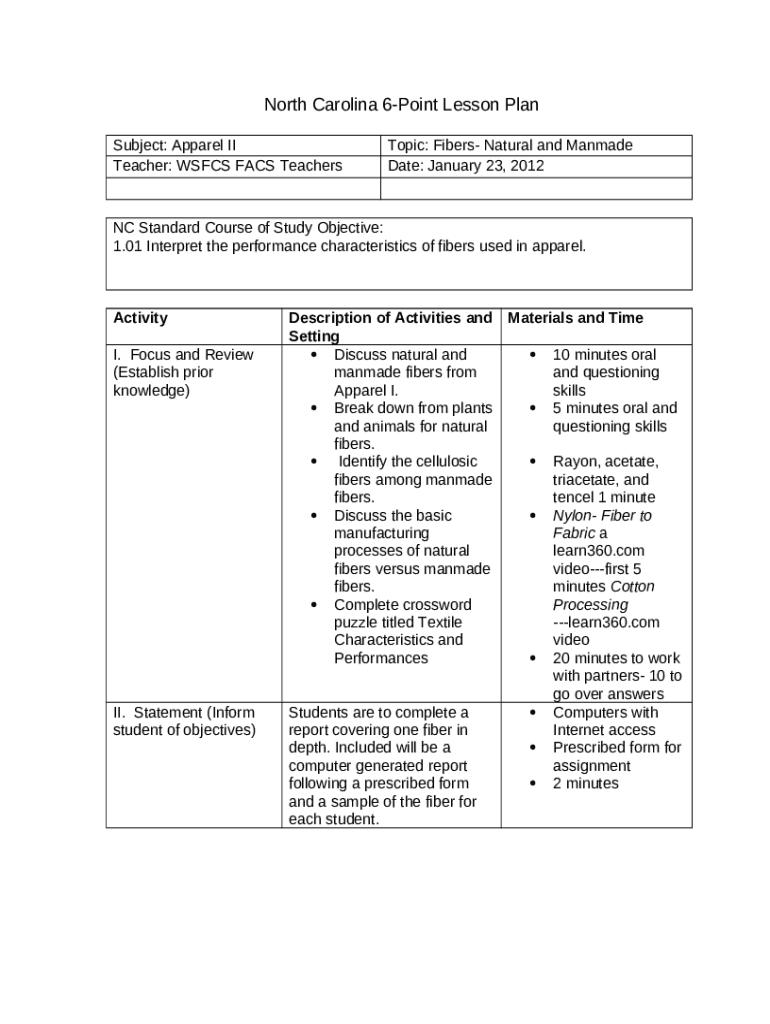







Definition and Meaning of the Six Point Lesson Plan Template
The six point lesson plan template is a structured framework used to design effective lessons in educational settings. It provides a clear outline that integrates six essential components to guide educators in planning their instruction. These components typically include:
- Objectives: Clearly defined learning goals for what students should accomplish by the lesson's end. For example, an objective could be for students to understand the life cycle of plants.
- Activities: Engaging tasks and exercises designed to facilitate learning. Activities might involve group discussions, hands-on experiments, or multimedia presentations.
- Materials Needed: A comprehensive list of resources and materials required for the lesson, such as textbooks, videos, or lab equipment.
- Assessment Methods: Techniques for evaluating student understanding and performance, such as quizzes, written reflections, or practical demonstrations.
- Adaptations: Modifications made to accommodate diverse learning needs and styles, ensuring all students can engage with the material.
- Reflection: A component for instructors to assess the effectiveness of the lesson and their teaching methods, allowing for continuous improvement.
This framework helps educators deliver structured, purposeful lessons aimed at enhancing student learning outcomes.
How to Use the Six Point Lesson Plan Template
Utilizing the six point lesson plan template effectively involves a systematic approach to lesson design. Follow these steps:
-
Identify Learning Goals: Determine what knowledge or skills students should acquire by the end of the lesson. Ensure goals are specific, measurable, attainable, relevant, and time-bound (SMART).
-
Select Engaging Activities: Choose activities that align with the learning objectives and actively involve students. Consider various instructional strategies, such as cooperative learning or problem-based learning, to cater to different learning styles.
-
Compile Materials: List all necessary materials and resources needed for the lesson. This includes texts, digital resources, handouts, and any special equipment required for activities.
-
Design Assessment Methods: Determine how student understanding will be measured during or at the end of the lesson. This could involve formative assessments, like exit tickets, or summative assessments, such as tests.
-
Plan for Adaptations: Consider the diverse needs of students in your classroom. Identify strategies to modify activities or assessments for learners with specific needs, such as providing additional resources or altering task requirements.
-
Include Reflection: After the lesson, evaluate its effectiveness. Reflect on what worked well, what could be improved, and how students responded. Use this feedback to inform future lesson planning.
This structured approach can enhance lesson clarity and ensure alignment between teaching activities and learning objectives.
Key Elements of the Six Point Lesson Plan Template
The six key elements of the six point lesson plan template are crucial for effective lesson delivery. Each element serves a distinct purpose and contributes to a comprehensive lesson plan:
-
Objectives: Define specific, measurable outcomes that articulate what students should know or be able to do by the end of the lesson. For instance, in a science lesson, you might aim for students to demonstrate an understanding of ecosystems.
-
Activities: Outline the planned instructional activities that will drive student engagement and learning. For example, these could include interactive experiments, discussions, or projects that reinforce the objectives.
-
Materials Needed: Provide a detailed inventory of resources required for the lesson. This ensures that all necessary items are prepared ahead of time, facilitating a smooth lesson execution.
-
Assessment Methods: Specify the tools and methods used to evaluate student performance. This could include tests, projects, or informal assessments like observation or peer reviews.
-
Adaptations: Identify any adjustments made for students with different learning needs. This may involve varying the complexity of tasks or using alternative materials to ensure accessibility for all learners.
-
Reflection: Include prompts for educators to reflect on the lesson's success. This aspect encourages critical self-evaluation, fostering professional growth and improved teaching strategies over time.
Each key element is interrelated, ensuring a holistic approach to lesson planning that supports both teaching effectiveness and student success.
Examples of Using the Six Point Lesson Plan Template
In practice, the six point lesson plan template can be tailored for various subjects and topics. Here are some illustrative examples:
-
Mathematics Lesson on Fractions:
- Objectives: Students will be able to identify and compare fractions.
- Activities: Engage in hands-on fraction activities using visual aids, followed by group problem-solving exercises.
- Materials Needed: Fraction circles, worksheets, and whiteboard markers.
- Assessment Methods: Use a short quiz and observe participation during group activities.
- Adaptations: Provide additional time and visual aids for students needing extra help.
- Reflection: Evaluate student understanding through quiz results and group discussion participation.
-
History Lesson on the American Civil War:
- Objectives: Students will understand the causes and consequences of the Civil War.
- Activities: Analyze primary sources and participate in a debate on key issues.
- Materials Needed: Historical documents, multimedia resources, and debate guidelines.
- Assessment Methods: Assess through debate performance and a reflective essay.
- Adaptations: Pair students for those needing support in debate preparation.
- Reflection: Assess engagement levels and understanding based on essay clarity and debate contributions.
These examples demonstrate the versatility of the six point lesson plan template across different subjects and instructional goals.
Why Use the Six Point Lesson Plan Template
Adopting the six point lesson plan template offers several benefits for educators and students alike:
-
Structured Framework: It provides a clear and organized outline, helping educators to design lessons that are coherent and aligned with learning objectives.
-
Enhanced Engagement: By incorporating diverse activities, lessons become more stimulating and promote active participation, catering to various learning styles.
-
Focused Assessment: Clear assessment methods enable educators to measure student understanding effectively, guiding instructional adjustments based on performance.
-
Adaptability: The template allows for customization to meet diverse student needs, ensuring inclusivity in the learning environment.
-
Professional Development: Reflection encourages educators to evaluate their practices, leading to continuous improvement and professional growth over time.
Overall, the six point lesson plan template fosters a comprehensive approach to lesson design that enhances educational quality and student outcomes.




